Five Paraguayan central bank officials arrested 10 days after calling for intervention in Ueno Bank
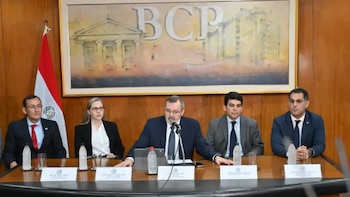
The same Banco Central del Paraguay (BCP) officials who filed a formal complaint against Ueno Bank on 3 November are now under arrest in the same investigation. For PSPs and acquirers, the detail that matters is not the courtroom drama; it is the sequence: supervisors said they saw the deterioration, did not stop the deposits, and then the bank collapsed with more than a million accounts frozen.
- The fiscal file behind the arrest warrants says the BCP leadership knew about Ueno Bank’s patrimonial deterioration since December 2025 and took no measures. In February of this year, the collegial board had already received alerts about non-compliance with the feasibility plan, irregular changes to trusts, and transactions with companies linked to Grupo Vázquez for approximately USD 140 million.
- Despite those alerts, the bank kept taking public deposits. The crisis escalated in the early hours of 3 November, when the BCP Board unanimously ordered Ueno Bank closed after confirming that its solvency ratio had fallen below 50%. The shutdown left more than a million account holders exposed.
- Authorities said deposits would be returned up to the legal cap of 75 minimum wages, equal to G. 228.300.000, through the Fondo de Garantía de Depósitos (FGD), with a maximum payout timeline of 15 days. That is the number everyone in the market watches when a retail-facing bank goes from “monitoring” to “liquidation mode.”
- Carlos Carvallo Spalding, the former head of Paraguay’s central bank, resigned the same day as the collapse. His home in the Madame Lynch neighborhood was later searched, and the Fiscalía accuses him of lying to the Senate and allowing Ueno Bank to keep taking savings despite internal warnings. The charges include lesión de confianza, producing public documents with false content, and self-serving administration; he is being held in preventive detention at the Agrupación Especializada.
- Holger Insfrán, the Superintendent of Banks, was detained on 12 November after a search of his home in Santa Librada, where about 500 pages of documents were seized. He is accused of failing to impose precautionary measures and of delaying formal notification to the Board about Ueno Bank’s credit concentration with related companies. Liana Caballero, who briefly served as interim BCP president after Carvallo’s departure, was detained this morning in Asunción, and Miguel Mora was also apprehended at the same time.
For high-risk payment businesses, the useful part of this story is not the arrest list. It is the reminder that supervisory inaction, related-party exposure, and delayed intervention can move very quickly from “internal concern” to frozen accounts and a deposit guarantee process measured in days, not months.
Related news
All news →


Weekly high-risk digest
Regulation, sanctions and payment news across your verticals — once a week, free.
Please check your inbox and click the link to confirm your subscription.
Please enter a valid email address!