Spreedly Competitors in 2026: What the Platform Sells, What It Prices Publicly, and Where It Now Competes
Spreedly used to be the vault people talked about. In 2026 it looks more like a full payment layer, especially after introducing Composer on October 21, 2026 on top of the newly acquired Dodgeball logic engine. For merchants and PSPs, that matters because the competitive set is no longer just “who stores cards?” but “who handles routing, retries, fraud checks, authentication, and agentic commerce?”
- Spreedly now sells more than vaulting. It calls itself a global payments orchestration platform with pillars named Connect, Vault, Optimize, Protect, Agentic and Composer. The company says it has 150+ gateway connections, 60+ payment methods, and 32+ fraud and risk solutions on a multi-tenant architecture, with white-label options and automated merchant onboarding. In other words, the surface area is now wide enough that it overlaps with orchestration vendors, vault providers, and parts of the fraud stack.
- Its public pricing is only partly public. The Independent Vault starts at $750 a month with unlimited storage. The Performance Optimization tier is priced through sales and adds routing, retries, network tokens and 3DS. That split matters: you can compare the storage piece directly, but the higher-value payment operations layer is still negotiated deal by deal.
- The contract terms are also spelled out. Spreedly’s Terms of Service dated October 1, 2026 set a 30-day initial term unless an ordering document says otherwise, then renewal for equal terms. Notice is at least 15 days, or 30 days where the term is 12 months or longer. Cards can be sent automatically to supported gateways, or by encrypted file to other PCI-compliant destinations, generally within 2 weeks. The Terms charge for each manual export, while the help center makes the first one free for each third-party service per merchant.
- The 2026 product shift is about agentic commerce. On March 4, agentic commerce went live as a channel, with agent-initiated transactions running over a merchant’s existing PSP relationships. The April 1 spring release introduced Composer 2.0, combining Dodgeball’s logic engine with Spreedly’s connectivity. On October 1, a summer roundup covered support for AI shopping agents, and on October 21 the company formally introduced Composer as a no-code canvas for fraud checks, authentication, routing and execution.
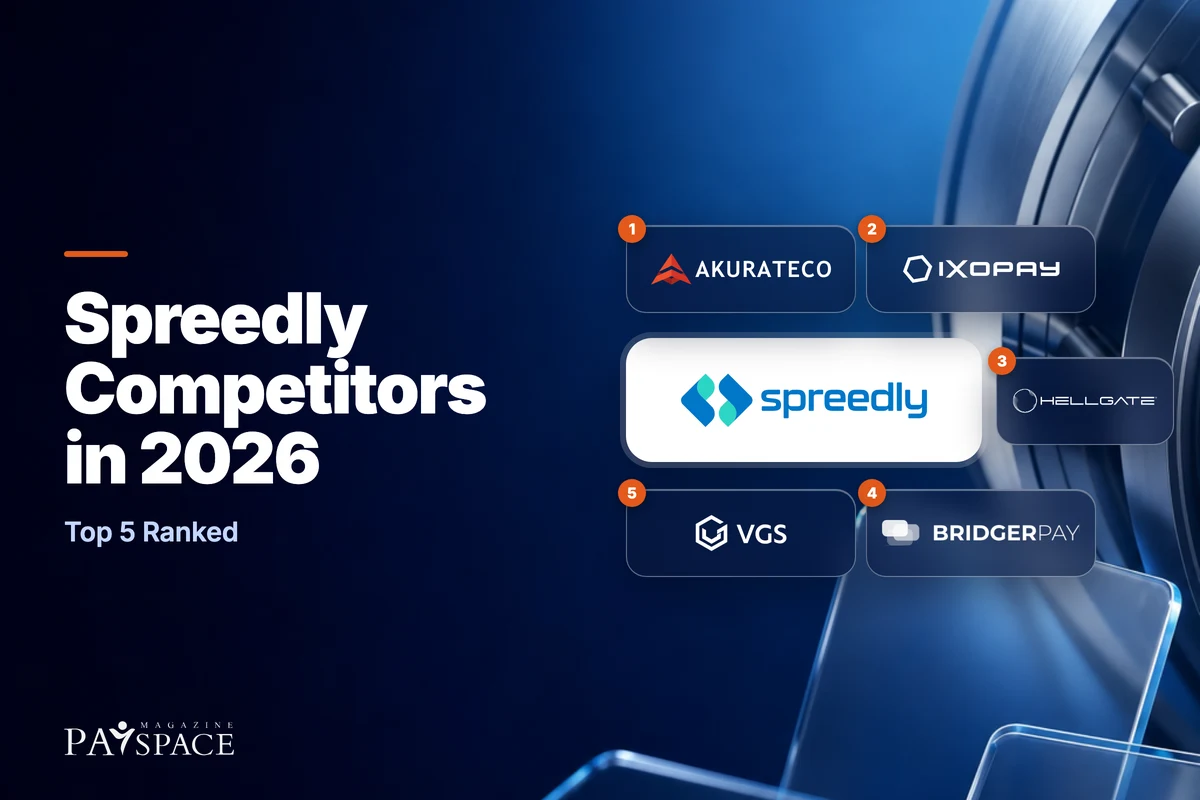
- The closest competitors depend on what you are buying. Akurateco is the self-hosted option in this set. Hellgate gives you dedicated infrastructure and publishes a starting price of €1,000 a month. VGS also publishes a starting price of $1,000 a month. IXOPAY and BridgerPay quote privately. So the comparison is not just feature-by-feature; it is also deployment model, pricing transparency, and how much of the payment layer you want to outsource.
One more detail that matters for revenue planning: Spreedly’s reach into Brazil via Pix and EBANX is older news, but it can still be more commercially relevant than the headline product release if that market is part of your current volume mix. Card networks are also moving on the same axis, with Visa announcing Agent Scoring and an Agentic Registry on June 10 and Mastercard launching Agent Connect on September 9.
Related news
All news →


Weekly high-risk digest
Regulation, sanctions and payment news across your verticals — once a week, free.
Please check your inbox and click the link to confirm your subscription.
Please enter a valid email address!