Home
/
news
/
ANJL and IBJR ask Brazil’s Supreme Court for an urgent ruling on MP 1.394/2026 betting ban
news
ANJL and IBJR ask Brazil’s Supreme Court for an urgent ruling on MP 1.394/2026 betting ban
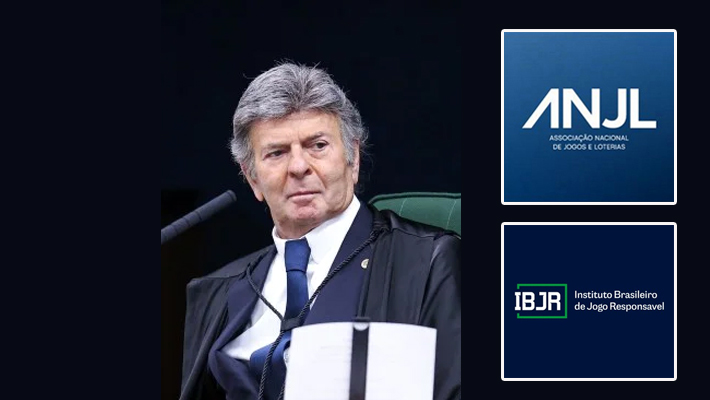
The National Association of Games and Lotteries (ANJL) and the Brazilian Institute of Responsible Gaming (IBJR) filed an urgent petition with Justice Luiz Fux in ADI 8.027, asking for a single-judge decision on the injunction against Provisional Measure 1.394/2026, which banned fixed-odds betting in Brazil. For PSPs, this is the kind of procedural fight that decides whether a market is merely frozen or legally shut down.
- The petition was filed on Monday (26) in ADI 8.027 and runs 24 pages plus 12 annexes. It is signed by six lawyers, including Pietro Cardia Lorenzoni, Bernardo Cavalcanti Freire and Celso Cintra Mori. The core argument is simple: if the Supreme Federal Court (STF) does not act, the authorisations will expire without any court having examined the injunction request.
- The dispute turns on timing. The associations argue that Article 4 of MP 1.394/2026 ends the authorisations “at the end of the thirty-day period” counted from publication on 25 September. Since the 30th day fell on Sunday (25), they invoke Article 132, § 1º, of the Civil Code to argue the deadline moved to Monday (26). In their reading, that is the day when the authorisations actually cease.
- They draw a sharp distinction between suspension and extinction. Until expiration, operators were barred from operating, but still held valid authorisations, so contracts with clubs, broadcasters, suppliers and employees were “largely only suspended.” Once the authorisations lapse, the activity becomes unlawful for those companies, and suspension turns into rupture. If Fux rules after that date, the petition asks for retroactive effects (ex tunc), as allowed by Article 11, § 1º, of Law 9.868/1999.
- The petition says the sector has already hit four dead ends, and each one pointed back to the STF: the 21st Federal Civil Court of the Federal District suspended ANJL’s collective writ of mandamus on 22/10; the TRF1 upheld that suspension on 23/10; the TRF3 Presidency, with Judge Johonsom di Salvo, overturned on 9/10 the only injunction granted to an operator, saying the solution had to be uniform for the whole market; and the TCU, in Acórdão 2.865/2026 of 21/10, declined to hear a representation from the Public Prosecutor’s Office at the Accounts Court seeking to delay the ban until 31/12.
- The filing closes with a line that sums up the strategy: “There is no one left to appeal to.” It also leans on the federal government’s own words. In a 5/10 filing in ADI 7.721, the Attorney General’s Office acknowledged the coexistence of a market that has been delivered to illegality by the ban, which ANJL and IBJR use to argue that the measure has already pushed activity outside the regulated channel.
Weekly high-risk digest
Regulation, sanctions and payment news across your verticals — once a week, free.
Please check your inbox and click the link to confirm your subscription.
Please enter a valid email address!