Home
/
news
/
Brazil’s lotteries hit records while regulated bets grew: the Caixa numbers do not support the “cannibalization” theory
news
Brazil’s lotteries hit records while regulated bets grew: the Caixa numbers do not support the “cannibalization” theory
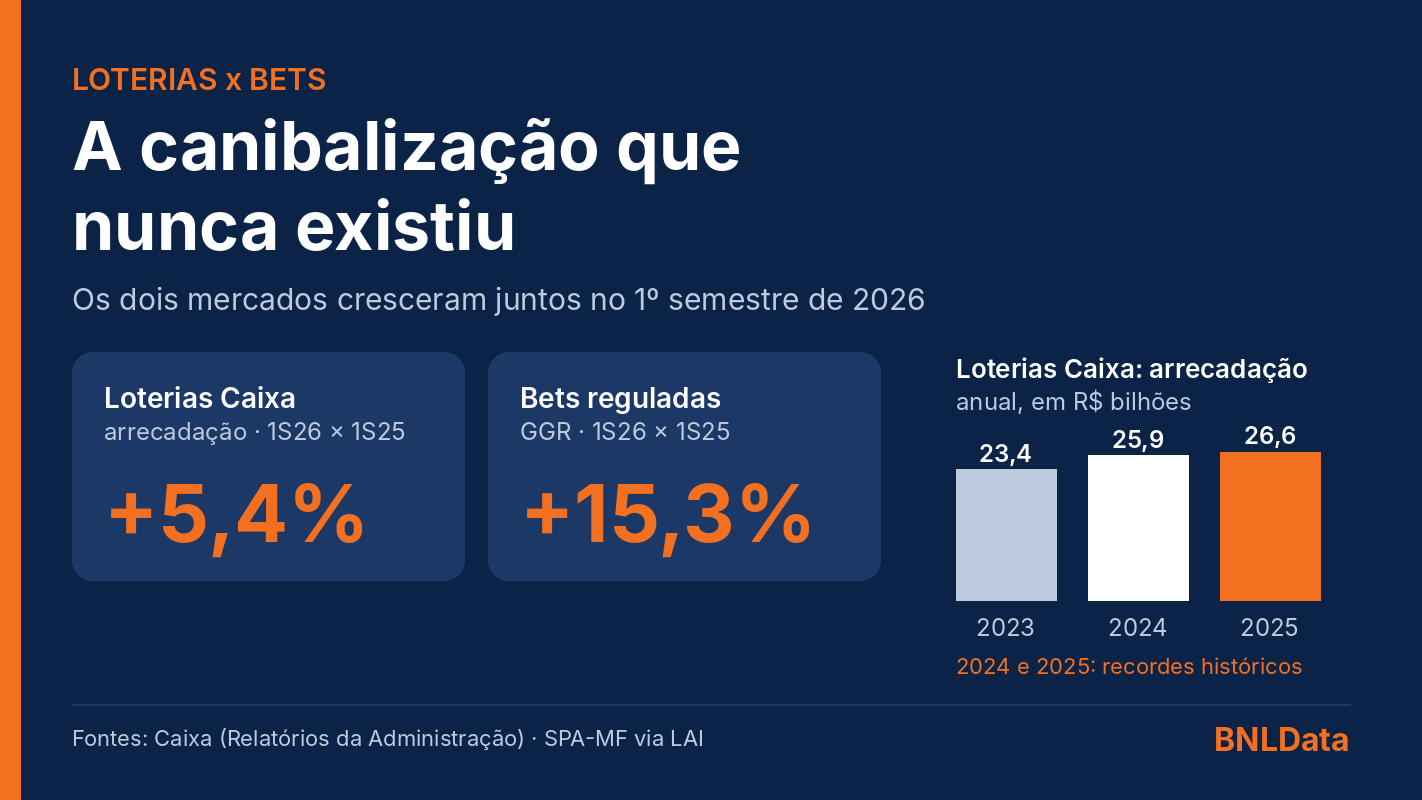
For years, the same argument was used to justify restricting sports betting in Brazil: regulated bets would eat into federal lottery revenue. Caixa’s own figures tell a different story. With both markets running, lotteries set records and the regulated bets market kept growing.
- Through September 2026, Loterias Caixa generated R$ 18.7 billion, up 3.9% from the same period in 2025. In the same period, the regulated betting market closed the first half of 2026 with GGR (gross gaming revenue) of R$ 20.07 billion, up 15.3% year on year. Both markets expanded at the same time, which is the opposite of what the “one is replacing the other” thesis would predict.
- The historical series points in the same direction. Loterias Caixa generated R$ 23.4 billion in 2023. In 2024, the year bets were regulated, revenue reached R$ 25.9 billion, the highest figure in the history of Loterias Caixa. In 2025, the first full year of the regulated market, with approximately R$ 37 billion in accumulated GGR over the year, lotteries set another record: R$ 26,612.5 million in revenue.
- The article notes one exception worth keeping in context: in the first half of 2025, lottery revenue fell by about 6%, and that drop was used by some as evidence of cannibalization. But the year still ended at a record, and 2026 started with an 8.4% increase in the first quarter. For lottery products, half-year swings are not a trend; jackpot accumulation matters, and everyone in the sector knows it.
- The commercial logic is different, and that is the point. Lottery sells the dream of a large prize through periodic draws and low-stake tickets bought at local retail outlets. Sports betting sells entertainment tied to the match the customer is already watching, with immediate outcomes. The audiences overlap, but the usage patterns do not. In mature markets, state lotteries and regulated betting have coexisted for decades, and many national lotteries have become sports betting operators themselves. Caixa received authorization to operate bets and never used it.
- The last full quarter when both products coexisted was the third quarter of 2026. MP 1.394 was published on 25 September, and legal betting platforms went offline in early October. Up to that point, lotteries had delivered R$ 7.1 billion to statutory beneficiaries, while regulated bets were also paying taxes, funding social security, sport, and public security, and sponsoring clubs. The two revenue streams were operating in parallel, not in a zero-sum relationship.
Related news
All news →


Weekly high-risk digest
Regulation, sanctions and payment news across your verticals — once a week, free.
Please check your inbox and click the link to confirm your subscription.
Please enter a valid email address!