Brazil’s Ministry of Finance still won’t say how much betting balance was refunded a month after the announcement

One month after Secom said there was still R$ 159 million to return to bettors, Brazil’s Ministry of Finance has not disclosed how much of that money actually made it back to players. For high-risk payment flows, the detail matters: the government is talking about restitution of balances from fixed-odds betting accounts, not a generic refund exercise.
- In response to an access-to-information request from BNLData, the Secretariat of Prizes and Bets (SPA) used the full extension period and answered only after the original deadline passed. The request, filed on 11 October under Brazil’s Lei de Acesso à Informação (LAI), was answered on Tuesday (10/11) with a partial disclosure decision.
- The request was anchored to a Secom release from 10 October about the restitution of balances under article 9 of MP nº 1.394/2026, which banned fixed-odds betting in the country. The sequence is the key point: on 5 October, the balance to be returned was estimated at R$ 1.2 billion; five days later, Secom said it had fallen to R$ 159 million. The Ministry was asked for the calculation behind that drop, the names and CNPJ numbers of the eight companies that had not sent data to the banks, whether the R$ 159 million includes those companies, how much had already been refunded, to how many bettors and into how many accounts, who pays for the cost of the operation, and the rules for Caixa Econômica Federal’s phase.
- For all six restitution-related questions, SPA gave a single line: the data “are in processing phase.” That means no calculation memo, no company list, no refunded amount, no count of bettors served, no operating cost, and no rules for the Caixa stage. The cost item and the Caixa item were not even addressed separately.
- The answer also undercuts itself. After invoking a partial denial on the grounds that part of the information is “related to an ongoing decision-making process,” SPA ends by saying there is “no personal information or information protected by other secrecy rules in this statement.” In other words, the number the market wants explained is not being withheld because of a privacy issue; it is a government number previously published in an official release.
- On site blocking, SPA answered with counts of URLs sent to Anatel for telecom operators to block, not the number of websites actually blocked. BNLData had asked for the number of effectively blocked sites between 25/9 and 9/10, day by day. The distinction is not cosmetic: sending URLs is a compliance input, not proof that the block took effect.
For PSPs, acquirers, and banks watching Brazil’s betting cleanup, this is the part that matters. The state is still working through refunds, bank routing, and telecom blocklists, but the public record remains thin on execution data. If you are trying to assess exposure in a market where the regulator is still untangling balances after a betting ban, that lack of transparency is itself a data point.
Related news
All news →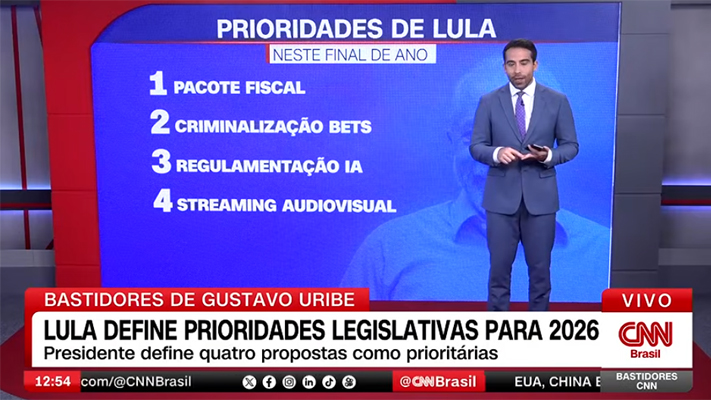
Bets crackdown drops out of Lula’s priority list as Brazil’s MP 1,394 stalls and PL 5,477/2026 targets only the illegal market
Lottopar says fixed-odds sports betting and online games remain prohibited in Brazil

South Korea Freezes KRW 154.8 Billion and Arrests 6,310 in 2026 Cyber Gambling Crackdown
Weekly high-risk digest
Regulation, sanctions and payment news across your verticals — once a week, free.
Please check your inbox and click the link to confirm your subscription.
Please enter a valid email address!