Brazil’s Supreme Court hears arguments on municipal lotteries and delays ADPF 1212 ruling
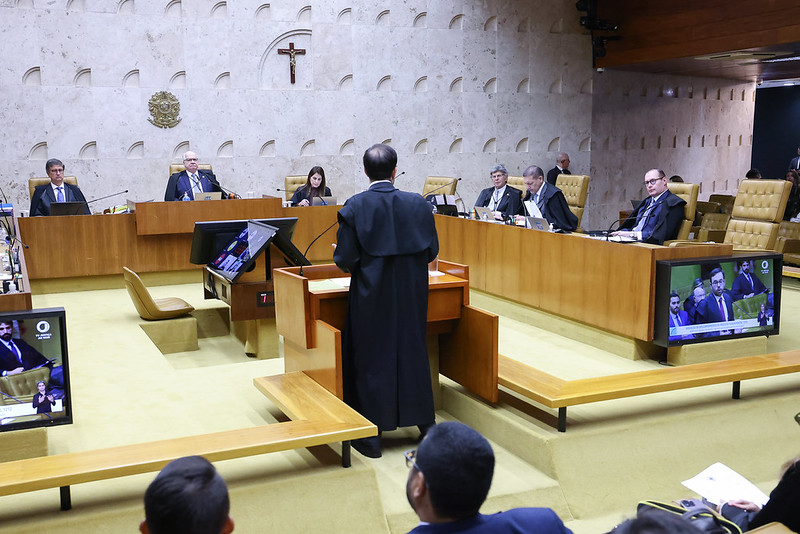
The Brazilian Supreme Federal Court (STF) opened hearings on ADPF 1212, a challenge to municipal laws and decrees that create or regulate local lotteries and sports betting. For PSPs and operators, the case matters because it sits right at the intersection of local licensing, federal authorization, and the court’s willingness to let municipalities run their own betting schemes.
- On Wednesday, November 4, the full bench of the STF began reviewing ADPF 1212, filed by the Solidariedade party against municipal laws and decrees that create, authorize, or regulate lotteries and sports betting at the local level. The session, led by Justice Edson Fachin, was limited to the reading of the report and oral arguments. The hearing ended without a vote, and the case was postponed with no new date set.
- The injunction currently in force was issued by reporting Justice Nunes Marques on December 13, 2025. It suspended all municipal laws and decrees on lotteries and sports betting, as well as ongoing tenders and the operation of services already awarded, under a fine of up to R$ 500,000 per day. The review of that injunction started in the virtual plenary but was interrupted after Justice Flávio Dino requested a pedido de destaque, moving the case to the physical plenary.
- In his report, Nunes Marques listed the municipal rules challenged by Solidariedade: São Vicente, Guarulhos, Poá, Campinas and the capital, São Paulo; Belo Horizonte (MG); Foz do Iguaçu (PR); Pelotas and Porto Alegre (RS); Caldas Novas and Anápolis (GO); Bodó (RN); and Miguel Pereira (RJ). The action also targets the general creation of municipal lotteries, which the party says stems from a mistaken reading of Article 30 of the Constitution.
- The AGU and the PGR backed the action on the merits. The municipalities defended their rules by invoking local interest and citing the STF’s own precedents, which is the usual line in these cases: on paper it is about municipal autonomy, in practice it is about whether local licensing can coexist with federal betting regulation.
- Ivan Cândido da Silva de Franco, lawyer for Solidariedade, said the subject “had no control whatsoever in the country” before the Supreme Court stepped in. According to him, the initial petition identified 13 municipalities with their own lotteries, and by the time the injunction was examined the number had already exceeded 70. He singled out Bodó (RN), a municipality of about 2,400 inhabitants that licensed 38 companies, one for every 62 residents. None of them had authorization from the Secretariat of Prizes and Bets of the Ministry of Finance (SPA/MF).
According to the lawyer, a municipal license cost around R$ 5,000 per company, while federal authorization costs R$ 30 million. He also said some municipalities were functioning as “true hubs” for companies that did not want to comply with federal regulation, and cited São Vicente and Poá, where the same company would operate betting of quo
Related news
All news →

Weekly high-risk digest
Regulation, sanctions and payment news across your verticals — once a week, free.
Please check your inbox and click the link to confirm your subscription.
Please enter a valid email address!