Will a blue wave push the CCCA after Marshall’s exit?
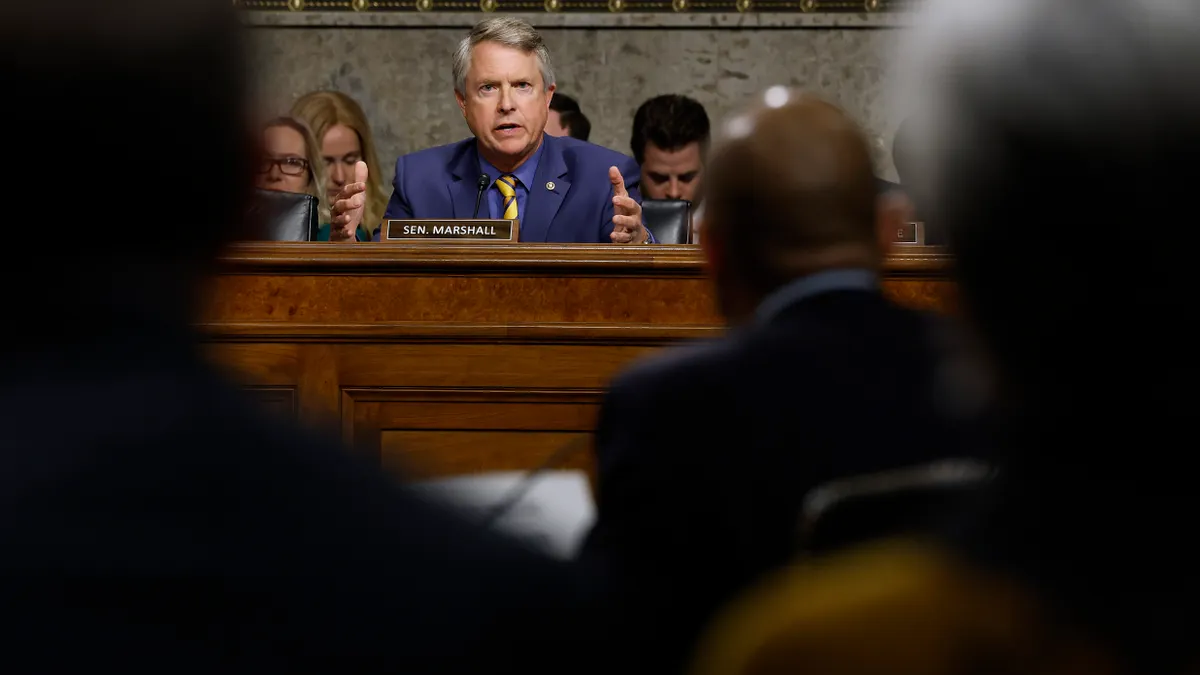
Republican Sen. Roger Marshall is out after this week’s Democrat victories in Congress, and Sen. Dick Durbin has already said he will retire at the end of this term. For the Credit Card Competition Act (CCCA), that leaves the bill heading into a new Congress next year without the two biggest Senate co-sponsors it has relied on since 2022.
- Durbin and Marshall have been the bill’s main Senate engine for the past few years. Their proposal would require banks that issue credit cards to make an alternative card network available for processing a transaction, rather than leaving Visa and Mastercard as the only practical rails in play. The policy goal is straightforward: more network competition, lower swipe fees for merchants.
- Doug Kantor, general counsel for the National Association of Convenience Stores and a longtime CCCA backer, called Marshall’s loss “painful.” That matters because Marshall’s support gave the bill bipartisan cover, which is usually the difference between a live bill and one that sits in committee while everyone nods politely.
- Kantor said Marshall helped build broader support for the bill in this Congress, including from President Donald Trump. He said Trump or Vice President JD Vance, a former Senate sponsor of the bill, publicly called for passage nine times, though much of that messaging came during their unsuccessful effort to reelect Marshall.
- The bill still has a narrow procedural path in the final two months of this year, before the congressional session ends and new senators and representatives arrive. Kantor said it could move as part of a spending bill, but he was not particularly bullish about the odds. His line was that it has “as good a shot as many other things to move.”
- Durbin’s office pointed to Sen. Peter Welch, a Democrat from Vermont, as the next Senate sponsor carrying the issue forward. Welch also backed the legislation in the House before moving to the Senate, according to a report from PunchBowl News. The thing is, the bill has always worked better when it had one Democrat and one Republican pushing from the Senate side; next year, that setup is gone.
For high-risk merchants, this is not just a Washington hobby horse. The CCCA is aimed directly at the economics of card acceptance, and Visa and Mastercard are the players on the other side of the bill. If the sponsorship map changes in the next Congress, so does the probability of any near-term change to how those fees are set.
Related news
All news →


Weekly high-risk digest
Regulation, sanctions and payment news across your verticals — once a week, free.
Please check your inbox and click the link to confirm your subscription.
Please enter a valid email address!