Why banning sports betting could cost Lula the election
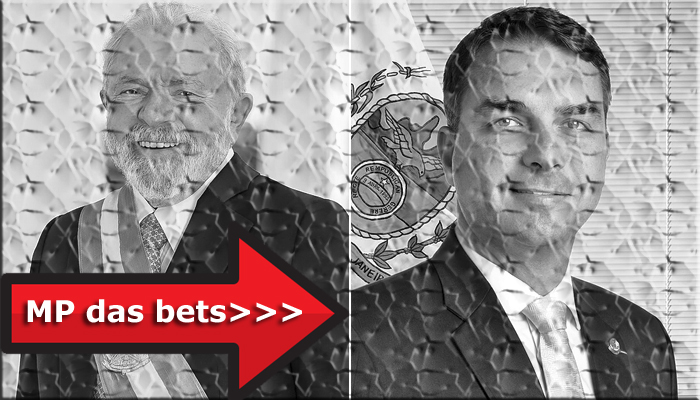
With Brazil’s presidential race tighter than in 2022, a crackdown on sports betting and online games could do more than reshape payments flows. It could put at risk a pool of more than 30 million active bettors, along with football sponsorships, media investment, player protection, thousands of jobs, and billions in tax revenue.
- An eventual Medida Provisória from President Luiz Inácio Lula da Silva banning sports betting and online games would be as much a political calculation as a consumer-protection measure. And that is exactly the terrain where it could backfire on the government: the latest polls show a race tighter than at any point since 2022, while the betting sector now supports a large enough bloc of voters, sports sponsorships, and tax receipts to make a blanket ban expensive.
- The race itself has been moving in the wrong direction for the Planalto. A Quaest poll released on 7 September showed Lula and Senator Flávio Bolsonaro (PL) tied in a hypothetical second round at 41% each. One week later, on 14 September, a new Quaest round — the latest available — put Flávio ahead numerically for the first time, 42% to 40%, still within the two-point margin of error, but a clear shift compared with earlier in the year. Datafolha, meanwhile, showed Lula ahead of Flávio on 11 September by 46% to 44%, also within the margin of error.
- For reference, the second-round vote difference that decided the 2022 election between Lula and Jair Bolsonaro was 2,138,485 votes, equal to 1.80 percentage points of valid votes. That means today’s technical tie — with a recent trend worsening for the government — is already at, or beyond, the level of closeness that defined the most competitive election in Brazil’s recent history.
- In that context, the SIGAP (Sistema de Gestão de Apostas), part of the Secretariat of Prizes and Betting at the Ministry of Finance, recorded 30,895,934 unique CPFs with active betting in the first half of 2026. That is a potential voter base larger than the margin that decided any of the last presidential contests. If just 10% of that universe — about 3 million people, before counting family members and dependents whose jobs are tied to the sector — shifted their vote because they felt directly hit by a ban, the political impact would exceed the 2022 margin.
- Football is the clearest transmission channel for the backlash. In less than two years, betting companies have become the biggest sponsors in Brazilian football. Recent surveys from September 2026 show that 14 of the 20 Série A clubs have bookmakers among their sponsors, with 13 occupying the top spot: shirt front sponsor. Flamengo leads with R$ 268,5 milhões/ano from Betano, the largest contract ever recorded in Brazilian football. Palmeiras gets R$ 170 milhões/ano from Sportingbet, and São Paulo R$ 113 milhões/ano.
For PSPs, acquirers, banks, and other payment providers serving high-risk verticals, the point is straightforward: in Brazil, betting is no longer just a payments category. It is embedded in electoral arithmetic, sports finance, and tax collection, which means policy changes can land on settlements, sponsorship budgets, and merchant relationships all at once.
Related news
All news →
Weekly high-risk digest
Regulation, sanctions and payment news across your verticals — once a week, free.
Please check your inbox and click the link to confirm your subscription.
Please enter a valid email address!