SOFTSWISS panel: the real cost of entering African iGaming markets goes well beyond the licence
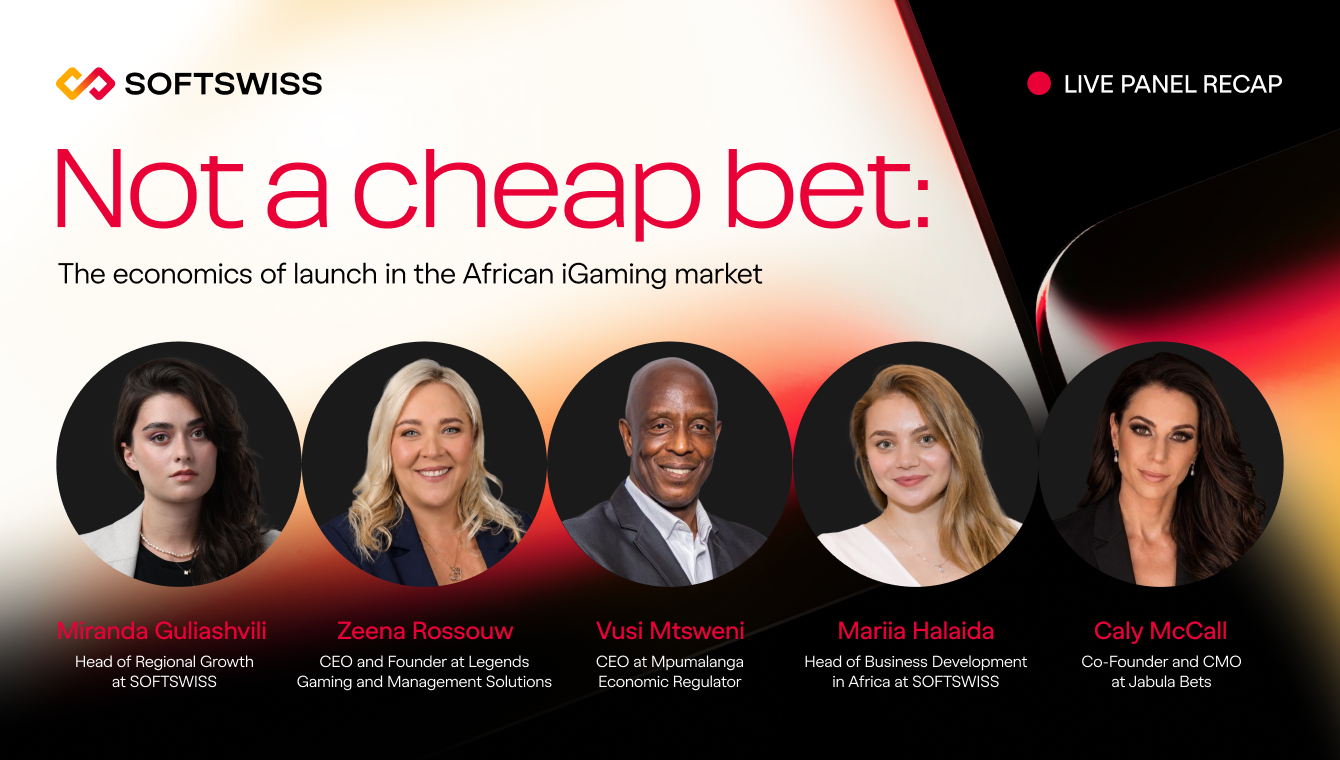
A live LinkedIn panel hosted by SOFTSWISS put some numbers and operational friction around a point operators and PSPs already know: in Africa, “the market” is not a market, it is 54 different rulebooks. For payments teams, that means licensing is only the opening invoice; localisation, compliance, certification, payment methods, and local company setup do most of the damage to the budget.
- SOFTSWISS hosted the live LinkedIn session “Not a Cheap Bet: The Economics of Launching an iGaming Market in Africa”, with Mpumalanga Economic Regulator, Jabula Bets, Legends Gaming and Management Solutions, and SOFTSWISS all looking at the practical costs of market entry, using South Africa as the main case study.
- The participants agreed on the obvious but operationally annoying fact: Africa is made up of distinct markets. The continent has 54 countries, and they differ on licensing rules, anti-money laundering requirements, and player habits. The payment stack changes with them: mobile money dominates in Kenya; South African players use vouchers, electronic funds transfers, and cards; other markets rely on USSD and agent networks. One operator may run a single platform across multiple countries, but it still needs country-specific compliance and locally adapted game content.
- South Africa showed how much work sits behind the licence. Operators apply province by province, and each of the nine provincial authorities follows its own process. Approval can take three, six, or 12 months depending on the province and the complexity of the application. After that, products must be certified by a test lab and the South African Bureau of Standards (SABS), and platforms must produce 21 market-specific regulatory reports.
- Some licensed operators have still not launched more than a year later because their software needed additional development. That is the bit budgets often miss: the licence is not the expensive part. The bigger costs are localisation, certification, setting up a local company, hiring staff, Broad-Based Black Economic Empowerment (BEE) requirements, technology, payments, and marketing.
- Mariia Halaida, Business Development Director for Africa at SOFTSWISS, said local content is critical: “If you want to operate in Kenya, you will have a different set of game suppliers than in West Africa or South Africa. So for us, as a platform and aggregation provider, it is essential to offer clients content that fits their needs and their markets. We do not have one offer for everyone. It is completely tailored.”
For high-risk PSPs, the useful takeaway is simple: in Africa, payments strategy cannot be bolted on after the licence. Method mix, local compliance, and content localisation are part of the launch cost from day one, and the market will punish anyone who budgets for “going live” instead of actually operating.
Related news
All news →
:strip_exif()/i.s3.glbimg.com/v1/AUTH_63b422c2caee4269b8b34177e8876b93/internal_photos/bs/2026/f/8/IdkHsdQYWylt8HLhgs9Q/20260121200144-1746e8d4ccfa91d6a6464d5ca54b4e6de8f5294fad9fbe53b45b655587a568c1.webp)
Weekly high-risk digest
Regulation, sanctions and payment news across your verticals — once a week, free.
Please check your inbox and click the link to confirm your subscription.
Please enter a valid email address!