Folha de S.Paulo editorial misstates Brazil’s betting losses, debt link, and online gambling ban
A Folha de S.Paulo editorial calling on Brazil’s Supreme Federal Court (STF) to uphold MP 1.394/2026 gets the arithmetic wrong and treats a claim of causation as if it were evidence. For high-risk operators and PSPs, the useful part is not the editorial’s politics; it is the gap between official gaming data and the numbers being used to justify a policy shutdown.
- The editorial, published on Sunday (8), asks the STF to confirm the merits of MP 1.394/2026 even while acknowledging that the measure was politically motivated, used the wrong instrument, and bypassed the urgency requirement. It also praises minister Luiz Fux for due process and, in the same breath, wants the Court to validate a rule it says was born from “electoral desperation.”
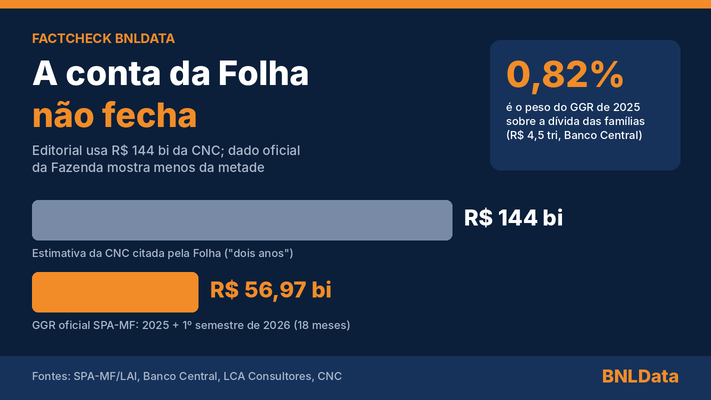
- The paper’s main economic claim is that R$ 144 billion, attributed to the Confederação Nacional do Comércio (CNC), was “diverted” from retail to betting in two years. Official data says otherwise. Brazil’s regulated market operated from 1 January 2025 until the MP was issued on 25 September 2026, roughly 21 months, not two years. The relevant measure is GGR (gross gaming revenue), meaning total stakes minus prizes paid.
- According to the Ministry of Finance, GGR was R$ 36.9 billion in 2025. The Secretaria de Prêmios e Apostas (SPA-MF), data obtained by BNLData via the Lei de Acesso à Informação, put first-half 2026 GGR at R$ 20.07 billion. That brings the total to R$ 56.97 billion in 18 months, less than half of the figure used by Folha. Even the government, which had every incentive to talk the sector down, was referring to about R$ 60 billion; that was the number cited by minister Dario Durigan when the MP was announced.
- The editorial also says 24-hour betting worsened Brazil’s “gravíssimo problema do endividamento das famílias,” but provides no data linking the two. The official numbers show 25,245,319 unique CPF holders betting on authorized platforms in 2025, with sector GGR of R$ 36.9 billion. That works out to an average loss of R$ 1,461.66 per bettor for the year, or about R$ 121.80 per month.
- For comparison, the Banco Central said household debt with the financial system reached about R$ 4.5 trillion in 2025, and household indebtedness ended the year at 49.8% of income. Even if every real lost in betting in 2025 had been borrowed, the total would still equal only 0.82% of that debt stock. The editorial skips that part.
The operational takeaway for high-risk PSPs is straightforward: when policy debates are built on inflated loss figures and unsupported debt narratives, regulatory outcomes can move faster than the underlying facts. In Brazil, the difference between GGR and headline “money lost” is not a semantic quibble; it is the number that regulators, courts, and banks will use when they decide whether a market is being managed or simply shut down.
Related news
All news →


Weekly high-risk digest
Regulation, sanctions and payment news across your verticals — once a week, free.
Please check your inbox and click the link to confirm your subscription.
Please enter a valid email address!