Estadão shows illegal betting ads and influencers bypass Meta and Brazil’s government crackdown
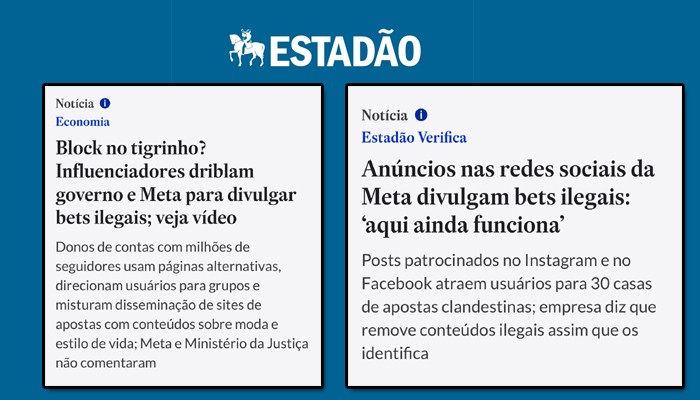
Two new Estadão reports say illegal betting operators are still being promoted on Instagram and Facebook, while influencers whose accounts were taken down are reappearing on alternate profiles and pushing followers into WhatsApp and Telegram groups. For regulated PSPs, the point is blunt: if the crackdown removes licensed brands but leaves illicit acquisition channels open, the traffic does not disappear — it moves.
- Estadão Verifica found 30 illegal betting sites surfaced through paid ads on Instagram and Facebook. The ads led to sports betting and online slot platforms, including the “jogo do tigrinho,” and used slogans such as “aqui nunca paramos,” “de volta ao jogo,” “bet liberada” and “a casa tá on!”
- The mechanics were familiar: the ads did not just send users straight to a gambling page, but to WhatsApp and Telegram groups that published betting analysis and platform addresses. One site promised more than R$ 3 million in monthly prizes, while another copied the name and visual identity of one of the main legal-market betting brands.
- The report also says some of the ads were boosted by fake profiles, including accounts posting in Chinese and without photos. In another layer of the same funnel, false reports styled like Estadão and g1 redirected users to Google Play, where the apps showed more than 670 thousand downloads.
- A second Estadão piece, by Vinícius Valfré, shows that taking down influencer accounts has only limited effect. Anderson Neiff had 11.8 million followers on the restricted profile and 2.6 million on an alternate one; Mariana Alves, known as Malévola, lost a 1.5 million-follower account and already has 1 million on the new profile; Guilherme Souza, Guipolêmico, had 4 million followers and now has 950 thousand on the alternate account.
- Valfré also quotes Neiff saying that “without making money” he will not stay out. According to the report, smaller influencers with fewer than 1 million followers keep mixing betting promotions with humor, fashion, and lifestyle content, which makes enforcement harder than simply deleting a profile and declaring the job done.
The story sits in the shadow of Brazil’s Medida Provisória nº 1.394/2026, issued on 25 September, which the article says removed authorized companies from the market while leaving bettors in the hands of clandestine platforms that continue to be promoted openly on social media. Meta and the Ministry of Justice did not comment.
Related news
All news →
Chicago proposes raising sports betting tax to 20 per cent in 2027 budget
Argentina’s Senate sets November 25 committee hearing on online gambling addiction bill after more than 700 days of delay
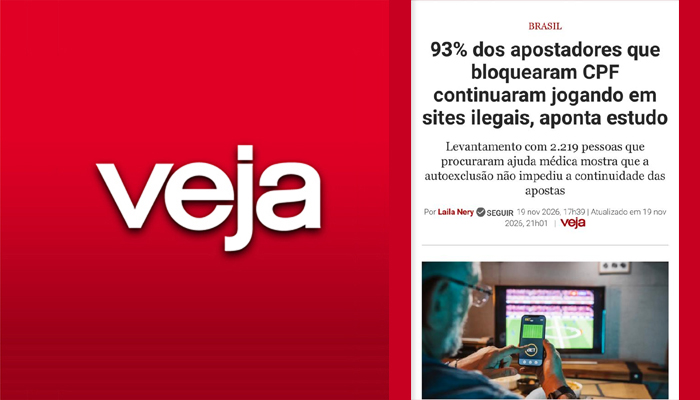
Self-exclusion did not stop bettors: study says 93% of those who blocked their CPF kept playing on illegal sites
Weekly high-risk digest
Regulation, sanctions and payment news across your verticals — once a week, free.
Please check your inbox and click the link to confirm your subscription.
Please enter a valid email address!