Singapore’s Digital-Asset Market in 2026: 55.4% On-Chain Growth, 32% Retail Ownership, and a Tight PSA Regime
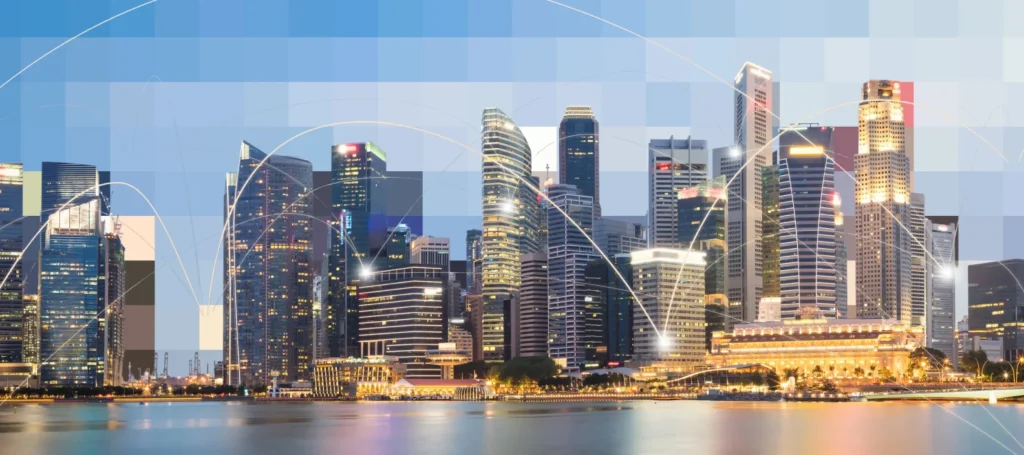
Singapore is no longer the place to slap a token onto a website and call it a strategy. By the end of 2026, it had turned into Asia’s leading institutional crypto hub, with regulated rails, bank participation, and a licensing regime that filters out the usual offshore noise.
- From July 2025 to June 2026, on-chain activity in Singapore grew 55.4% to $284 billion. In the same period, the share of Singapore residents who owned or had owned cryptocurrency reached 32% in 2026. For PSPs and infrastructure providers, that is the signal: the market is active, but it is not being run as a retail free-for-all.
- The Monetary Authority of Singapore (MAS) deliberately stepped away from the speculative retail segment. It closed the country to unlicensed offshore platforms, banned retail investors from leveraged trading, and restricted mass-market advertising of crypto services. In exchange, large investors, banks, and fintech infrastructure firms got a rulebook that is strict, but predictable.
- Crypto in Singapore is regulated under the Payment Services Act (PSA), passed in 2019. The law treats crypto-asset activity as digital payment token (DPT) services, rather than creating a separate crypto statute, and MAS applies technology neutrality together with strict anti-money laundering and countering the financing of terrorism (AML/CFT) requirements.
- To provide DPT services, firms must hold either a Standard Payment Institution (SPI) or a Major Payment Institution (MPI) license. SPI firms are capped at S$3 million in average monthly transaction volume for any single type of payment service and need minimum base capital of S$100,000. MPI firms face no transaction cap, but must maintain base capital of at least S$250,000 and post a security deposit of S$100,000 to S$200,000.
- The market has clearly moved toward the larger license class. According to the MAS register, the number of DPT providers holding an MPI license rose from 4 in 2021 to 38 in 2026. Those players include custodians, stablecoin issuers, and other infrastructure firms serving institutional flows rather than retail speculation.
Singapore’s digital-asset market is now embedded in the traditional financial stack. MAS and major banks including DBS, Standard Chartered, OCBC, and UOB are building blockchain into banking infrastructure, while regulated stablecoins and wholesale central bank digital currency (wCBDC) are being used for settlements between businesses and banks. Tokenized real-world assets (RWAs) are also becoming a core instrument for institutional investors, and MAS is preparing rules for AI agents that will be able to handle treasury and payment operations on their own.
Related news
All news →
Argentina’s Senate unanimously passes the Problem Gambling Prevention Law as Nadia Márquez broadens the debate to pornography, food, and compulsive buying

Google, Alberta, and Austria: three gambling policy shifts with direct implications for licensed operators and PSPs

Ontario iGaming cash wagers pass CAD10bn for the first time in October 2026
Weekly high-risk digest
Regulation, sanctions and payment news across your verticals — once a week, free.
Please check your inbox and click the link to confirm your subscription.
Please enter a valid email address!