Paraguay’s central bank launches resolution process for Ueno bank after solvency shortfall
The Banco Central del Paraguay (BCP) has started the resolution process for Ueno bank after finding its solvency ratio below 50% of the minimum required. For high-risk payment and deposit flows, the immediate point is simple: the bank has been closed, cards and app services are offline, and the deposit guarantee mechanism has been triggered.
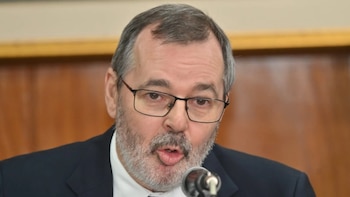
- BCP president Carlos Carvallo said on Tuesday that he submitted his resignation, while also saying he will remain in office because the situation requires his presence. Carvallo previously led Financiera Ueno before it became Ueno bank, and has headed the central bank since 2023.
- The central bank said it unanimously decided to begin the “procedure of resolution” for Ueno bank after confirming a solvency deficiency “below fifty percent (50%) of the minimum required.” The process includes appointing interventors from the Superintendence of Banks and activating the Deposit Guarantee Fund (FGD).
- Liana Caballero, a member of the BCP board, said the institution was closed and that “neither the application, nor the cards, nor any service of the entity is active from today.” She also said the law allows up to 15 days to return funds to clients.
- The FGD covers up to 75 minimum wages, or about 228,300,000 guaraníes (about 38,622 dollars), “per natural or legal person.” Carvallo said deposits up to that amount are “absolutely covered by law,” and that the bank’s remaining assets will be assessed to determine whether anything beyond the covered amount can be paid.
- The case matters because Ueno bank had attracted about 380 million dollars from the state-run Instituto de Previsión Social (IPS), the deposits of about 32,000 retirees, and funds from official institutions including the Administración Nacional de Electricidad (Ande) and the Itaipú binational dam. Caballero said the bank accounts for “less than 9% of the total financial system,” and that the authorities do not see contagion risk.
Ueno bank had been under heavy scrutiny in recent months, enough for the central bank to say in early October that the local financial system “maintains adequate levels of solvency and liquidity and operates normally.” In other words: this was not a quiet file on someone’s desk.
Related news
All news →
No STF, Brazilian clubs say MP das Bets would cut Série A revenue by R$ 1 billion and leave them 10 days to adapt

“No country banned it and it worked”: the remarks by Udo Seckelmann and José Francisco Manssur that irritated MP defenders at Brazil’s Supreme Court

Binance says $6.3B hack started with fake job interviews and a compromised AI coding tool
Weekly high-risk digest
Regulation, sanctions and payment news across your verticals — once a week, free.
Please check your inbox and click the link to confirm your subscription.
Please enter a valid email address!