Kazakhstan’s regulators and financial institutions discuss crypto, stablecoins, and tokenization in Almaty
Cryptocurrencies, stablecoins, and tokenization are moving deeper into banking services, payment infrastructure, and capital markets in Kazakhstan. For PSPs and high-risk operators, the useful part is not the conference rhetoric but the direction of travel: the market is building regulated rails, and the state is still working on the tax and supervisory framework around them.
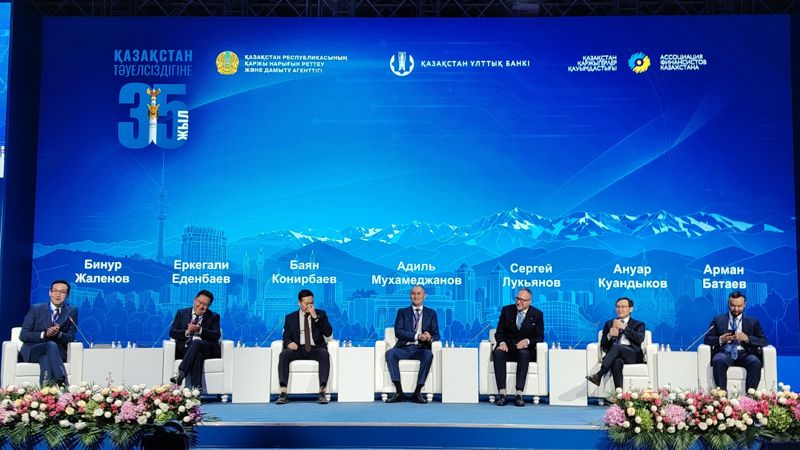
- At the XIV Congress of Financiers of Kazakhstan, participants in a session titled “Crypto Industry and the Integration of Digital Assets into the Traditional Financial System” discussed how digital assets are being folded into the country’s financial stack. The room included representatives of the National Bank, the Astana International Financial Centre (AIFC), the Kazakhstan Stock Exchange (KASE), the administration of Alatau city, financial institutions, and technology companies.
- Deputy Chairman of the National Bank Binur Zhalenov said crypto is one of the main topics for traditional financial institutions and regulators, even though the technology was originally built around decentralization and removing intermediaries. He added that Kazakhstan is “one of the pioneers of this big movement” and that, as a multi-jurisdiction country, it is attractive to global crypto players.
- Zhalenov also said the country already has an ecosystem involving the AIFC and new financial platforms, while the state continues to create conditions for the industry’s development, including work on a favorable tax regime. For firms in payments and digital assets, that is the sort of line that matters more than the conference stage: it signals that policy work is still active, not finished.
- The AIFC’s Managing Director for Financial Services Regulation, Yerkegali Edenbayev, said the main shortage is time. In his view, technologies are arriving and being implemented much faster than traditional regulatory mechanisms can adapt, which is why Kazakhstan should use more regulatory sandboxes and pilot projects to test new financial solutions in controlled conditions.
- Bayan Konirbaev, Chief Digital Officer of the Alatau city administration, pointed to a different bottleneck: the lack of practical use cases for digital assets. His point was that the digital economy is not just about new tools for financial institutions, but also about bringing a wider audience into economic activity through tokenization and cryptoassets.
For high-risk payment providers, Kazakhstan’s message is pretty straightforward: the infrastructure conversation has moved beyond whether digital assets belong in the system at all. The real question now is which products can survive the gap between experimentation and a workable regulatory framework.
Related news
All news →


Weekly high-risk digest
Regulation, sanctions and payment news across your verticals — once a week, free.
Please check your inbox and click the link to confirm your subscription.
Please enter a valid email address!