From stigma to crime: banning betting does not end gambling, it only strips the bettor’s protection
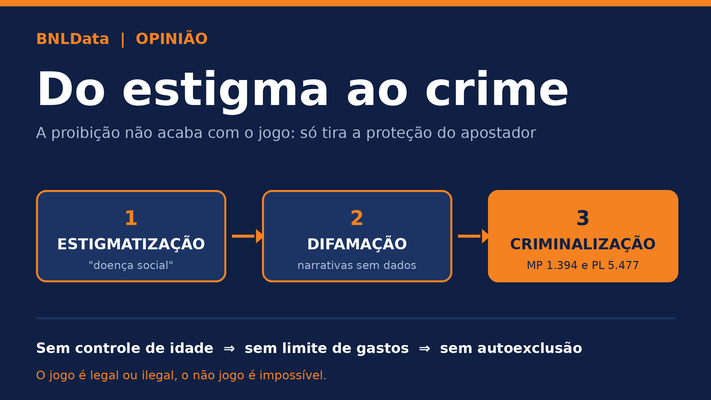
Brazil’s betting sector is moving from regulated activity to prohibition, and the practical result is not zero gambling but fewer safeguards for players. That matters for PSPs and acquirers because the shift pushes volume from supervised operators into sites that have no age checks, no spending controls, and no local accountability.
- The article says the sector in Brazil has gone through three steps in quick succession: stigmatization, defamation, and now criminalization. It points to public statements that frame betting as a social disease, repeat a quoted “15 times higher” suicide risk without citing a source, and recycle a R$ 38,8 billion social cost figure even though the study’s authors reportedly described it as an association, not causation.
- It then argues that the political narrative has shifted from criticism to prohibition. The text cites MP 1.394 as the measure that moved betting from a regulated market that paid taxes and license fees to prohibition, and says PL 5.477/2026 would treat as a crime an activity that the same government had previously authorized, regulated, and taxed.
- The core operational point is what disappears when players are pushed off regulated platforms. In the regulated market, the article says users had identity verification and under-18 blocking, spending and time limits, self-exclusion, a ban on credit card use, a Brazilian company to complain to, and oversight from SPA/MF. On illegal sites, none of that applies: no age checks, no limits, no self-exclusion, credit cards are accepted, and the operator is outside Brazilian law.
- The piece also says monitoring reports show these illegal platforms growing after MP 1.394. It cites H2 Gambling Capital, which estimates R$ 25 billion per year moving to the illegal market. Since Casa de Apostas exited, the article says Brazil has had no regulated site in operation, leaving recreational bettors, described there as the overwhelming majority, with a choice between stopping and going underground.
- There is also a fiscal angle that matters to regulated operators and payment intermediaries. The article says the government lost the funds that Law 14.790 earmarked for health, public security, and sport once betting was pushed out of the regulated environment. For PSPs, that is the familiar trade-off: prohibition does not eliminate demand, it changes where the money flows and who controls the payment rail.
The comparison the article makes is blunt: alcohol and tobacco create larger social costs, yet remain legal, regulated, and taxed. Whether one agrees with the analogy or not, the mechanism is clear enough for payments people: when a market is pushed into illegality, transaction monitoring gets worse, consumer protection disappears, and the compliance burden shifts from regulated rails to everyone trying to detect what moved off them.
Related news
All news →


Weekly high-risk digest
Regulation, sanctions and payment news across your verticals — once a week, free.
Please check your inbox and click the link to confirm your subscription.
Please enter a valid email address!