Brazil’s Supreme Court could link the gambling ban case with the online betting law, affecting 2,728 stayed lawsuits
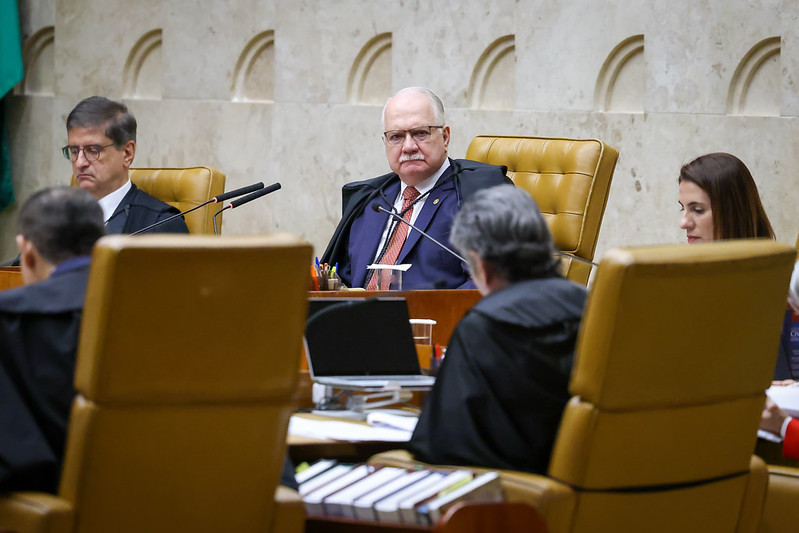
The Brazilian Supreme Federal Court (STF) paused on Thursday (6/8) a case on whether the criminal offense of operating illegal gambling — jogo do bicho, bingo, and slot machines — still applies under the 1988 Constitution. For regulated payments and betting operators, the bigger issue is the calendar: the court may end up deciding that case together with the challenges to Brazil’s Lei das Bets, with around 2,728 lawsuits currently waiting on the outcome.
- Relator Justice Luiz Fux voted to keep the gambling ban in place. Justice Flávio Dino agreed with the merits of that position, but asked for a review period to consider whether the same trial should also cover online sports betting, or bets.
- Behind the scenes, Fux committed to check the status of the Direct Actions of Unconstitutionality (ADIs) challenging the Lei das Bets during the 90-day review period. That could open the door to a joint hearing starting in November.
- Justice Dias Toffoli suggested adding ADPF 1212, reported by Justice Nunes Marques, to the same bundle of cases. That action provisionally suspended all municipal laws, decrees, and other rules that created or regulated local lotteries and sports betting in Brazil, on the basis that authority to operate and regulate the sector belongs exclusively to the Union.
- Right after the session, Nunes Marques filed a request to place the ADPF on the STF’s in-person Plenary agenda. That matters because a combined hearing would widen the impact well beyond the original dispute over jogo do bicho and slot machines.
- The case being heard, Extraordinary Appeal 966.177, under Theme 924, has general repercussion. In practice, that means the thesis the STF sets will apply not only to the specific case, which originated in Rio Grande do Sul, but across lower courts in similar cases. According to CNJ statistics cited during the proceeding, about 2,728 cases are currently stayed nationwide pending this definition.
For high-risk operators and their PSPs, this is the part that matters: the court’s timetable may be more consequential than the current vote count. A single STF ruling can clear or freeze a large set of parallel disputes, and here the number is not theoretical — it is 2,728 stayed proceedings.
Related news
All news →/https://i.s3.glbimg.com/v1/AUTH_da025474c0c44edd99332dddb09cabe8/internal_photos/bs/2026/a/4/JZgMamSDu4CIUNPUsAQg/116359810-ec-rio-de-janeiro-rj-25-09-2026-fim-das-bets-no-brasil-local-gavea.-footo-marcelo.jpg)
:strip_exif()/i.s3.glbimg.com/v1/AUTH_da025474c0c44edd99332dddb09cabe8/internal_photos/bs/2026/B/5/oVATTjQpWcrAszB1Lm8w/116363444-sao-paulo-25-09-2026-bets-proibicao-o-presidente-luiz-inacio-lula-da-silva-pt-a.jpg)

Weekly high-risk digest
Regulation, sanctions and payment news across your verticals — once a week, free.
Please check your inbox and click the link to confirm your subscription.
Please enter a valid email address!