Yuno Competitors in 2026: 5 Alternatives for Payment Orchestration Buyers
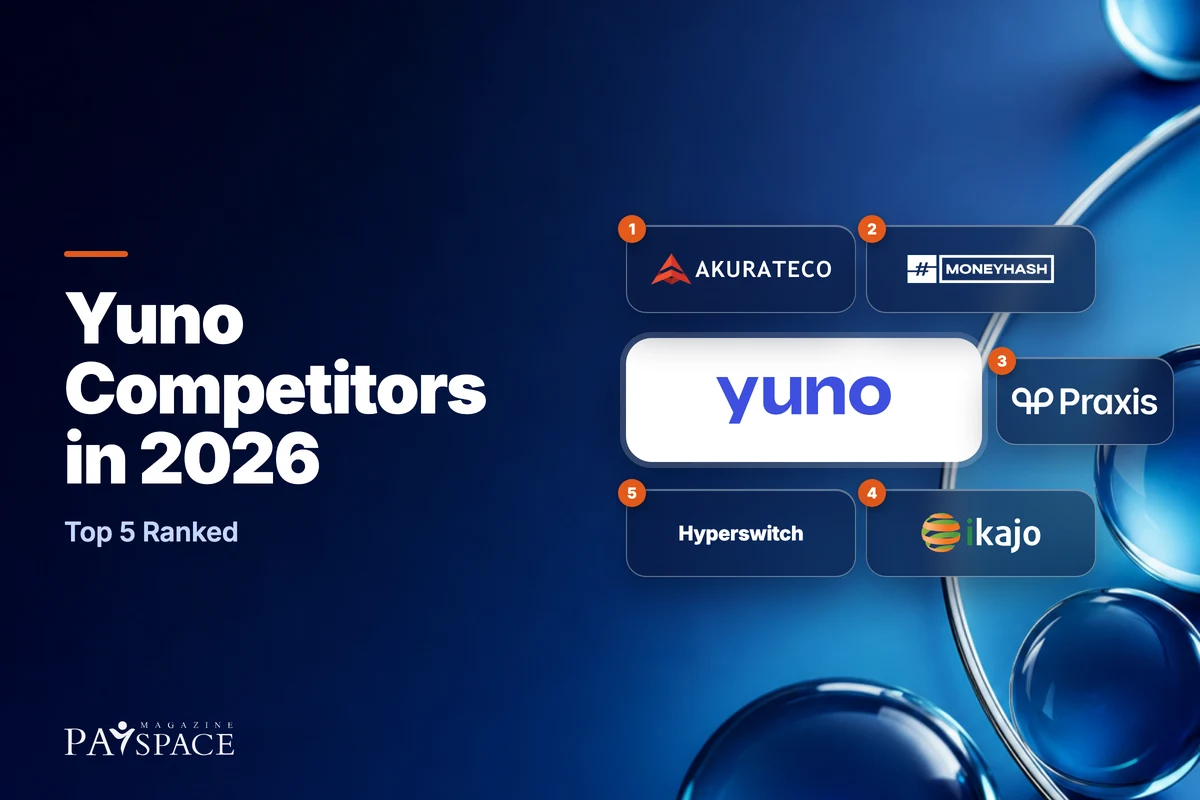
Yuno spent 2026 adding rails rather than rebranding itself into a powerpoint. That matters if you are comparing payment orchestration platforms for a high-risk stack, because the real question is no longer “who has the longest feature list,” but which vendor already reaches your markets, currencies, and risk profile.
- Yuno now positions itself as an AI-native intelligence system for global payments, but the product is still a payment orchestration stack first. Founded in Colombia, it offers one API for pay-ins, payouts, fraud prevention and stablecoins, plus multi-PSP routing, retries, account updater, network tokens, 3DS (3-D Secure) and reconciliation. Its integrations page now counts 1,000+ providers in 190+ countries, up from 460+ integrations in its August release, and its customer list includes McDonald’s, NetEase Games, GoFundMe, inDrive and Rappi.
- The pricing model is unusually public for this category. Yuno lists add-on unit prices in its price list image, including smart routing at $0.0101, network tokens at $0.0150, and a 3DS transaction at $0.0353. The Monthly Platform Fee is set in each order form. Tokens are removed on written request, and the receiver must hold a current PCI DSS Attestation of Compliance. For buyers, that means the commercial structure is partly visible, but not fully standardized across contracts.
- The contract terms are also public, and they are the sort of terms CFOs and PSPs actually read. Leaving early means paying all remaining monthly fees within 30 days. Renewal is automatic unless you give 60 days’ notice. Fees can rise up to 8% on renewal with your written agreement, and late amounts carry 1.5% a month. In other words: the sticker price is only the beginning of the spreadsheet.
- Most of Yuno’s 2026 expansion has been about adding specific rails in specific regions. On June 9 it announced Onafriq, whose network spans 43 African markets, after Flutterwave in April. On September 3 it added Revolut Pay and Revolut’s acquiring and gateway services, covering the UK, the EEA, Singapore and Australia. Cyclops arrived on September 30, giving access to 30+ stablecoin infrastructure providers. Coinbase acceptance followed on October 5. Yuno also closed a $45 million Series B on August 12, led by Global PayTech Ventures with Andreessen Horowitz and Tiger Global among the participants.
- If your buying criteria are about footprint and routing depth, the closest alternatives are not all trying to solve the same problem. The source points to Akurateco or a self-hosted Hyperswitch if you want your own infrastructure. MoneyHash goes deeper in the Middle East and Africa, naming regional banks. Praxis and Ikajo are positioned for regulated gambling and other high-risk business. Ikajo also stands out on price in this comparison, with a starting rate of 1.2%.
For high-risk merchants and PSPs, the useful comparison is not just feature count. Yuno is vendor-run in two regions, the US and EMEA, while some competitors are clearly built around local bank coverage or regulated gaming use cases. If your next market is already covered by Yuno, routing breadth may matter more than specialization; if your risk profile is the issue, the narrower players in this list may be the better fit.
Related news
All news →


Weekly high-risk digest
Regulation, sanctions and payment news across your verticals — once a week, free.
Please check your inbox and click the link to confirm your subscription.
Please enter a valid email address!