Zimbabwe tightens rules for crypto service providers, with registration, local offices, and Travel Rule checks now required

Zimbabwe has put new rules in place for virtual asset service providers (VASP), and the headline is simple: if you want to operate in the country, you now need a local footprint, registration with the FIU, and tighter compliance controls. For PSPs and crypto businesses, this is less about optics and more about whether a setup can survive the licensing process in the first place.
- Under an order from Zimbabwe’s Minister of Finance, Economic Development and Investment Promotion, Mthuli Ncube, VASPs must register with the Financial Intelligence Unit (FIU) at the Reserve Bank of Zimbabwe. The same registration requirement applies to traditional financial institutions.
- To operate legally in Zimbabwe, VASPs must open a Zimbabwean office, appoint at least two resident directors, and hire a local compliance officer. Directors and owners must have no criminal convictions, and companies must hold a valid tax clearance certificate. Registration certificates must be renewed annually.
- Submitting false information during registration can lead to a fine of up to $10 000 and criminal liability. Companies that fail to comply with the rules can be fined up to $50 000 for each violation.
- The rules also require compliance with the Travel Rule, meaning registered platforms must collect and transmit sender and recipient identification details for virtual asset transfers. In Zimbabwe, that threshold is $1000, so crypto platforms must exchange data including names and wallet addresses once transfers cross that amount.
- Operators that fail to identify and monitor risks tied to crypto mixers and other privacy-enhancing tools face a possible licensing refusal, suspension, or revocation.
For context: in 2023, Zimbabwe’s central bank announced the launch of a gold-backed state digital token, Zimbabwe Gold (ZiG), as a means of payment. The stated goal was to channel local investment into national assets rather than U.S. dollars.
Related news
All news →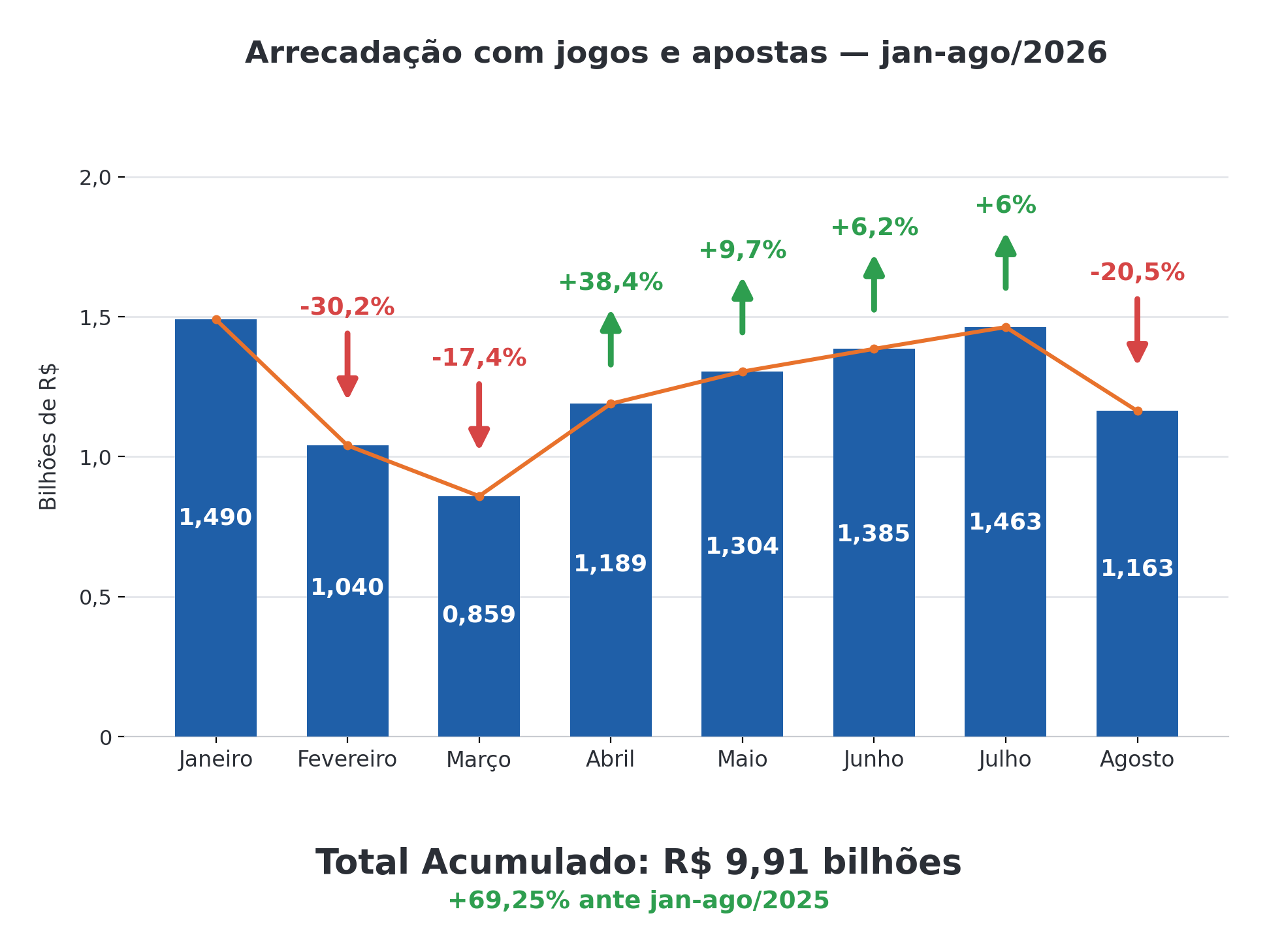
Brazil collected R$ 9.91 billion from betting and gambling taxes from January to August 2026

Sports betting sponsorships in Brazilian football reached R$ 1.03 billion in 2025 as clubs face R$ 17.3 billion in debt

First Dutch online gambling licence renewals confirmed ahead of 2026 expiry
Weekly high-risk digest
Regulation, sanctions and payment news across your verticals — once a week, free.
Please check your inbox and click the link to confirm your subscription.
Please enter a valid email address!