CNC sees Black Friday 2026 growth at 1.8% in Brazil as bets drop out of the story
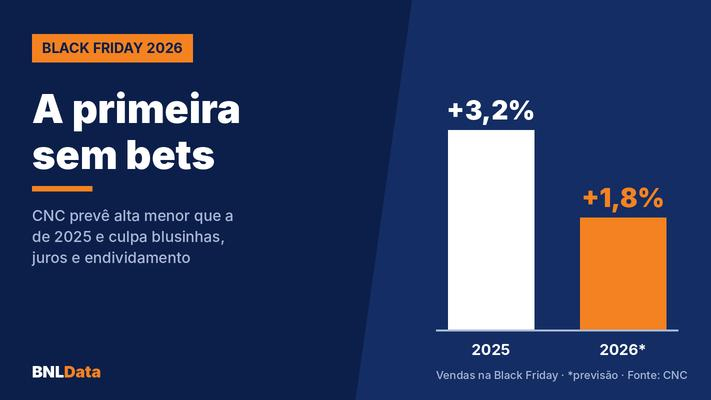
Brazil’s National Commerce Confederation (CNC) says Black Friday 2026 should grow 1.8%, the weakest pace in recent years, even though it is the first edition after regulated betting was taken offline. That matters for high-risk payments because the sector’s favorite excuse of “money going back to retail” is not showing up in the numbers.
- The CNC’s forecast puts Black Friday sales at R$ 11.52 billion, below the R$ 12.9 billion seen in 2014 in inflation-adjusted terms. For comparison, Black Friday sales rose 3.2% in 2025.
- Over the last 12 months, retail sales volume in Brazil rose 1.6%, according to the IBGE. That is down from 2.2% in 2025 and 3.6% in 2024. The CNC also says real income mass is slowing, which gives the forecast a more mundane explanation than the betting ban narrative that circulated earlier in the year.
- According to the CNC, the slowdown is now driven by three other factors: the end of the “taxa das blusinhas,” which Fabio Bentes said diverted spending to Asian platforms; high interest rates, with the Selic at 13.75% and personal credit around 61% a year; and household debt, with 29.6% of families behind on payments.
- What is missing from the CNC’s Black Friday 2026 study is the same “bets effect” that was used to explain lower delinquency in October. The report, as summarized by UOL, does not treat betting as a source of freed-up consumer spending or as a drag on retail demand.
- There is also a numbers problem in the study: it says foreign remittances totaled US$ 1 billion versus US$ 577 million in the same period of 2025, and labels that an 82% increase. That arithmetic does not check out; the same 82% figure also appears for the number of remittances, which suggests the two data points were mixed together.
For PSPs and acquirers watching Brazil’s high-risk flow, the practical point is simple: the spending narrative shifts with the month. When retail numbers are strong, the explanation is the betting ban. When they are weak, the blame moves to imported goods, interest rates, and debt. Meanwhile, the report’s own numbers suggest that the retail rebound story is not doing the heavy lifting anyone hoped for.
Related news
All news →


Weekly high-risk digest
Regulation, sanctions and payment news across your verticals — once a week, free.
Please check your inbox and click the link to confirm your subscription.
Please enter a valid email address!