Brazil’s central bank says it has not blocked any Pix account or payment institution over illegal betting since September 25

Nearly two months after Brazil’s government banned fixed-odds betting under Provisional Measure No. 1.394/2026, the two federal bodies supposed to cut off payments to illegal betting platforms have delivered no visible action. In a response under the country’s Access to Information Law, the Banco Central do Brasil said no payment institution has had its authorization revoked or denied for servicing betting operators, and that it has not blocked any account or Pix key tied to illegal betting.
- The Central Bank also said it has received no notifications from the Secretariat of Prizes and Bets (SPA) of the Ministry of Finance and has not blocked any account or Pix key for links to illegal betting. The final appeal decision was signed on Monday, November 16, by Izabela Moreira Correa, director of Citizenship and Conduct Supervision at the BC.
- The request was filed by BNLData on October 11, one day after the Presidency’s Social Communication Secretariat (Secom) published a report on returning balances to bettors and fighting illegal bets. The release did not say how many accounts had been blocked or how much money had been retained, which is usually the part the market actually cares about.
- The appeal asked the Central Bank for the number of accounts and Pix keys blocked since September 25, the amount retained, and the payment institutions notified, penalized, or derecognized for the same reason. In its first response, on October 28, the BC gave no data and said supervision of betting falls to the SPA, which does not have a centralized database of blocks and treats supervision information as confidential.
- Even so, the BC marked the answer as “partially granted access.” On the first-level appeal, decided on November 9, the bank explained how the government’s blocking framework was supposed to work. Resolution BCB No. 597, dated September 30, 2026, added the obligation to prevent transactions destined for fixed-odds betting to the Pix rules, and Resolutions BCB Nos. 590, 595 and 596 did the same for other payment schemes.
- In practice, the Central Bank pushed the operational burden down to banks and payment institutions. According to its response, each institution is responsible for setting its own procedures to identify and block those transactions based on SPA criteria. For further details, the BC pointed back to the SPA.
The government’s blocking flow was set out in Decree No. 13.033 of June 19, 2026, which regulates Article 21-A of Law No. 14.790/2023 and says the SPA must notify financial institutions, payment institutions, and other relevant parties. For PSPs active in Brazil, the useful takeaway is simple: the legal framework exists on paper, but the enforcement chain in this case has not produced public blocking figures, account freezes, or licensing actions from the Central Bank.
Related news
All news →
Brazil’s betting ban is a warning for LatAm, SOFTSWISS webinar panel says

Conor McGregor and 1xBet tease a new project as production starts at the bookmaker’s filming location
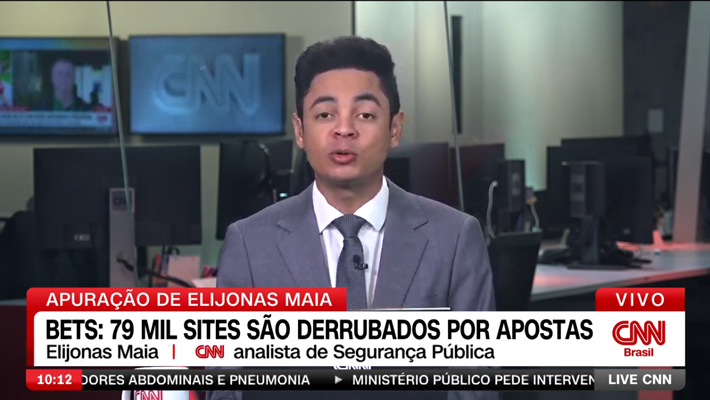
Brazil’s Justice Ministry says it has moved to take down nearly 80,000 betting-related sites and profiles after the MP ban
Weekly high-risk digest
Regulation, sanctions and payment news across your verticals — once a week, free.
Please check your inbox and click the link to confirm your subscription.
Please enter a valid email address!