Astana IFC Court bans six crypto platforms from operating without a licence in Kazakhstan, with app store restrictions to follow
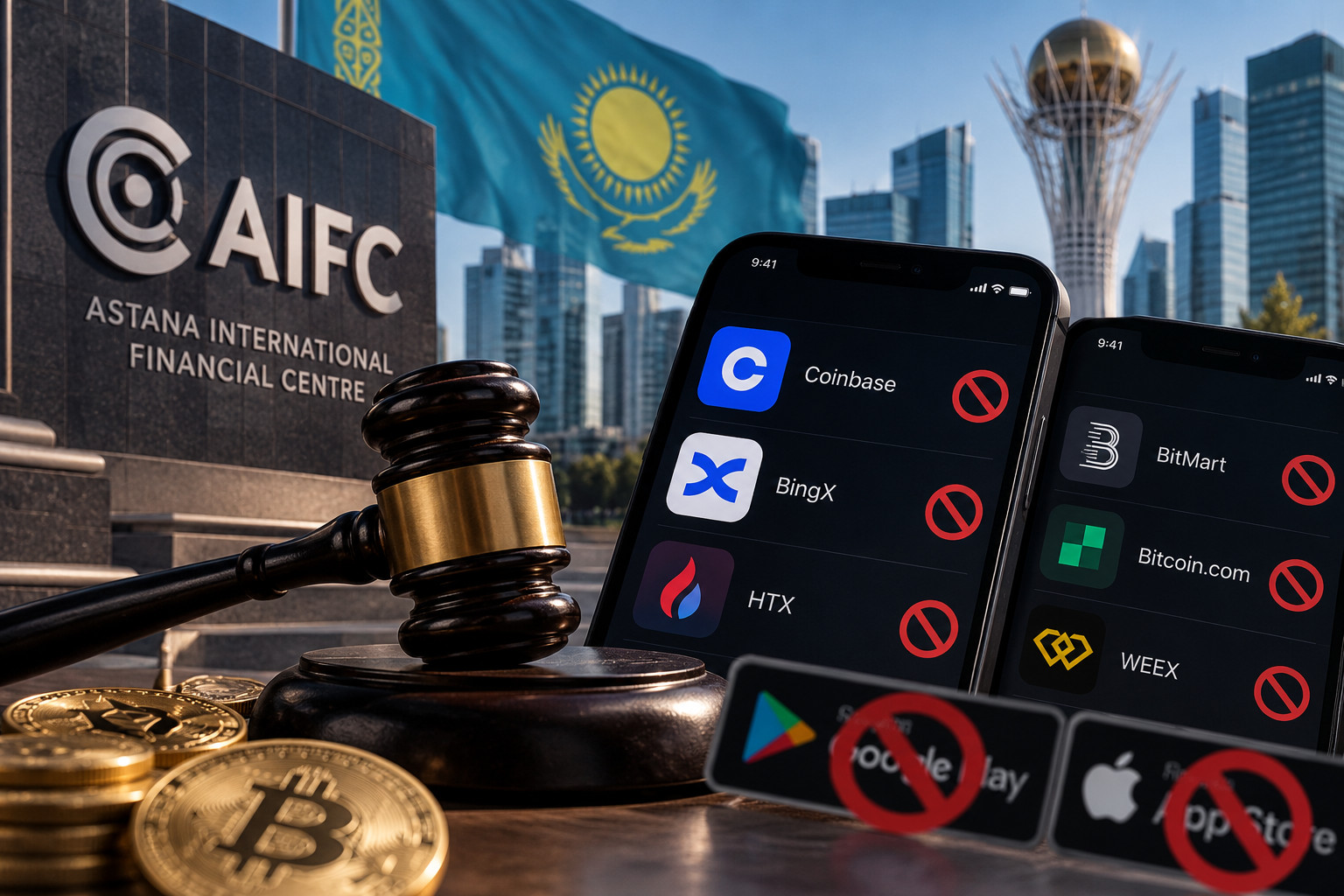
Kazakhstan’s Astana International Financial Centre (AIFC) Court has ordered six international crypto platforms to stop offering digital asset services without an AIFC licence. The order matters because it reaches beyond the platforms themselves: AFSA says the same decisions will be sent to Google Play and Apple App Store to restrict access geographically.
- On 15 September 2026, the AIFC Court granted the Astana Financial Services Authority’s (AFSA) claims against the operators of seven crypto platforms: BingX, Bitcoin.com, Huobi Global (HTX), BitMart, Coinbase, LBank and WEEX. The court prohibited them from providing, offering or advertising digital asset services within the AIFC without the relevant licence.
- The order also covers the distribution of mobile apps and access to those apps for the purpose of providing such services. In other words, the case is not just about a website being available; it is about the delivery channel as well, which is where app stores enter the picture.
- LBank later took its own steps to block access to its services in Kazakhstan. After that, on 18 September, the court amended its decision and removed LBank from the list. The remaining six platforms are now covered by the injunction.
- AFSA said the court decision also applies to Google and Apple as app store operators for the purpose of geographic access restrictions. The relevant court decisions will be sent to Google Play and Apple App Store. AFSA has not said that Google and Apple have already implemented those restrictions, so a full block of all six platforms in Kazakhstan is not yet confirmed.
- AFSA said its campaign against unlicensed crypto platforms began in 2025, when it sent written warnings to more than 20 platforms and explained the AIFC regulatory regime. In early 2026, it filed court claims against operators that continued without the required licence. As a result, nine crypto platforms voluntarily restricted access to their apps in Kazakhstan through Google Play and Apple App Store, and AFSA withdrew its claims against them. Another seven platforms said they intended to apply for an AFSA licence, but intent is not the same thing as a licence, which tends to be the part that matters.
The court said operating digital asset services without permission undermines the integrity of the centre’s regulatory system and creates unfair competition. For PSPs, acquirers and banking partners, the practical takeaway is simple: in Kazakhstan’s AIFC perimeter, app distribution and licence status are now part of the same enforcement picture.
Related news
All news →


Weekly high-risk digest
Regulation, sanctions and payment news across your verticals — once a week, free.
Please check your inbox and click the link to confirm your subscription.
Please enter a valid email address!