Brazil’s presidential candidates line up around tighter rules for bets, with Lula backing possible restrictions and Bolsonaro camp pushing social-benefit bans
/https://i.s3.glbimg.com/v1/AUTH_da025474c0c44edd99332dddb09cabe8/internal_photos/bs/2024/f/N/Y5FLuiTMW0fHg4CmFR4Q/ja-7529-1-.jpg)
Brazil’s presidential contenders are not saying the same thing about much, but on bets they are converging on a familiar playbook: tighter advertising rules, higher taxes, and in some cases a full ban on online betting. For PSPs and operators watching Brazil, the key point is that the market is already regulated, taxed, and now under active political pressure.
- Luiz Inácio Lula da Silva (PT), speaking to the podcasts Não Inviabilize and As Cunhãs, said his team is studying measures to restrict online sports betting. “If it depended on my personal will, we would end bets,” he said, adding that platforms should not be able to reach children through electronic devices.
- Lula said the issue is being reviewed with the Ministries of Finance, Planning, and Justice. He also pointed to his government’s Desenrola program in the same context, framing the debate around household debt and consumer spending rather than just gambling policy.
- The president also called ministers to discuss bets on Tuesday, one month after the Finance Ministry announced new advertising rules for the sector. Those rules include warnings about risks and a ban on comments that push bettors toward action or suggest “easy winnings” and a “sense of urgency.”
- Brazil regulated and started taxing the sector in 2023. At that time, the federal government required companies seeking legalization to pay a
R$ 30 millionconcession fee valid for five years. On Tuesday, the Secretaria de Prêmios e Apostas (SPA) of the Ministry of Finance ordered the suspension of betting sites linked to six companies after finding rule violations. - Flávio Bolsonaro (PL), Lula’s main opponent in the race for the presidency, included in his government program a proposal to ban the use of federal social-program funds on bets. That restriction already applies in Brazil since October 2025 for beneficiaries of Bolsa Família and Benefício de Prestação Continuada (BPC). His campaign document also calls for awareness campaigns and financial-education initiatives.
For high-risk payment providers, the signal from Brasília is straightforward: Brazil is not moving toward a lighter-touch market. The regulatory direction is toward tighter ad controls, more scrutiny of funding sources, and active enforcement against non-compliant sites.
Related news
All news →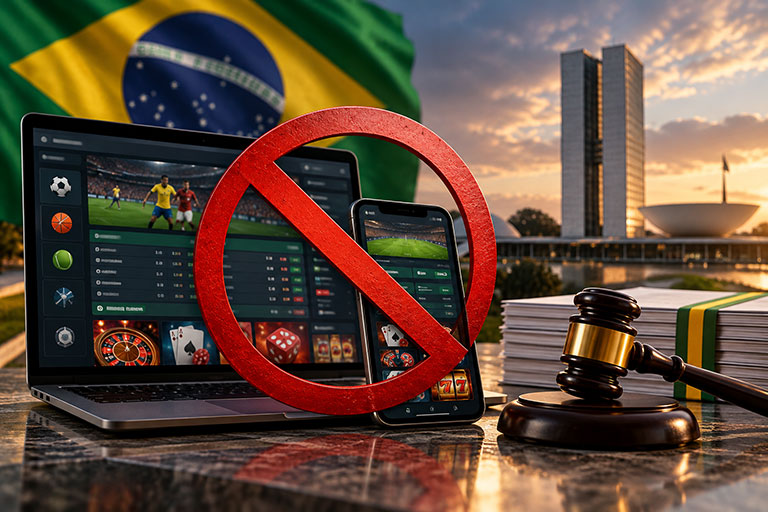
Brazil bans online fixed-odds betting nationwide as Lula signs Provisional Measure No. 1,394
/https://i.s3.glbimg.com/v1/AUTH_59edd422c0c84a879bd37670ae4f538a/internal_photos/bs/2026/Y/0/v2wti0SXaSBGcDyBzkuQ/montagem-two-rows-1280x720px.jpg)
Before the ban, what Brazil’s presidential candidates were saying about online betting
Brazil: Why a Quick Reversal of the Gambling Crackdown Should Not Be Expected, According to Ilya Machavariani
Weekly high-risk digest
Regulation, sanctions and payment news across your verticals — once a week, free.
Please check your inbox and click the link to confirm your subscription.
Please enter a valid email address!