Brazil police raid illegal betting network across DF and 5 states, target A55 and freeze up to R$ 3.483 billion
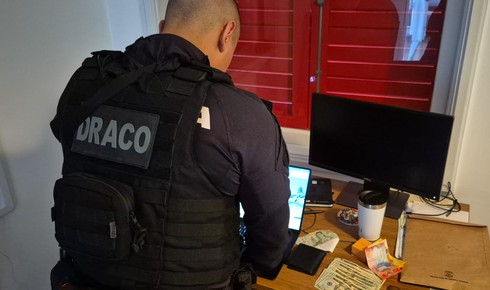
Police in Brazil say a network of illegal betting sites routed customer deposits through shell companies, then spread the money across people, businesses, and payment institutions. For PSPs and acquirers, the interesting part is not the betting front end — it’s the payment flow, the use of multiple front companies, and the reported conversion into cryptoassets.
- According to the investigation, payments made to the betting platform were sent to companies with declared business activities that had nothing to do with gambling. In Sobradinho, in the Federal District, police say funds were sent to a psychosocial care clinic and a tarot shop, while other destination addresses turned out to be empty properties or ordinary commercial premises.
- Police said the scheme used dozens of shell companies to receive payments, concentrate the funds, and redistribute them among individuals, companies, and payment institutions, including through conversion into cryptoassets. That is the kind of structure that usually matters most to payment teams: it is designed to make the merchant trail look normal until the money has already moved.
- The investigation also reaches A55 Sociedade de Crédito, a São Paulo-based fintech authorized by the Banco Central to operate as a direct credit company. In simulations carried out by the Ministry of Finance, PIX charges from the investigated sites led to numerous accounts of shell companies held at this fintech, and the fintech also held accounts of other entities involved in the scheme, with nominee rotation.
- Police said financial information related to the institution and companies in the same group indicated movement of about R$ 1 billion, including transfers to the investigated company and payments related to betting houses without authorization. On 30 July 2026, the Banco Central announced its intention to cancel the fintech’s authorization to operate.
- The operation covers search-and-seizure warrants and asset-freezing measures, with no arrest warrants issued. Searches were carried out in the Federal District, São Paulo, Goiás, Paraná, Ceará, and Rio Grande do Norte, and the Sobradinho guarantees court ordered the freezing of accounts and financial assets of 64 individuals and 120 legal entities up to a total of R$ 3.483 billion, plus the unavailability of assets held at institutions supervised by the Banco Central and the CVM.
For high-risk payment providers, the practical takeaway is straightforward: when a betting flow is split across dozens of third-party companies, the merchant-of-record story stops being useful very quickly. The exposure then sits with the accounts, the settlement chain, and whoever accepted the merchant structure without seeing the underlying payout pattern.
Related news
All news →
Vitalik Buterin says crypto exchanges are preparing for “bunker mode” as October hacks hit $6.48 billion

Argentine prosecutor seeks fraud charges and pretrial detention for Ariel Vallejo over Sur Finanzas money laundering case

Paraguay prosecutors seek preventive detention for Ueno Bank founder after intervention
Weekly high-risk digest
Regulation, sanctions and payment news across your verticals — once a week, free.
Please check your inbox and click the link to confirm your subscription.
Please enter a valid email address!