Adyen scanned $1.6 trillion in payments data and found fraud is falling, but concentrating
Adyen says payments fraud declined in 2025, even as the remaining losses became more concentrated in fewer identities and more dominated by first-party abuse. For PSPs, acquirers, and merchants in high-risk verticals, the useful part here is not the headline decline; it is the shape of the fraud problem, because that is what determines where controls, manual review, and decline logic actually need to sit.
- Adyen analyzed more than $1.6 trillion in payments data for 2025 and surveyed 1,000 U.S. merchants. Trevor Nies, Adyen’s global head of digital, described fraud as a moving target: “It’s like squeezing a balloon. It goes down in one area and it goes up in another.”
- According to Adyen, total fraud losses fell 20% in 2025 and average fraudulent dispute value fell 23%. But the company says fraud is also becoming more concentrated: just 5% of identities drive 58% of fraud value. Adyen also said there is an 84% chance that a consumer’s identity has appeared across multiple transactions, business payouts, or card transactions, which makes coordinated misuse easier.
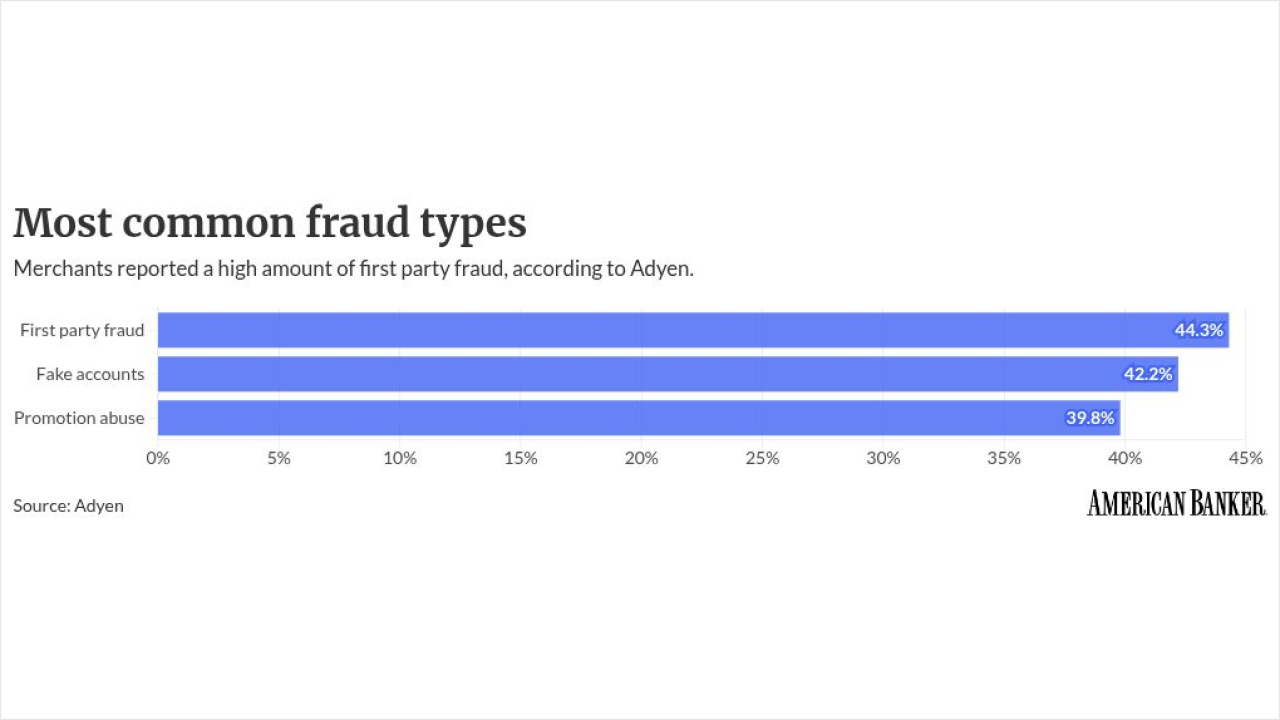
- The fraud mix is shifting toward identity abuse and first-party fraud. Adyen said fake accounts and identity abuse affect 42% of businesses, while 50% of merchants report false declines from blocking legitimate customers. Nearly 70% of businesses expect fraud and abuse to hurt revenue growth over the next two years, which is the part CFOs tend to care about after the chargeback report lands.
- First-party fraud, where a customer uses a legitimate identity to falsely dispute a legitimate purchase, is now the most common type of fraud, according to Adyen, with more than 44% of businesses reporting it. About two in five businesses also report consumer-oriented abuse such as “cycling promotions” and promotion abuse, including fake offers, free-trial exploitation, discounts, and loyalty-point abuse.
- Nies said AI cuts both ways. “In general, AI has done amazing things that help merchants actually fight fraud. But crooks also have access to these tools,” he said. In other words, the tooling is getting better on both sides, which is exactly why fraud programs that rely on static rules tend to age badly.
Adyen’s findings line up with broader market data. Javelin said in April that 20% of consumers had card payments declined in the prior year due to suspected fraud, but 70% said those declines were necessary to prevent broader fraud. For merchants and PSPs, the operational message is clear: false positives are still expensive, but so is being too permissive when identity abuse and first-party fraud are the main event.
Related news
All news →


Weekly high-risk digest
Regulation, sanctions and payment news across your verticals — once a week, free.
Please check your inbox and click the link to confirm your subscription.
Please enter a valid email address!