EU 21st sanctions package gives Brussels power to ban crypto-asset services from entire foreign countries as Russia moves to impose up to 3% fees on USDT and USDC
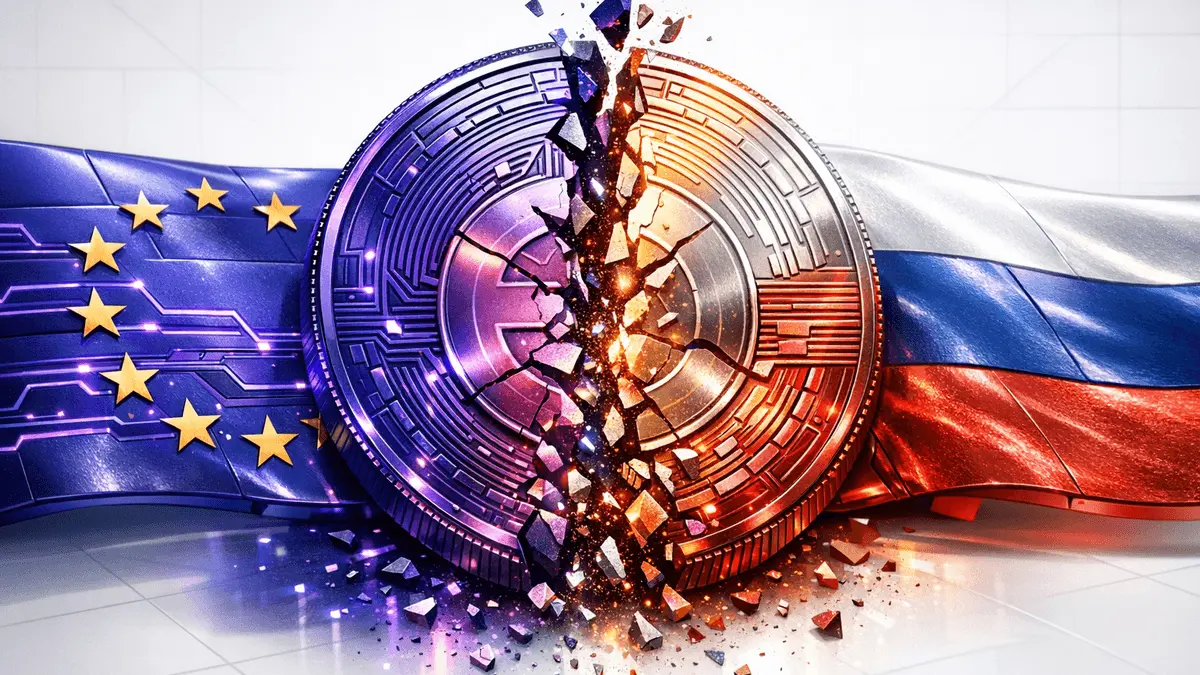
The European Commission has introduced a jurisdiction-level crypto sanctions tool in its 21st package against Russia, and Moscow answered the same day with punitive fees on Western-linked stablecoins. For PSPs, exchanges, liquidity providers, and settlement layers, the point is simple: the compliance question is no longer just which counterparty is in scope, but which country’s entire crypto stack can be cut off.
- On June 9, European Commission President Ursula von der Leyen announced the EU’s 21st sanctions package against Russia. Buried inside it is a new mechanism that would let Brussels impose a full third-country ban for crypto-asset services if a foreign jurisdiction is found to be helping Russia evade sanctions.
- The important shift is at the jurisdiction level. Earlier EU sanctions packages named specific exchanges, wallets, and individuals. This package goes further: if a country is deemed to be hosting platforms that facilitate Russia crypto sanctions evasion, the EU can designate that country’s crypto sector as off-limits to EU-regulated markets.
- Von der Leyen spelled out the intent plainly: “For the first time we will introduce the possibility of a full third country ban for crypto-asset services. It will act as a strong deterrent for the countries hosting platforms that help Russia evade our sanctions.” In practice, that means any exchange, liquidity provider, or settlement layer touching the banned jurisdiction could be cut off from European counterparties.
- Hours later, on the same calendar day, Russia’s Deputy Finance Minister Ivan Chebeskov spoke at SPIEF 2026 and announced punitive fees of up to 3% on Western-linked stablecoins including USDT and USDC. So the market is now seeing reciprocal pressure from both sides: the EU is building a country-wide exclusion tool, while Russia is making Western stablecoin rails more expensive to use.
- The jurisdictions named in the source as major intermediary hubs for Russian crypto flows include Turkey, UAE, Kazakhstan, and Hong Kong. For high-risk operators, those are not abstract geographies; they are the places where routing, liquidity, and compliance controls can suddenly become policy-sensitive overnight.
The thing to watch here is not just sanctions policy, but the operating model underneath it. If a regulator can now target an entire foreign crypto sector, PSPs and exchanges need to think in terms of country exposure, not just merchant exposure. That is a very different spreadsheet.
Related news
All news →


Weekly high-risk digest
Regulation, sanctions and payment news across your verticals — once a week, free.
Please check your inbox and click the link to confirm your subscription.
Please enter a valid email address!