Brazil’s central bank moves closer to exporting Pix to other countries
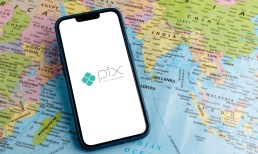
Brazil’s central bank now sounds more confident that Pix will be linked with instant payment systems in other countries, a shift that matters well beyond local rails. For PSPs and acquirers, cross-border instant payments are no longer a theoretical talking point: the bank is framing them as a way to cut costs, speed up settlement, widen access, and make cross-border flows more transparent.
- Reuters reported Monday, August 10, 2026, that Brazil’s central bank said in a Monday report that connecting Pix with other instant payment systems could lower costs, accelerate transactions, broaden access and improve transparency in cross-border payments.
- That is a firmer stance than in 2023, when the central bank said only that Pix “may in the future” be integrated with other countries’ instant payment systems. The wording matters: on paper that is a policy note, in practice it is the difference between a distant possibility and an active interoperability agenda.
- The PYMNTS Intelligence report Digital Developments: Charting Digital Payment Growth in Latin America said Pix has helped instant payments become table stakes in Latin America, delivered unprecedented growth, and become one of Brazil’s most preferred payment methods. It also said Pix has significantly boosted financial inclusion by encouraging the opening of digital accounts across all societal segments and integrating more individuals into the financial ecosystem.
- Ebanx said in February that it expects Pix to account for 45% of Brazil’s online sales by the end of 2026 and 50% in 2028, up from 42% in 2025. Ebanx Chief Product Officer Eduardo de Abreu said there had been “a lot of trust-building among consumers around Pix, combined with wider availability on websites.”
- The political backdrop is already noisy enough for payments teams to notice. In July, U.S. Trade Representative Jamieson Greer named Pix an obstacle to trade when justifying 25% tariffs on imports from Brazil that went into effect in late July. A senior official in the Trump administration told Reuters: “We’re not asking Brazil to get rid of Pix,” while Brazil officials said the criticism is meant to protect U.S. credit card companies.
For high-risk merchants and PSPs, the practical takeaway is straightforward: Pix is no longer just a domestic alternative payment method in Brazil. If Brazil keeps pushing interoperability, Pix starts looking more like a cross-border payment rail with policy weight behind it, which is exactly the sort of thing acquirers, wallets, and processors have to plan around early.
Related news
All news →/https://i.s3.glbimg.com/v1/AUTH_da025474c0c44edd99332dddb09cabe8/internal_photos/bs/2026/a/4/JZgMamSDu4CIUNPUsAQg/116359810-ec-rio-de-janeiro-rj-25-09-2026-fim-das-bets-no-brasil-local-gavea.-footo-marcelo.jpg)
:strip_exif()/i.s3.glbimg.com/v1/AUTH_da025474c0c44edd99332dddb09cabe8/internal_photos/bs/2026/B/5/oVATTjQpWcrAszB1Lm8w/116363444-sao-paulo-25-09-2026-bets-proibicao-o-presidente-luiz-inacio-lula-da-silva-pt-a.jpg)

Weekly high-risk digest
Regulation, sanctions and payment news across your verticals — once a week, free.
Please check your inbox and click the link to confirm your subscription.
Please enter a valid email address!