Lula Bets on Games as Brazil Regulates a Sector That Also Runs on Gambling Mechanics
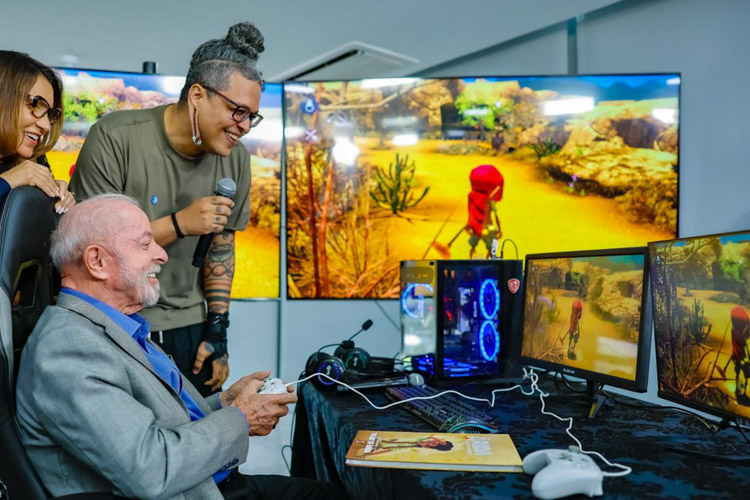
One day after Brazil’s Ministry of Justice compared loot boxes to betting, President Lula signed Decree No. 13.138/2026 regulating the Legal Framework for the Electronic Games Industry. The government is presenting games as a clean creative sector, but its own ministries and Congress have already treated parts of the business as gambling-adjacent.
- On Wednesday (14), Lula signed the decree at Palácio do Planalto to implement Law No. 14.852/2024. The package was branded Desenvolve Gamers Brasil and includes support through Ancine and the Audiovisual Sector Fund, a program called Rouanet Games, simplified registrations with INPI, and a public platform, Game Brasil, to promote Brazilian games.
- The timing matters. The ceremony was aimed at a young audience, three months before the end of Lula’s term and during an election climate. At the same time, the same government had recently issued a provisional measure to ban fixed-odds betting, while presenting games as harmless, creative and innocent. For operators, the point is simple: political treatment can shift fast, and sectors that look socially acceptable on paper can still get wrapped into the same regulatory logic as betting.
- Brazil’s betting industry has already seen that script. The government invited companies to invest, charged R$ 30 million for each licence, required a local headquarters, certified technology and responsible gaming rules, and collected the money. After that, the tone changed, and companies that complied with Law 14.790 became the villains in the presidential narrative. That is the part PSPs and acquirers care about: regulatory compliance does not always buy political durability.
- The Ministry of Justice made the contradiction explicit on Tuesday (13), when it sent a technical note to the National Data Protection Authority (ANPD) asking for oversight of six games with loot boxes, or paid reward boxes with random prizes. According to the ministry, these games expose children and adolescents to risks similar to betting. The note links loot box purchases to problem gambling, depression, anxiety, impulsivity and financial harm. The games are rated 18+, but do not verify user age, which means minors can still pay for random prizes in practice.
- Another ministry note, prepared with UNESCO, goes further and says the videogame industry includes commercial practices similar to gambling, including betting with virtual items, and connects them to gambling disorder, the same condition the government associates with bets. Congress has already moved in the same direction: Law No. 15.211/2025, the ECA Digital, bans loot boxes for minors. In other words, Brazil’s state institutions have already treated this mechanic as betting-like, even if the presidential speech still pretends otherwise.
The article also points to a concrete abuse case in Brazil: an 8-year-old boy, the son of a businessman, spent about R$ 40,000 in three days buying coins. For payment providers, that is the part of the story that matters more than the rhetoric: if a product depends on minors, random rewards, virtual items and card-funded microtransactions, regulators will not keep the “just games” framing for long.
Related news
All news →:strip_exif()/i.s3.glbimg.com/v1/AUTH_59edd422c0c84a879bd37670ae4f538a/internal_photos/bs/2026/o/D/vLtFB3T1qgmgtx2HPt7w/37447615496-4cb71e3490-k.jpg)

Weekly high-risk digest
Regulation, sanctions and payment news across your verticals — once a week, free.
Please check your inbox and click the link to confirm your subscription.
Please enter a valid email address!