Changpeng Zhao Says Binance Leadership Complacency Helped Enable a USD 6.3 Billion Attack
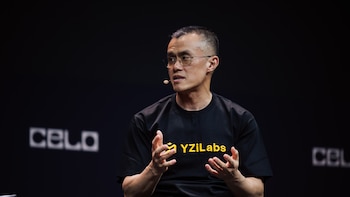
Binance founder and former CEO Changpeng Zhao used the close of Binance Blockchain Week in Bangkok to make a blunt point: internal complacency, employee-targeted social engineering, and AI-assisted analysis all helped attackers get through. For PSPs and exchanges, the useful part is not the mea culpa itself, but the operating lesson: security drift is enough to turn a mature stack into a soft target.
- Zhao said the attack on Binance was driven by a combination of internal complacency, a campaign directed at employees, and the use of artificial intelligence to speed up system analysis. Speaking at the Queen Sirikit National Convention Center during the first day of Binance Blockchain Week in Thailand, he asked companies in the sector to share information and build a security alliance to respond to incidents.
- He framed the incident as a warning for the wider crypto ecosystem, telling the audience: “Let Binance be the alarm. Don’t let it happen to you.” The line was delivered on Saturday 28 November during a conversation with Gareth Jenkinson, head of multimedia content at The Block.
- Zhao also said Binance had protected users and handled communications during the incident, but admitted that security had not received enough attention from senior leadership. “In my perception, the Binance team and the ecosystem became a bit complacent,” he said, adding that procedures were not constantly renewed or updated and that senior leaders were too focused on other matters.
- Zhao is no longer in Binance’s management. He resigned as CEO in November 2023 after pleading guilty in the United States to failing to maintain an effective anti-money laundering program, as part of a settlement that ended a US investigation into the company. The deal included USD 4.3 billion in penalties for Binance and a personal fine of USD 50 million for Zhao.
- Richard Teng took over executive leadership after Zhao’s departure. Zhao kept his controlling stake in the company, but the settlement imposed an independent compliance monitor and limited his role in Binance’s operations. In Bangkok, he appeared as founder and shareholder, not as part of the company’s executive management.
Zhao said the attackers had contacted around 1,000 employees or more using real recruiters and fake approaches, which is the part high-risk operators should notice: the weak point was not a single system, but a sustained attempt to work through people and processes. That is usually how these things go on paper and in practice.
Related news
All news →


Weekly high-risk digest
Regulation, sanctions and payment news across your verticals — once a week, free.
Please check your inbox and click the link to confirm your subscription.
Please enter a valid email address!