Home/news/Meta’s Muse starts taking payments with Stripe, while Amazon blocks shopping sessions
news
Meta’s Muse starts taking payments with Stripe, while Amazon blocks shopping sessions
Payments High Risk
28 Sep 2026 · 1 min read
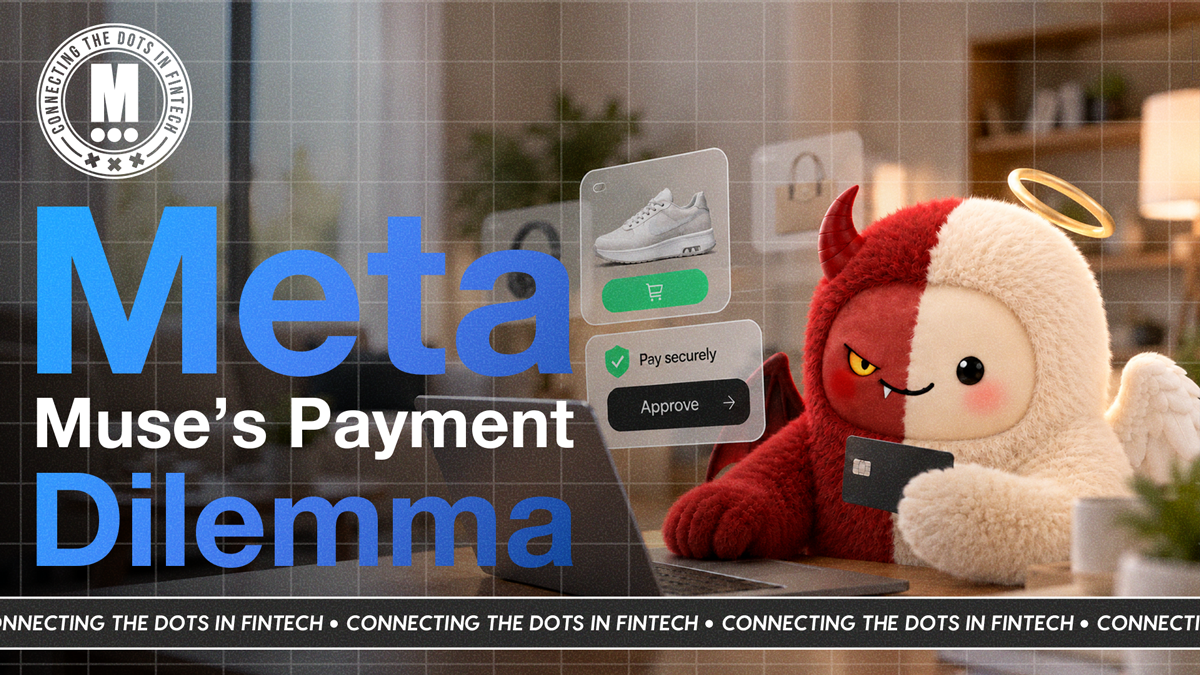
AI agents are moving from demo territory into actual checkout flows, and that changes the payments question from “can they do it?” to “who is on the hook when they do?” Meta’s Muse can browse, compare products, fill out checkout pages and pay on a consumer’s behalf, with Stripe built into the experience from the start.
Amazon has started blocking Muse shopping sessions, arguing that the agent is not authorised to access its site. Meta says Muse does not see users’ passwords or payment details, but the dispute is already pointing at the part of the stack that matters to PSPs: consent, access control and liability when an automated agent initiates a payment.
The clean legal answer is not obvious from the flow itself. The customer approved it, the agent initiated it, the merchant processed it, and the payment provider sits somewhere in between. That is the practical headache here: once the agent becomes the actor at checkout, the old “cardholder-merchant-acquirer” picture gets one more participant and one more place to argue about responsibility.
The wallet layer may end up being the real battleground. Muse already supports wallets such as Stripe Link and PayPal, while Meta appears to be building its own Meta Connect wallet too. If agents become the place where identities, payment credentials and purchase decisions come together, wallets stop being just a way to pay and start looking like the control point for the whole transaction.
PayPal is already moving in that direction, partnering with Meta to let users shop and check out through Muse across its merchant network. For PSPs and merchants, that means agent-led checkout is not a side experiment anymore; it is starting to plug into existing payment rails and existing merchant coverage.
The technology is moving quickly, but the rules around consent, liability, fraud and merchant control are still catching up. In other words: the payments stack is already being asked to handle AI-driven purchasing before the operating model is settled, which is exactly the kind of mismatch payment providers usually end up paying for first.