Brazil’s MP 1.394 cut visible online casino demand by 95%, but 87 brands were still operating 45 days later
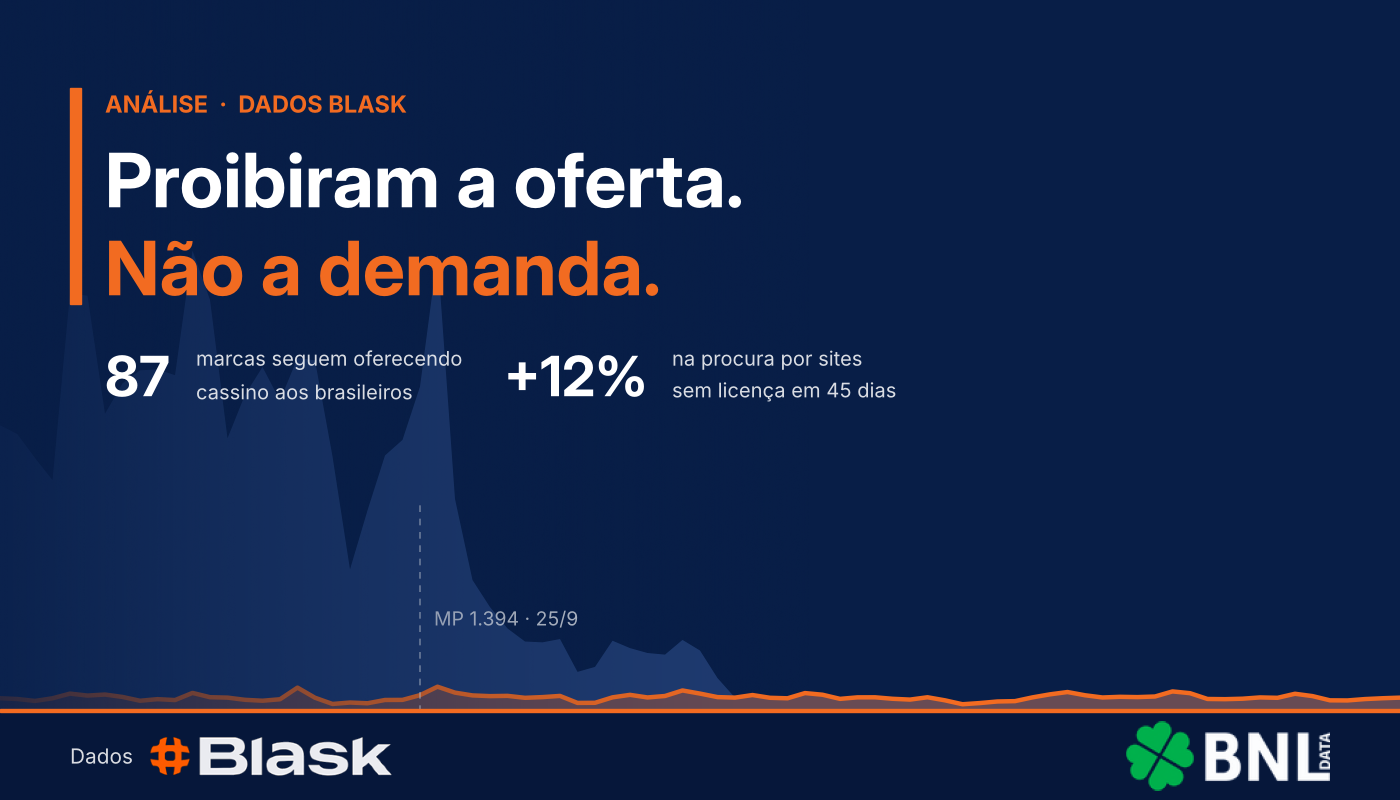
Blask’s report on the 45 days after MP 1.394 shows the gap between what a ban can suppress and what it can’t. Visible search demand for casino brands collapsed, but unlicensed operators kept filling the market, and the demand itself did not disappear.
- The headline number is a 95% drop. Before the MP, searches for betting brands in Brazil totaled about 5.4 million per day in the Blask Index. In November, that figure was 262,000. Brazil, which had 26 times Mexico’s demand, was reduced to Mexico’s size in the index.
- Blask’s own framing matters here: the index measures searches for brand names, not access, deposits, or revenue. In other words, it captures the player who looks for the bet. After the ban, the logic flipped: the bet started finding the player, through social networks, Telegram and WhatsApp groups, links, bonuses, and invites that do not require anyone to type a brand name into a search bar.
- The demand did not vanish. Searches for unlicensed brands increased 12% in the 45 days after the MP, reaching 265,000 searches per day, with a peak of 442,000 on September 26, one day after the measure. On November 21, 87 brands were still offering Gates of Olympus, the most widely distributed game in the country.
- Fifteen of those brands, including 1xSlots, Wazamba, Verde Casino, and PlayZilla, arrived after the prohibition. 1win increased its search volume 5.9 times and came to account for 27% of unlicensed demand. Eight international brands grew from 31% to 62% of that market.
- The operators that disappeared from the visible market were the licensed ones: those that paid the concession fee, collected taxes, and reported to the Secretaria de Prêmios e Apostas. The brands that remained, or arrived later, operated from outside Brazil and without any of those obligations.
Blask also says the ban changed the game libraries. In April, Brazil stood out in Latin America for crash games such as Aviator and for PG Soft, the company behind the Fortune series. Both dropped sharply: Aviator fell from 2nd to 99th place among the most distributed games, while PG Soft’s share of lobby content fell from 11.1% to 4.2%, and Fortune Tiger moved from 147 to 29.
Related news
All news →
Weekly high-risk digest
Regulation, sanctions and payment news across your verticals — once a week, free.
Please check your inbox and click the link to confirm your subscription.
Please enter a valid email address!