Blask Index: Brazil’s casino lobby lost its local accent after 45 days of unregulated market
Blask’s data suggests that after MP 1.394, branded betting searches in Brazil fell 95%, demand for unlicensed sites rose 12%, and the casino lobbies left standing stopped looking distinctly Brazilian. For PSPs and operators, that is the important part: when a regulated market is switched off, traffic does not simply vanish — it reappears in a smaller, more international-looking unlicensed layer.
- Blask tracked the 45 days after MP 1.394 took effect on 25 September, comparing branded demand and casino lobby content with the weeks before the ban and with Mexico, Argentina, Chile, and Peru. The company’s Blask Index measures demand for iGaming brands using normalized search data, so it captures how often people search for brand names rather than traffic, deposits, or revenue.
- Licensed brands in Brazil averaged 5.2 million in the daily Blask Index between 2 and 24 September. Unlicensed brands tied to Brazil averaged 236,000, or about 4% of the market. In the eleven days between the measure and the shutdown deadline, from 25 September to 5 October, licensed brands fell to 2.3 million per day. In the week after their sites were blocked, from 6 to 12 October, they dropped further to 745,000.
- From 13 October, Blask stopped classifying licensed brands as operating in Brazil. By then, the licensed market had effectively disappeared from the company’s dataset, while the unlicensed segment had become the only visible branded layer left in the country.
- Demand for unlicensed brands peaked on 26 September, the day after the measure, at 442,000. Over the 45-day period it averaged 265,000 per day, 12% above the pre-ban level. In the first 20 days of November, the average was 262,000, which suggests the post-ban floor settled quickly rather than retracing back toward the old market structure.
- Total branded demand in Brazil fell from about 5.4 million per day before the ban to 262,000 in November, a 95% drop. At that level, Brazil is now roughly in line with Mexico at 260,000 per day in November and Chile at 253,000, and below Argentina at 509,000, Colombia at 539,000, and Peru at 916,000. Before the ban, Brazil’s daily demand was 26 times Mexico’s.
The lobby mix changed just as sharply. Crash games and the PG Soft Fortune series, the two elements that made Brazil stand out from the rest of Latin America in Blask’s April analysis, dropped out of the most widely distributed titles. In April, Brazil was the only market in the region with crash games among the top 30; today it is the only one of the five without them. The casino lobbies that remain are less local and more international, with Aviator and Fortune Tiger no longer doing the same work they used to.
Related news
All news →
TRF5 restricts LOTEP draws to Paraíba and gives capitalisation room to breathe
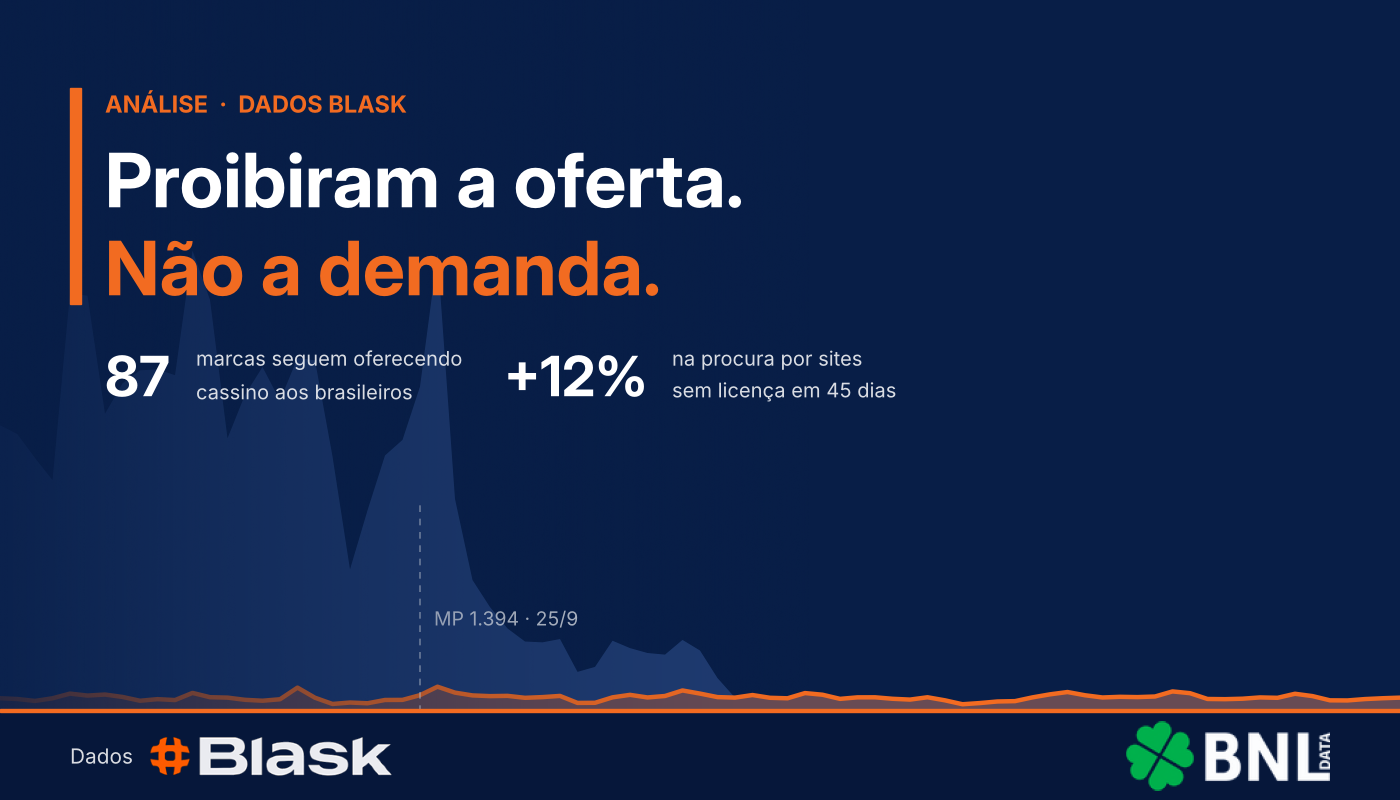
Brazil’s MP 1.394 cut visible online casino demand by 95%, but 87 brands were still operating 45 days later
Russia’s central bank is building a mechanism for banks to identify dropper cards and block transactions
Weekly high-risk digest
Regulation, sanctions and payment news across your verticals — once a week, free.
Please check your inbox and click the link to confirm your subscription.
Please enter a valid email address!