Bets paid R$ 1.1 billion to Brazil’s biggest football clubs in 2025
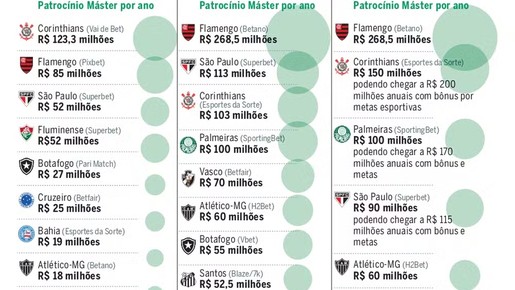
Brazil’s top-flight clubs now draw about 7% of their sponsorship revenue from betting companies, and the sector is on track to move about R$ 1.1 billion through Brazilian football in 2026. That matters because a federal move to ban betting activity could leave 14 of Serie A’s 20 clubs staring at broken master-sponsorship deals.
- According to the data in the report, 14 of the 20 Serie A clubs have master sponsorship contracts with betting companies. If the government’s ban takes effect, those agreements could be terminated, which is the part that will keep club treasuries and sponsors busy reading contract clauses instead of press releases.
- The betting market moved about R$ 523 million in 2024, and in 2026 it is expected to move about R$ 1.1 billion in Brazilian football, roughly the same level as the previous season. In 2024, 18 of the 20 first-division teams had betting brands on their shirts, and betting firms also took naming rights to major national competitions.
- The GLOBO’s breakdown says no betting contract accounts for more than 13% of any participant’s budget. Across Serie A, betting sponsorships make up only about 7% of total club revenue from sponsorships, using gross 2025 budgets and fixed contract amounts, excluding bonuses.
- Flamengo has the largest betting deal in Brazilian football history: Betano pays R$ 268.5 million per season. Flamengo also posted the biggest revenue ever recorded in the country, with R$ 2.089 billion in gross revenue in 2025, so the betting deal equals 12.85% of its latest budget.
- Two other clubs sit above the 10% mark: Corinthians at 10.6% and São Paulo at 10.5%. Superbet pays São Paulo R$ 113 million a year, while Esportes da Sorte pays Corinthians R$ 103 million. The rest of the table keeps falling from there: Atlético-MG at 7.8%, Santos at 7.7%, Bahia at 7.1%, Vasco at 6.8%, Grêmio at 6.7%, Internacional at 6.4%, and Vitória at 6%.
The useful takeaway for PSPs and acquirers is not just the headline number. A ban would hit a sponsorship stack that already sits inside club budgets, broadcast-facing assets, and naming-rights contracts, which is exactly the sort of web that turns regulatory action into payment and settlement headaches fast.
Related news
All news →
Weekly high-risk digest
Regulation, sanctions and payment news across your verticals — once a week, free.
Please check your inbox and click the link to confirm your subscription.
Please enter a valid email address!