Illegal gambling money laundering probe in La Plata targets a detained Buenos Aires official and more than $27.149 billion in alleged flows

La Plata prosecutor Betina Lacki has ordered new measures to determine who Albertina Mangini was taking orders from, and how much decision-making power the financiers arrested with her actually had. For PSPs, e-money operators, and crypto businesses, the detail that matters is the mechanism: alleged laundering through a hierarchy of nominee accounts, biometric data capture, and high-risk payment rails.
- Lacki is considering asking guarantees judge Agustín Crispo to turn the arrests into pretrial detention over a laundering scheme that allegedly moved more than $27.149 billion.
- The investigation describes a hierarchical organization with functional division of tasks. Lacki says Mangini, Mauro Perrotta, Juan Ignacio Campoli Sillero, Catriel Taubenschlag, Cristian Alejandro Scigliano, and Ignacio Leonel Marchioni are allegedly co-authors of the crimes under review, each with a specific role in the circuit. So far, only Mangini, Perrotta, and Marchioni are detained. Crispo has said there is not yet enough evidence to detain the others.
- According to the prosecutor’s theory, Mangini used her position in the Buenos Aires provincial government’s Office of Coordination with the Patronato de Liberados to identify people in financial vulnerability or under judicial supervision and offer them money in exchange for handing over personal and biometric data. Those people then became “financial mules,” nominal holders of Ualá, Mercado Pago, and PayPal accounts used to move illicit funds.
- Lacki says Mangini did not act sporadically. Her filing points to repeated cases involving several former prisoners and says she used her role in the Patronato de Liberados to reach potential victims. The file also cites a transfer Mangini allegedly made to one of the former prisoners after collecting that person’s biometric data.
- The next alleged link is Mauro Perrotta, whom the prosecutor describes as the “central core or operational node” of the scheme. Several intermediaries — identified in the case as “Valentina,” “Kiara,” “Lucrecia,” and “Luciana” — would have operated under his supervision. Marchioni, described as an “umpire” in crypto buying and selling, held an account at Sur Finanzas and closed it after a suspicious activity report was filed with the Unidad de Información Financiera (UIF). Lacki also asked UIF chief Matías Alvarez to cooperate, but he has not responded yet.
The high-risk angle here is straightforward: the case combines account farming, biometric capture, fintech wallets, and crypto-related activity inside a single alleged laundering chain. For PSPs and acquirers, that is exactly the kind of fact pattern that turns KYC weaknesses into regulatory and counterparty risk.
Related news
All news →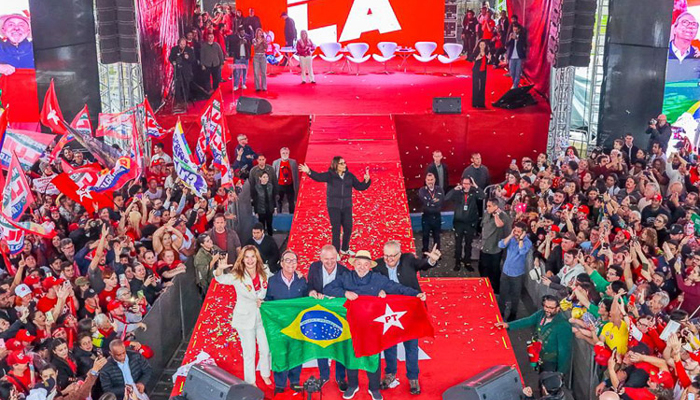
Lula repeats pledge to “end bets” in Santa Catarina, while Brazil’s own data points to a regulated market worth R$ 37 billion in GGR
Curacao Gaming Authority says its online gaming portal was hacked; scope of the damage is still being assessed
Argentina to share crypto transaction data, Philippines blocks 8,000 accounts tied to illegal online casinos, and Australia fines Dabble Sports over self-exclusion breaches
Weekly high-risk digest
Regulation, sanctions and payment news across your verticals — once a week, free.
Please check your inbox and click the link to confirm your subscription.
Please enter a valid email address!