With licensed betting operators out, Brazil loses the bettor trail in match-fixing cases, IBIA says
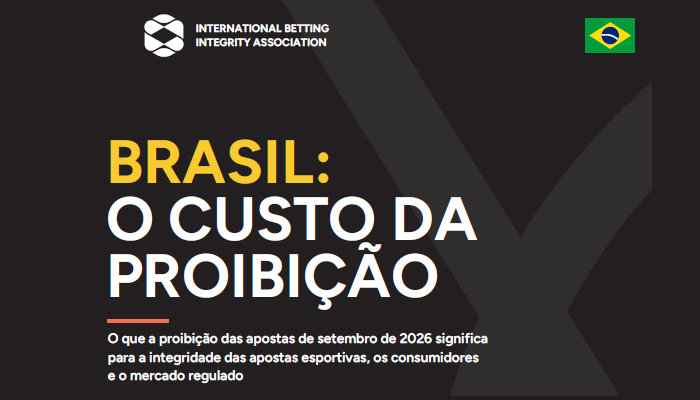
The International Betting Integrity Association (IBIA) says Provisional Measure 1.394/2026 tears up Brazil’s national match-fixing enforcement layer. Its point is practical, not rhetorical: once licensed operators are no longer required to report suspicious betting, investigators lose the account-level data that helps connect a betting pattern to a person, a match, and a case.
- The IBIA’s October report, Brazil: the cost of prohibition, says suspicious betting alerts in Brazilian sport rose from 7 in 2024 to 25 in 2025, the first regulated year. The association frames that jump as a result of licensed operators monitoring customers and reporting suspicious activity, not as proof that match-fixing suddenly got worse.
- From 2021 to 2024, before regulated betting, IBIA recorded an average of 11 alerts a year in Brazilian sport. Across 2021 to 2025, it logged 68 alerts in Brazil across eight sports. Football accounted for 51 of them, followed by basketball with 6 and tennis with 6, plus one each in futsal, American pool, table tennis, volleyball, and beach volleyball. In 2025 alone, football generated 19 of the 25 alerts, with basketball on 5.
- Under the regime that started in January 2025, operators authorized by the Secretariat of Prizes and Bets (SPA/MF) were required to monitor customers, report suspicious bets, and join an independent integrity monitoring body. The thing is, that framework did more than create paperwork: it created a reporting obligation and a usable trail of data. With the prohibition, IBIA says no operator is now required to notify Brazilian authorities of suspicious bets.
- IBIA says the new setup removes three things at once: the duty to report suspicious betting, the evidence trail regulators and police relied on, and access to customer and betting-account data used in investigations. It also says the regulated-monitoring model supported sports sanctions and criminal cases in Brazil, including recent convictions.
- The criticism landed one day after Brazil’s Ministry of Justice created a division inside the Federal Police to crack down on illegal betting and match-fixing. So the policy signal is doing that familiar Brazilian regulatory dance: one arm creates an enforcement unit while another strips out the reporting infrastructure that makes enforcement work.
The IBIA document is only five pages, but the mechanism matters for high-risk operators and their payment stacks. In sports betting, the value of licensed rails is not just acceptance and settlement; it is also the data trail that lets operators, regulators, and law enforcement separate suspicious flow from ordinary handle. Take that away, and you do not get more visibility. You get less.
Related news
All news →
:strip_exif()/i.s3.glbimg.com/v1/AUTH_59edd422c0c84a879bd37670ae4f538a/internal_photos/bs/2026/o/D/vLtFB3T1qgmgtx2HPt7w/37447615496-4cb71e3490-k.jpg)

Weekly high-risk digest
Regulation, sanctions and payment news across your verticals — once a week, free.
Please check your inbox and click the link to confirm your subscription.
Please enter a valid email address!