Brazil’s iGaming U-turn: when regulation becomes regulatory risk
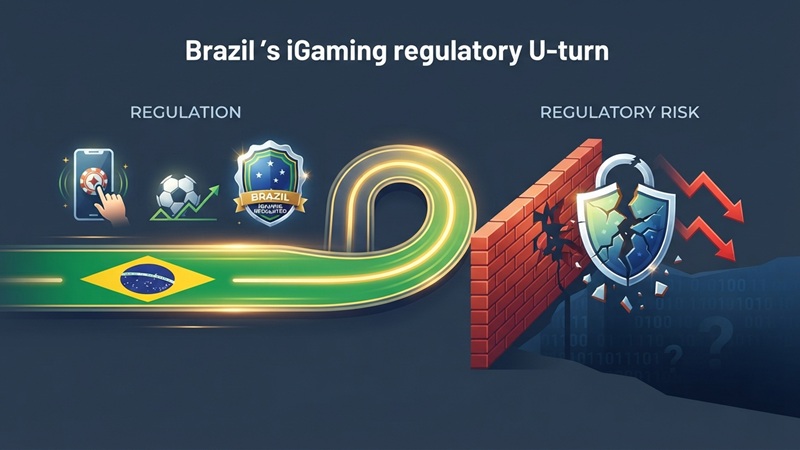
Brazil has done something that matters far beyond its own market: it built a regulated fixed-odds betting regime, opened it on January 1st, 2025, and then effectively shut it down on September 25th, 2026. For PSPs, acquirers, and operators, the useful lesson is not “Brazil is complicated” — everyone already knew that — but that a state can turn a freshly licensed market into a policy casualty fast enough to leave payment flows, authorizations, and merchant planning exposed.
- On September 25th, 2026, President Luiz Inácio Lula da Silva signed a provisional measure that effectively ended Brazil’s newly regulated fixed-odds betting market. The measure covered sports betting and online games, prohibiting their operation, offering, intermediation, and advertising, and terminating the authorizations that had only recently been granted.
- The timing matters because the decision came just days before Brazil’s presidential election, while Lula was facing a closely contested race. Reuters described the ban as one of a series of measures announced in the run-up to the election. That does not prove electoral motivation, but it does show the political pressure around a market that had only just been formalized.
- This was not a case of one government undoing another government’s framework. Brazil adopted Law 13.756 in 2018, which created the legal basis for fixed-odds betting on sporting events, but the market did not actually function because the necessary implementing regulations were not passed. The decisive expansion came later: Law 14.790 of December 2023 substantially developed the framework and brought online games into the regime, detailed implementing rules followed in 2024, and the regulated national market opened on January 1st, 2025.
- For payments players, the mechanics are the point. A market can move from “not yet live” to licensed, regulated, and operational in a short window — and then become prohibited again by provisional measure. That creates a practical question for PSPs, acquirers, and partner banks: whether authorizations, merchant routing, and advertising-dependent acquisition models can survive policy reversals that arrive faster than the commercial setup.
- The government’s stated concerns were about gambling harm, rising betting expenditure, and household indebtedness, with particular attention to low-income households. One widely reported example involved Bolsa Família, Brazil’s federal cash-transfer program for low-income families. A Central Bank analysis estimated that people belonging to households receiving the benefit had transferred approximately R$3 billion to betting platforms in August 2024.
There is, though, a catch that matters for anyone using public data to price risk. Brazil’s Federal Court of Accounts (TCU) later identified methodological limitations in the Central Bank analysis: the data could show that people associated with Bolsa Família households had transferred money to gambling platforms, but not that the transferred money had originated from the benefit itself. For PSPs, this is the familiar problem — the political argument and the evidentiary record are not always the same thing, and regulators may act on the first while merchants and payment providers are left to underwrite the second.
Related news
All news →
Behind the live casino: the economics of studios, dealers, and round-the-clock production

Alberta iGaming Corporation says responsible gambling rules are built into the province’s regulated iGaming market from day one

Bulgaria advances gambling ad ban, higher licence fees and tax changes after first parliamentary vote
Weekly high-risk digest
Regulation, sanctions and payment news across your verticals — once a week, free.
Please check your inbox and click the link to confirm your subscription.
Please enter a valid email address!