Behind the live casino: the economics of studios, dealers, and round-the-clock production
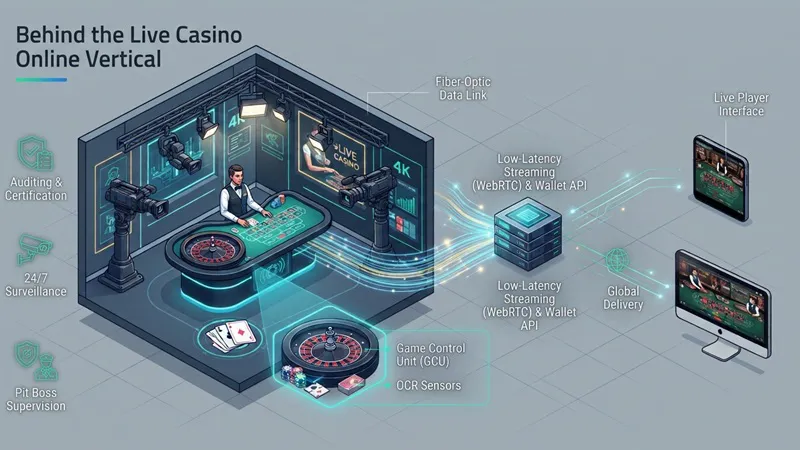
A live casino table may look like a thin layer of UI over a dealer and a roulette wheel. In practice, it is a production business with fixed costs, shift planning, language coverage, compliance, and real-time integration — which is exactly why operators and PSPs care about scale before they care about the catalogue.
- Live casino is not a “game file” business. It is a continuous production environment that combines dealers and presenters, floor supervisors, studio managers, broadcast technicians, surveillance personnel, compliance teams, and technical support. Camera systems, lighting, microphones, game equipment, streaming infrastructure, and software all have to work together to keep the table live without interruption.
- Scale is the point. In its 2025 annual report, published in April 2026, Evolution reported 22,475 employees and more than 800 operator customers. The company operates studios across Europe, North America, South America and Asia, with local facilities built to support markets with different regulatory requirements. Its current studio information lists more than 2,000 live tables across its global network.
- Vivo Gaming shows the same model from another angle: more than 200 live tables operating 24/7, serving over 75 countries, with dealers speaking more than 25 languages. These are the suppliers’ own published figures, and they are useful because they show what international live casino coverage actually costs in staffing and infrastructure terms.
- The economics are fixed-cost heavy. Studios need facilities, equipment, connectivity, technical maintenance, and staff coverage whether a table is busy or not. That means the business question is not just how many tables can be launched, but how consistently those tables will be used. For an operator, the right model depends on target markets, expected demand, branding strategy, and willingness to invest in its own infrastructure.
- Dealers are not a decorative layer; they are part of the product. Recruitment and training sit at the centre of the model because dealers must understand the games and procedures, handle bets accurately, and keep production standards consistent across shifts, languages, and jurisdictions.
For PSPs and acquiring teams, the takeaway is straightforward: live casino expansion is usually a question of operational capacity, not just content supply. If the operator wants 24/7 coverage across multiple jurisdictions, the payment stack has to sit behind a business that is already built for that level of permanence.
Related news
All news →
Alberta iGaming Corporation says responsible gambling rules are built into the province’s regulated iGaming market from day one
Brazil’s iGaming U-turn: when regulation becomes regulatory risk

Bulgaria advances gambling ad ban, higher licence fees and tax changes after first parliamentary vote
Weekly high-risk digest
Regulation, sanctions and payment news across your verticals — once a week, free.
Please check your inbox and click the link to confirm your subscription.
Please enter a valid email address!