Women in Brazil are betting to pay bills, and they are bearing the brunt of the boom
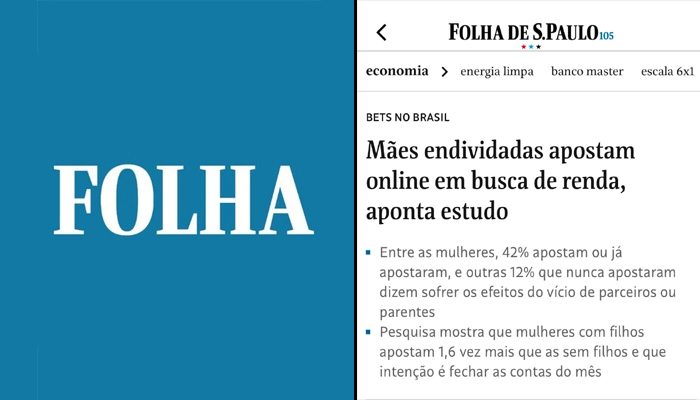
A Clarice study reported by Folha de S.Paulo says 42% of Brazilian women have already bet, while another 12% who never played say they are dealing with the fallout of a partner’s or family member’s addiction. For PSPs and operators, the point is simple: in Brazil, bets are not just an acquisition channel — they are being used as a substitute for income.
- The “Mulheres & Bets” study, produced by Clarice with Instituto Estratégia Latina and Instituto de Pesquisa IDEIA, combined 20 qualitative focus groups with 60 participants and a national survey of 2,008 respondents conducted in July 2026, according to the report published by Folha de S.Paulo.
- The sharpest split in the data is among mothers: women with children bet about 1.6 times more than women without children. Beatriz Della Costa, cofounder of Clarice and one of the study’s spokespeople, said the motivation is not entertainment. “The women who bet, the mothers who bet, do not bet to be Virgínia, as people keep thinking,” she said, referring to the influencer known for multimillion-dollar contracts with betting platforms. “They bet to pay for a birthday cake, to go eat Japanese food, to order delivery, to buy school supplies. It is like a third income.”
- The study ties the spread of betting among mothers to the moment the platforms scaled in Brazil. Online gambling was legalized in Brazil in 2018, grew during the Covid pandemic, and took more than R$ 10 billion from Brazilian families for the first time in 2021, according to H2 Gambling Capital. During the same period, women were facing losses in income, employment, and stability.
- Between 2019 and 2025, with no advertising rules and no addiction-prevention mechanisms, influencers promoted slot-style games on social media as a source of extra income, often alongside false winning strategies. Traditional media stayed away from the sector because of reputational risk, which left social platforms as the dominant advertising channel for bets.
- Aderbal Vieira Júnior, psychiatrist and head of the behavioral addictions clinic at Proad (Programa de Orientação e Atendimento a Dependentes), at Unifesp, linked the pattern to a shift in women’s social role. “As women also enter this profile of being the person who has to provide something, get some money, they also end up chasing gambling with that function,” he said. He added that not every use becomes problematic, but the article cuts off before his full comment.
For the high-risk payments crowd, Brazil’s detail matters: this is not just a consumer habit story. It is a payments-flow story shaped by household pressure, social media acquisition, and a market that scaled before the guardrails did.
Related news
All news →
Argentina’s Rebill raises $5.4 million pre-Series A to simplify cross-border payments in Latin America and the US
26th NextGen Payments & RegTech Forum lands in Austin on 10 November 2026
Quaest poll will test whether Brazil’s bets ban changed votes in the Lula vs. Flávio Bolsonaro runoff
Weekly high-risk digest
Regulation, sanctions and payment news across your verticals — once a week, free.
Please check your inbox and click the link to confirm your subscription.
Please enter a valid email address!