Bets Became Brazil’s Scapegoat as the 2025 Regulated Market Gets Politicized

Brazil’s fixed-odds betting market is being turned into campaign-season shorthand for everything that is going wrong, even though the sector has been regulated since 2025 and its data sits inside the Treasury’s Sigap system. For PSPs, acquirers, and banks, the useful part is not the rhetoric — it is the gap between what politicians are saying and what the regulatory framework actually requires.
- José Francisco Manssur says the election campaign has amplified calls to ban fixed-odds betting (AQFs) in Brazil, with politicians across the spectrum repeating anti-bet talking points. He notes that even people who supported the regulation now seem to be competing over who can blame betting for more of the country’s problems.
- The article says candidates for President are all claiming to oppose betting, while some candidates for state governments are promising to “prohibit” a matter that falls under federal jurisdiction. In other words, the political debate is running ahead of the legal one, which matters if you are reading this as a payments or licensing decision rather than a campaign speech.
- Manssur argues that betting is being blamed for household debt, retail distress, and even an alleged fall in ENEM registrations, while the sector is also accused of hurting airlines. He says these claims are often made without explaining how the numbers were obtained, and that they do not hold up against official data.
- That official data comes from Sigap, the betting management system created by the Treasury, which records every bet in the regulated market. The point is straightforward: if you are assessing risk exposure, onboarding criteria, or source-of-funds controls, the regulated market in Brazil is not operating in a data vacuum.
- The text also makes a comparison with China, where betting is prohibited and Beijing estimates there are 200 million bettors. Manssur’s question is blunt: does prohibition actually solve the problem? His answer is that Brazil should first separate problems linked to the period before regulation from those involving authorized operators and illegal ones.
For high-risk PSPs, the practical takeaway is that Brazil’s debate is not just about gambling policy. It is about whether the market is judged using regulated-operator data from Sigap or lumped together with illegal activity, which is usually where policy mistakes start.
Related news
All news →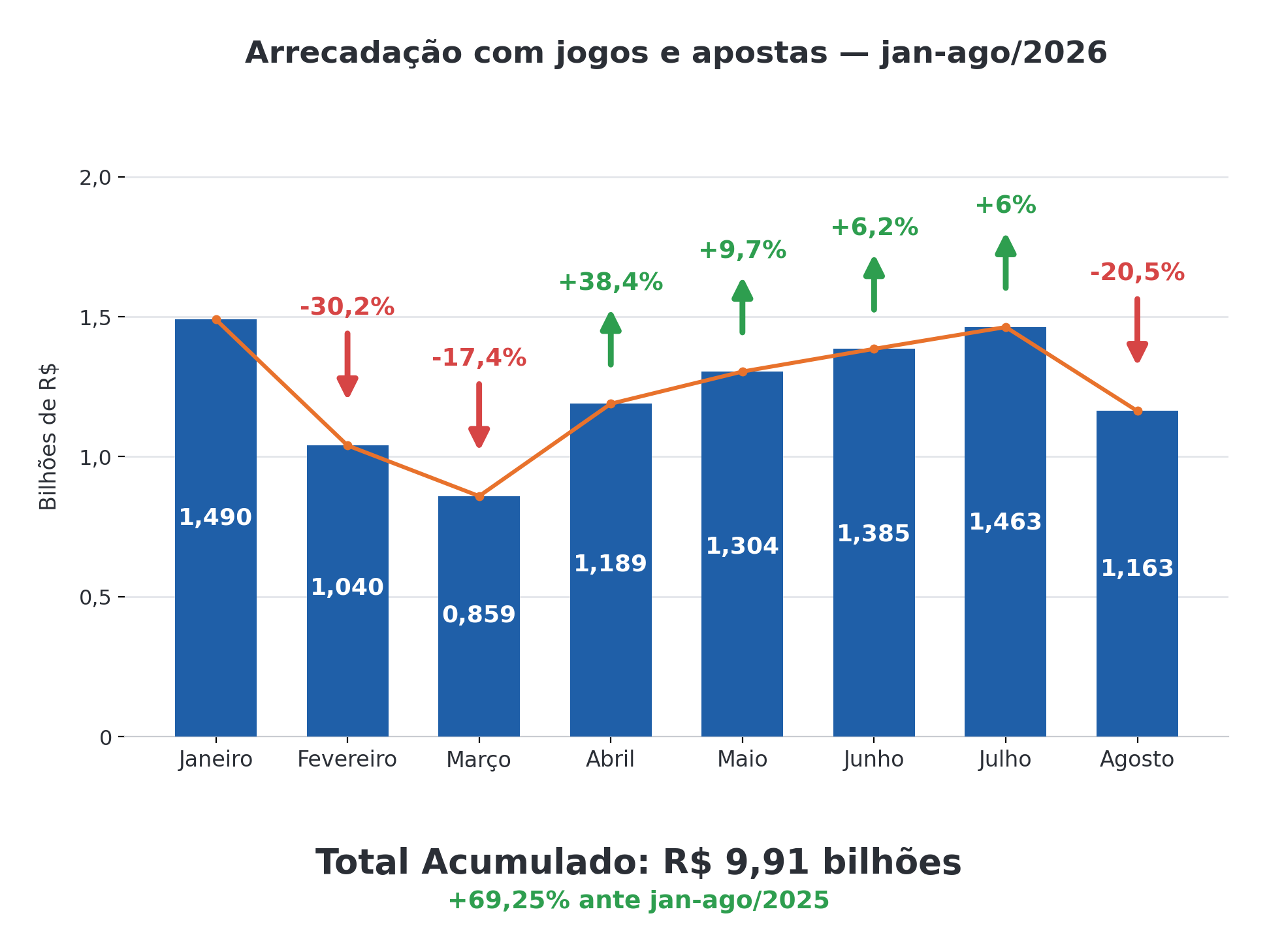
Brazil collected R$ 9.91 billion from betting and gambling taxes from January to August 2026

Sports betting sponsorships in Brazilian football reached R$ 1.03 billion in 2025 as clubs face R$ 17.3 billion in debt
First Dutch online gambling licence renewals confirmed ahead of 2026 expiry
Weekly high-risk digest
Regulation, sanctions and payment news across your verticals — once a week, free.
Please check your inbox and click the link to confirm your subscription.
Please enter a valid email address!