Buenos Aires court grants house arrest to former judicial official accused of biometric data theft and illicit fund transfers
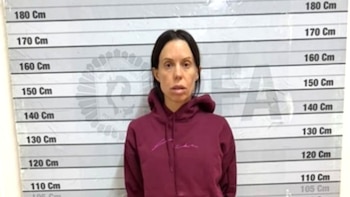
A La Plata court has ordered house arrest for Albertina Mangini, the former judicial official detained in a case involving an alleged network that collected biometric data from vulnerable people to open accounts and move illicit funds. For PSPs and banks, the point is straightforward: this is another reminder that identity capture, account opening, and money movement can sit in the same fraud chain.
- The Criminal Guarantees Court No. 6 of La Plata ruled that Mangini may be moved to house arrest, but not immediately. The measure only takes effect once the decision becomes final and the electronic monitoring system confirms that the proposed apartment in La Plata can support the ankle bracelet and GPS setup.
- Under the ruling, Mangini must remain at that address under supervision by the Buenos Aires province Patronato de Liberados. She is also barred from direct or indirect contact — by phone, messages, social media, or through third parties — with the complainant, identified witnesses, and the other defendants in the case.
- The decision came after her defense asked for a softer measure than pretrial detention, citing her health condition. Her lawyers, Alfredo J.M. Gascón, Miguel Ángel Molina, and Alfredo Gascón, argued that she was not receiving proper medication in detention and pointed to a history of anxiety and suicidal ideation.
- Prosecutor Betina Lacki opposed the request, arguing that flight risk and obstruction risk still existed because there may be unidentified participants and digital evidence still pending review. She also said Mangini was receiving medical, psychiatric, pharmacological, and nutritional care at the detention facility.
- Judge Catriel Taubenschlag said those risks could be managed with a less burdensome measure than prison. He cited her lack of prior convictions, ties to La Plata, family support, the fact that she has already been removed from her former post and no longer has the institutional access she had before her arrest, plus the case’s timeline: it has been pending for more than two years and is advanced enough, in the court’s view, for alternative controls.
The court also referred to medical and psychological reports from custody showing a significant weight loss, a body mass index of 16.6, reduced muscle mass, dietary restrictions, constipation episodes, distress, and anxiety. For high-risk operators, the useful detail is not the health story itself; it is that the alleged scheme centered on biometric capture and account opening, which is exactly the kind of chain that can turn weak identity controls into downstream payment fraud.
Related news
All news →
:strip_exif()/i.s3.glbimg.com/v1/AUTH_59edd422c0c84a879bd37670ae4f538a/internal_photos/bs/2026/o/D/vLtFB3T1qgmgtx2HPt7w/37447615496-4cb71e3490-k.jpg)

Weekly high-risk digest
Regulation, sanctions and payment news across your verticals — once a week, free.
Please check your inbox and click the link to confirm your subscription.
Please enter a valid email address!