CBF vice president says regulated betting should not be shut down and calls for tougher laws against illegal operators in Brazil
Michelle Ramalho, vice president of the Brazilian Football Confederation (CBF), used a panel in Lisbon on Tuesday (2/6) to argue that regulated sports betting in Brazil is being unfairly blamed for match-fixing and other problems. For PSPs and acquirers, the takeaway is simple: Brazil’s legal betting market is being publicly defended by football and operator voices, while the pressure is shifting toward enforcement against unlicensed sites.
- Ramalho, speaking at the 14th Lisbon Forum at the University of Lisbon, said that “many ignorant people say regulated bets have to end,” but argued that regulated operators are “victims” too. She said the debate around betting in Brazil is still clouded by confusion over the role of licensed companies, according to Poder360.
- She also pushed back on the idea that betting operators are the source of match manipulation: “We can no longer talk about football today without bets. We have to demystify this label that many people use as if bets were the author of match manipulation. […] Which bet would want that game to be manipulated?”
- Alexandre Fonseca, CEO of Superbet Apostas Esportivas, gave a different kind of useful detail for payment teams: according to him, users of regulated platforms are mostly male and higher income. He contrasted that with the most indebted groups in Brazil, saying women and low-income consumers are among those most affected by debt.
- Fonseca said the main debt problem is tied to credit cards, and added that regulated betting operators do not accept them. “The illegal market accepts [credit cards], but the regulated one only accepts Pix,” he said. That matters because the payment method mix is one of the clearest practical differences between legal and illegal betting flows in Brazil.
- Ramalho also called for stricter legislation against unlicensed bookmakers, saying regulated companies such as Superbet and Betano are doing “very serious work” and should not have to compete with illegal operators on unequal terms. “It is very important to classify betting houses that are not legalized. We do not have a severe law for this. And it is not fair for those who are legal, doing everything properly, to compete with illegal houses. […] The Congress needs to open its eyes to this,” she said.
Guilherme Figueiredo, Director of Public Affairs at Betano Brasil, also took part in the panel with Ramalho and Fonseca. For payment providers, the direction of travel is clear enough: the regulated side is arguing for stricter enforcement, while the legal market is being framed as a compliance-first environment centered on Pix rather than credit cards.
Related news
All news →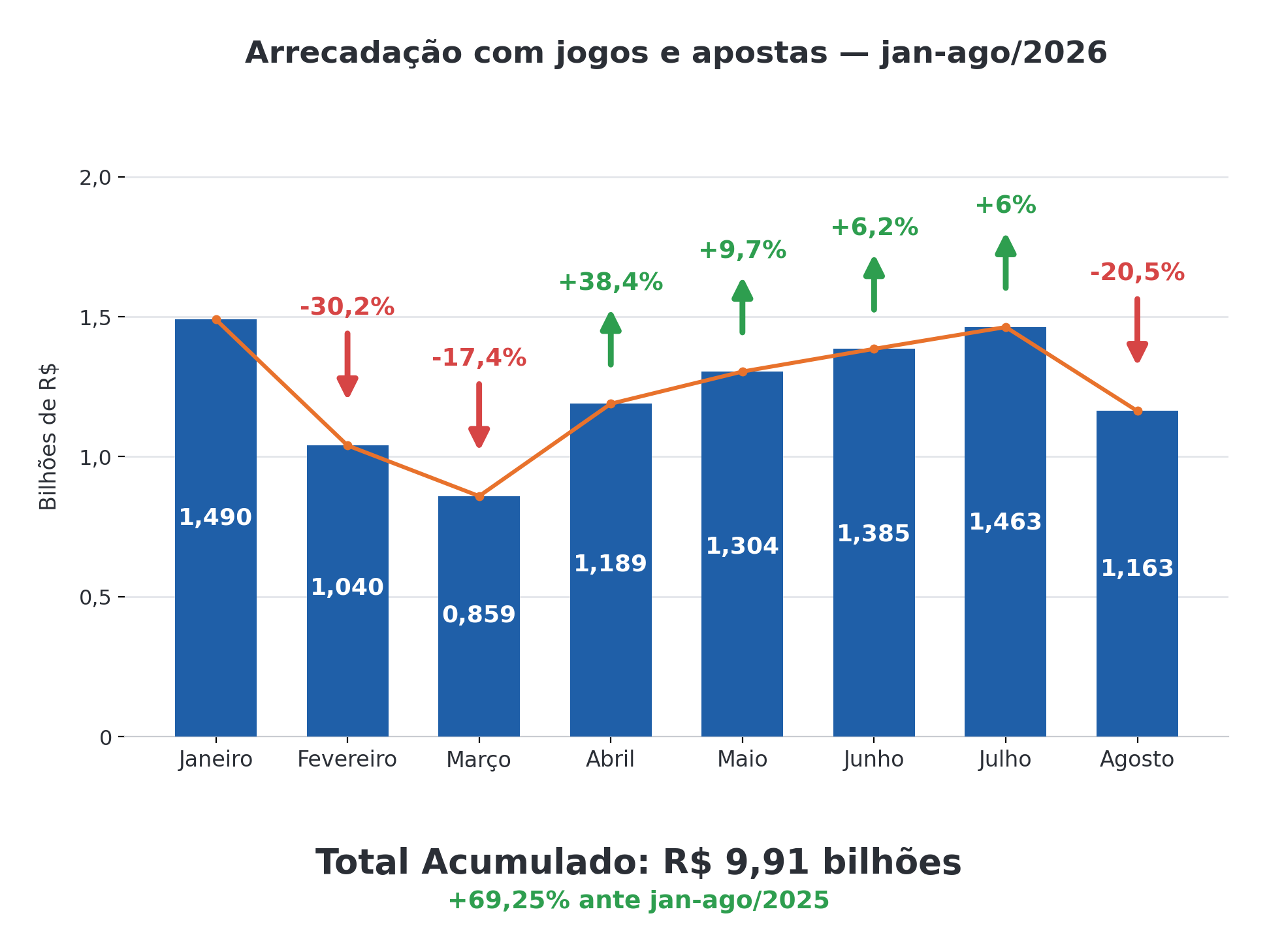
Brazil collected R$ 9.91 billion from betting and gambling taxes from January to August 2026

Sports betting sponsorships in Brazilian football reached R$ 1.03 billion in 2025 as clubs face R$ 17.3 billion in debt
First Dutch online gambling licence renewals confirmed ahead of 2026 expiry
Weekly high-risk digest
Regulation, sanctions and payment news across your verticals — once a week, free.
Please check your inbox and click the link to confirm your subscription.
Please enter a valid email address!