Bets were paying more than three months of Série A wages a year to Brazilian clubs; at São Paulo, more than six
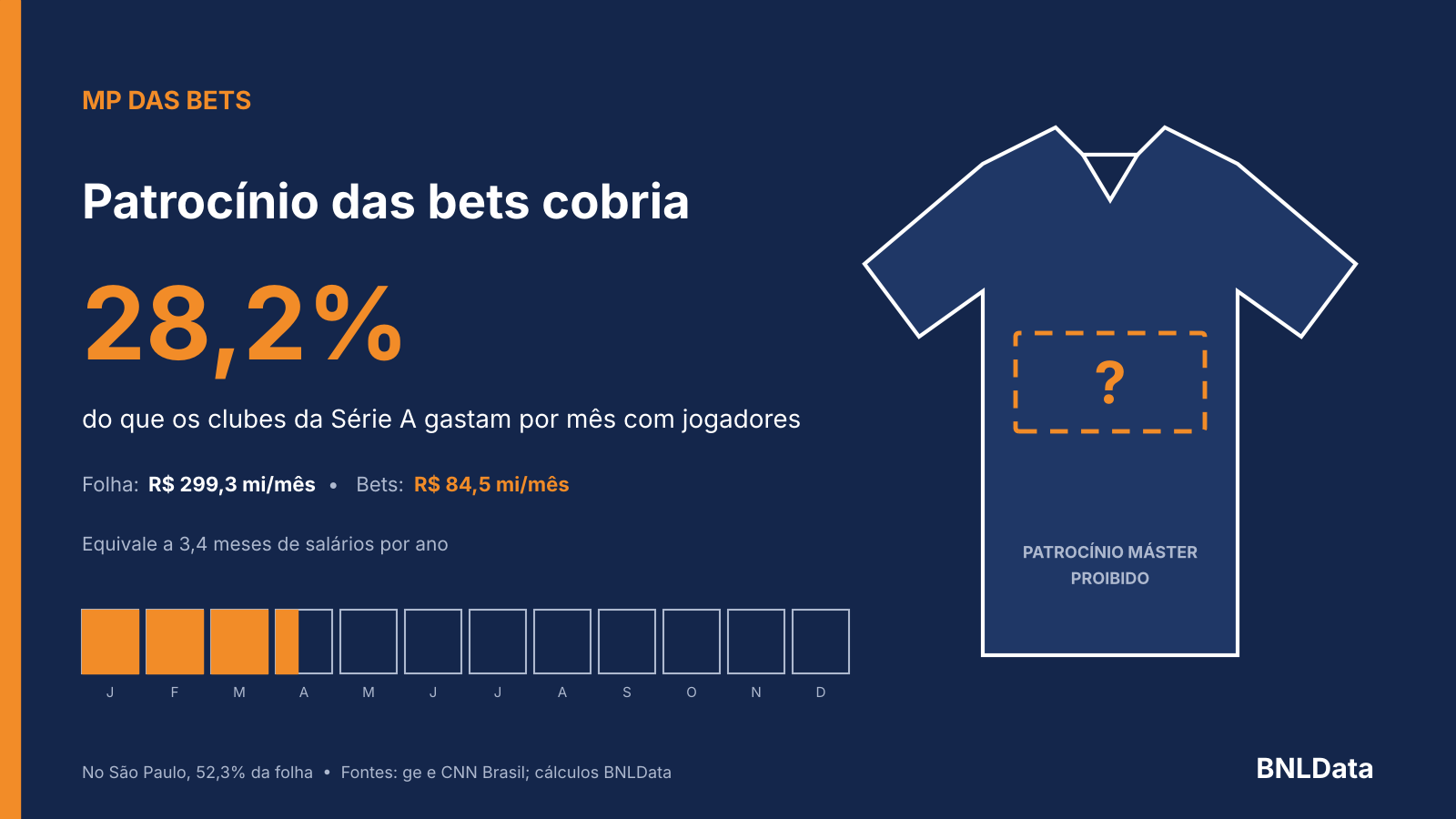
A BNLData cross-check of master sponsorship deals against payroll figures published by ge Globo shows the real cash exposure behind Brazil’s betting sponsorship debate. For 14 Série A clubs, betting brands were covering, on average, 28.2% of monthly wage bills — much more than the “6% to 7%” figure cited by President Luiz Inácio Lula da Silva.
- Total master sponsorships from betting companies reached about R$ 1.01 billion per year, or R$ 84.5 million per month. The combined monthly payrolls of those 14 clubs came to R$ 299.3 million, which means the betting money covered more than three months of salaries per year on average. For operators, that is the relevant number: not the full club budget, but the fixed monthly expense that has to be met on time.
- São Paulo is the most exposed case. Its deal with Superbet is worth R$ 113 million per year, or R$ 9.4 million per month, equal to 52.3% of the club’s estimated R$ 18 million monthly payroll. In practice, that meant the betting sponsor was paying more than six months of first-team wages per year.
- Flamengo comes next. The club’s payroll is R$ 50 million per month, and its Betano contract is worth R$ 268.5 million per year, the largest sponsorship deal in Brazilian football history. That sponsorship covered 44.8% of wages, or 5.4 months of payroll. If only the fixed portion of the deal is counted — R$ 220 million according to Folha — coverage would still be 36.7%, or 4.4 months.
- Corinthians is also heavily dependent on betting money. Its R$ 150 million annual deal with Esportes da Sorte covered 41.7% of a R$ 30 million monthly payroll, equal to five months of wages. Botafogo (30.6%), Palmeiras (27.8%) and Vasco (26%) complete the group of clubs where betting sponsorships covered more than three months of payroll per year.
- The payroll data itself is not exact. ge says salary figures are difficult to pin down because associations and SAFs do not disclose squad costs in a standardized way, so the ranking is built from balance sheets and reporting with clubs. That makes the calculation conservative rather than aggressive. The Palmeiras example shows the gap: monthly football department costs are around R$ 45 million, while club directors have disputed how that should be read in practice.
For PSPs, acquirers, and banks looking at high-risk sponsorship exposure, this is the useful takeaway: in Brazilian football, betting brands were not buying peripheral logo space. They were, in several cases, underwriting a meaningful chunk of monthly payroll. When that flow is cut or restricted, the pressure shows up where it always does — on fixed costs, settlement timing, and the willingness of clubs to replace that revenue with something less volatile.
Related news
All news →
:strip_exif()/i.s3.glbimg.com/v1/AUTH_59edd422c0c84a879bd37670ae4f538a/internal_photos/bs/2026/o/D/vLtFB3T1qgmgtx2HPt7w/37447615496-4cb71e3490-k.jpg)

Weekly high-risk digest
Regulation, sanctions and payment news across your verticals — once a week, free.
Please check your inbox and click the link to confirm your subscription.
Please enter a valid email address!