Brazilian bar association backs opinion calling 1946 casino ban unconstitutional
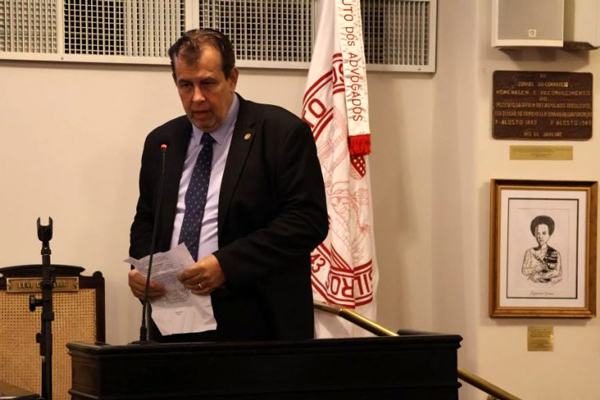
The Instituto dos Advogados Brasileiros (IAB) has approved a legal opinion saying Decreto-Lei nº 9.215/1946, which bans casinos and gambling in Brazil, is incompatible with the 1988 Federal Constitution. For payment operators, the obvious point is that Brazil is still a prohibition market on paper, but the country’s legal debate is now moving toward formal regulation rather than pure suppression.
- The decision was approved by majority vote in a plenary session held on Wednesday (3/6). The opinion was prepared by Paulo Horn, a lawyer and member of the IAB’s Constitutional Law Committee.
- The document argues that the 1946 decree was not received by the 1988 Constitution because it conflicts with the current constitutional order. Horn says it clashes with principles such as human dignity, private autonomy, free enterprise, and economic freedom.
- Horn told the plenary that the ban, which has been in place for eight decades, reflects a pre-constitutional measure adopted in a transitional historical context to prohibit land-based casinos. The committee also said the old rule rests on categories that are too abstract and historically dated to justify restrictions on fundamental freedoms.
- The IAB’s view is that Brazil needs a regulated model focused on transparency, state supervision, and user protection, especially given the controversy around online betting and population indebtedness. In other words, the legal argument is not just about casinos as such; it is about replacing prohibition with a framework that can be monitored.
- The opinion also says an absolute casino ban is not supported by modern criminal law theory. The committee argues there is no specific, concrete legal interest justifying criminal intervention, and Horn describes the ban as a form of “symbolic criminal law,” incompatible with the principle of harm and with constitutional limits on state punitive power.
The opinion also says prohibition has failed in practice: it has not eliminated the activity, only pushed it into clandestine, informal, and transnational environments. For PSPs and acquirers watching Brazil, that is the part that matters: the legal center of gravity is shifting toward formalization, even if the statutory ban is still on the books.
Related news
All news →
North Korean fake recruiters infected 30,000 devices and stole at least $10.7 million in crypto

Money transfers from Russia to Georgia fall to their lowest level since 2004 after restrictions on Zolotaya Korona

Three Brazilian courts upheld Novibet’s anti-fraud controls in Bahia, Rio de Janeiro, and Rio Grande do Norte
Weekly high-risk digest
Regulation, sanctions and payment news across your verticals — once a week, free.
Please check your inbox and click the link to confirm your subscription.
Please enter a valid email address!