Buenos Aires police link 55 suspects to “Fake Coins” crypto fraud network using Tinder, fake websites, and forged bank accounts
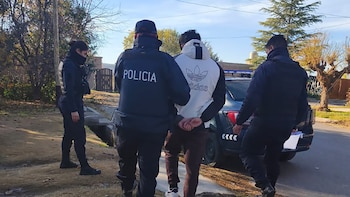
Buenos Aires police and the Buenos Aires Prosecutor’s Office have moved against a crypto-fraud ring that allegedly used digital investment scams, fake identities, and even Tinder to draw in victims. For PSPs, acquirers, banks, and crypto payment flows, the interesting part is not the romance-scam angle itself, but the mix of onboarding fraud, mule-style account movement, and loan abuse behind the scenes.
- The case involves 55 people under suspicion across several parts of Argentina. Police carried out more than 70 simultaneous raids and arrested 21 people in operations across Buenos Aires province, Córdoba, Santa Fe, Misiones, and Mendoza.
- According to the investigation, the “Fake Coins” group ran a criminal structure tied to computer fraud involving cryptoassets. It allegedly offered investment opportunities with promises of extraordinary returns, presenting them as if they were backed by decentralized financial markets and blockchain technology.
- The group reportedly used multiple acquisition channels to reach victims: fake websites, fraudulent mobile apps, mass email campaigns, and messages on social networks. It also used dating apps and contact networks such as Tinder to build relationships with potential victims and then push them into investing, a pattern commonly called a “romance scam.”
- Investigators say the organization worked with a hierarchy and specialized roles. At the lower levels were so-called “prestacuentas,” people who moved money between bank accounts and virtual wallets to make the funds harder to trace and to hide their illicit origin.
- The alleged fraud also included opening bank accounts with false documents, taking out million-peso loans in the names of unrelated companies, and redirecting the proceeds to accounts controlled by suspects. In July 2025, one accused person went to a Banco Galicia branch, used fake DNI and documents to claim he was the president of SEEDAR SA, and opened a current account in that company’s name. He later took out an electronic loan in the name of SEEDARD SA for 393.815.000 million pesos and transferred the money from that account to one in the name of a suspect linked to Let Bit. On 19 August, more “prestamos DNI” were taken out electronically for 464.402.600 million pesos and transferred as well.
For high-risk payment teams, the pattern is familiar: synthetic or stolen identity at account opening, rapid lending or credit abuse, and layered transfers through bank accounts and virtual wallets. The detail worth keeping in mind is that the scheme did not rely on one channel; it combined social engineering, fake merchant-style infrastructure, and financial accounts that could be used to move proceeds quickly.
Related news
All news →


Weekly high-risk digest
Regulation, sanctions and payment news across your verticals — once a week, free.
Please check your inbox and click the link to confirm your subscription.
Please enter a valid email address!