Brazil’s Secom blames regulated betting for illegal-market losses, but official 2025 data show R$ 36.9 billion in GGR
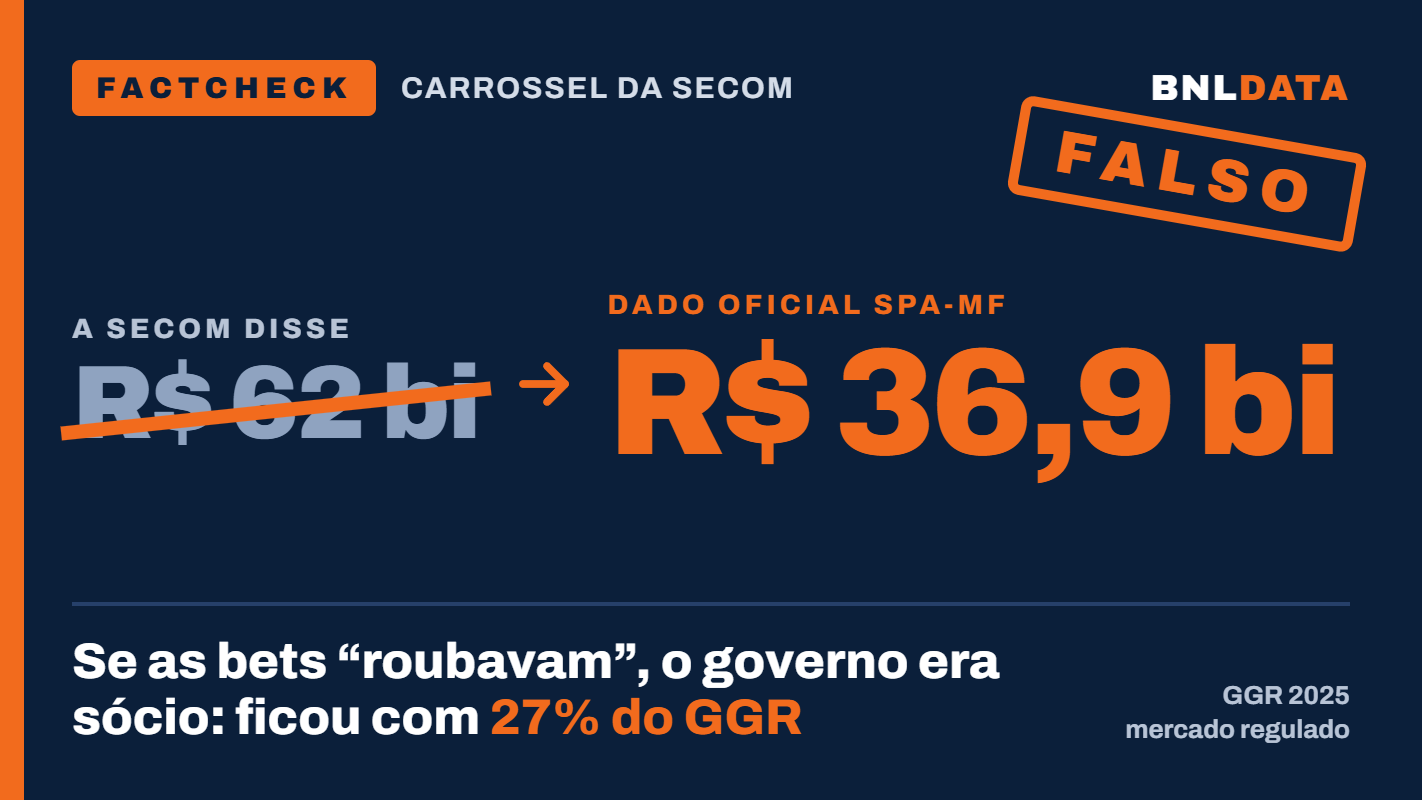
The Brazilian government’s own numbers tell a different story from the Instagram carousel published by the Secretaria de Comunicação Social da Presidência (Secom). For anyone in payments, the key point is simple: the regulated market’s official 2025 GGR (gross gaming revenue) was R$ 36.9 billion, and the state’s share came out of that same regulated flow.
- Secom posted a carousel on Instagram to justify a ban on bets, but the fact-checking benchmark used in the source is the official regulated-market data from the Secretaria de Prêmios e Apostas do Ministério da Fazenda (SPA-MF). On that basis, the claim that Brazilian families lost R$ 62 billion in 2025 is rejected: the official figure is R$ 36.9 billion in GGR, which is the difference between stakes and prizes paid out.
- The article says that dividing R$ 36.9 billion across the 25.2 million Brazilians who bet with the 79 authorized companies works out to about R$ 122 per month per bettor. That is the regulated-market spend figure Secom did not use.
- The source also says that for every real retained by the betting operators, 27 centavos went to the government. In other words, the state was not standing outside the regulated market looking in; it was taking a cut from the same activity it later framed as a problem.
- The R$ 62 billion figure came from the Boletim Fiscal dos Estados of Comsefaz, which was calculated using Banco Central payments statistics, meaning Pix transfers. The catch is that this flow does not distinguish between authorized betting sites and clandestine ones. The difference between the Comsefaz number and the official SPA-MF figure is R$ 25.6 billion, around 41% of the Comsefaz total, which the source says matches the floor of illegal-market estimates.
- The same official data also undercut another common talking point: in 2025, betting companies received R$ 220.6 billion in deposits and returned R$ 183.7 billion to players in prizes and withdrawable bonuses. That means 83% of what was deposited went back to bettors, which is the basic mechanism that keeps gambling functioning as entertainment rather than a one-way transfer.
For PSPs, acquirers, and banks, the practical takeaway is not about political theater. It is that Brazil’s regulated betting figures, tax take, and player-flow data are being pulled into a fight over whether the state is measuring the licensed market or the licensed-plus-illicit mix. Those are not the same thing, and they do not lead to the same commercial or compliance decisions.
Related news
All news →

Weekly high-risk digest
Regulation, sanctions and payment news across your verticals — once a week, free.
Please check your inbox and click the link to confirm your subscription.
Please enter a valid email address!