“Proibir não é proteger” campaign will appear in nine Brazilian Serie A matches during the 29th round
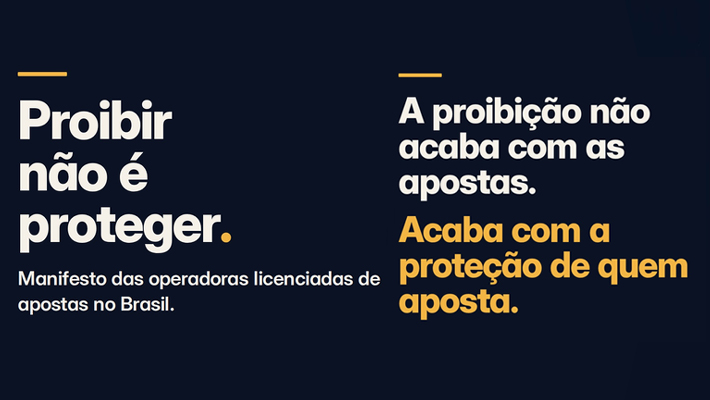
A manifesto by licensed betting companies against Provisional Measure 1.394/2026 is moving onto pitch-side boards in nine matches of the 29th round of the Campeonato Brasileiro on Wednesday (7) and Thursday (8). For high-risk operators, the point is straightforward: the regulated market is using football’s biggest stage to argue that prohibition pushes play toward illegal sites, not away from betting.
- Companies affiliated with the Associação Nacional de Jogos e Loterias (ANJL) and the Instituto Brasileiro de Jogo Responsável (IBJR) are giving up advertising space on the perimeter boards for the “Proibir não é proteger” campaign.
- The boards will rotate through four message blocks. The slogans push the same line from different angles: “Proibir não é proteger”; “Não se muda a regra no meio do jogo” / “Proibir quem segue as regras favorece quem?”; “Não é só o futebol que perde” / “Quem lucra com as bets ilegais?”; “A demanda não acaba, apenas muda de endereço” / “A quem interessa o mercado ilegal?”
- The campaign will also launch www.apostoquevocenaosabia.com, a site that lays out what the regulated market says it protects for bettors: facial recognition to open an account and withdraw funds, tax payments earmarked by law for public policy, advertising restrictions, responsible gambling limits and self-exclusion, blocks on minors’ access and credit card use, monitoring against match-fixing, and anti-money laundering controls.
- The site says each topic is explained in practical terms, along with what bettors lose if regulation disappears. It also cites legal sources, ordinances, and studies in a dedicated references section.
- One figure the campaign highlights is R$ 4,53 billion in 2025 transferred to areas defined by law, including sport, public security, education, and health. ANJL president Plínio Lemos Jorge said the manifesto is meant to show the importance of the regulated betting market for bettors and for society, and said the industry is trying to fight illegal sites. IBJR president Carlos Lima added that prohibition does not make demand disappear; it pushes demand to illegal platforms.
For PSPs, acquirers, and banks in Brazil, the useful part is not the slogan work. It is the regulatory framing: the licensed sector is arguing that controls such as facial recognition, AML monitoring, age blocks, and self-exclusion are the things that separate regulated betting from the black market. That is the commercial and compliance argument the industry wants in front of Brazilian consumers right now.
Related news
All news →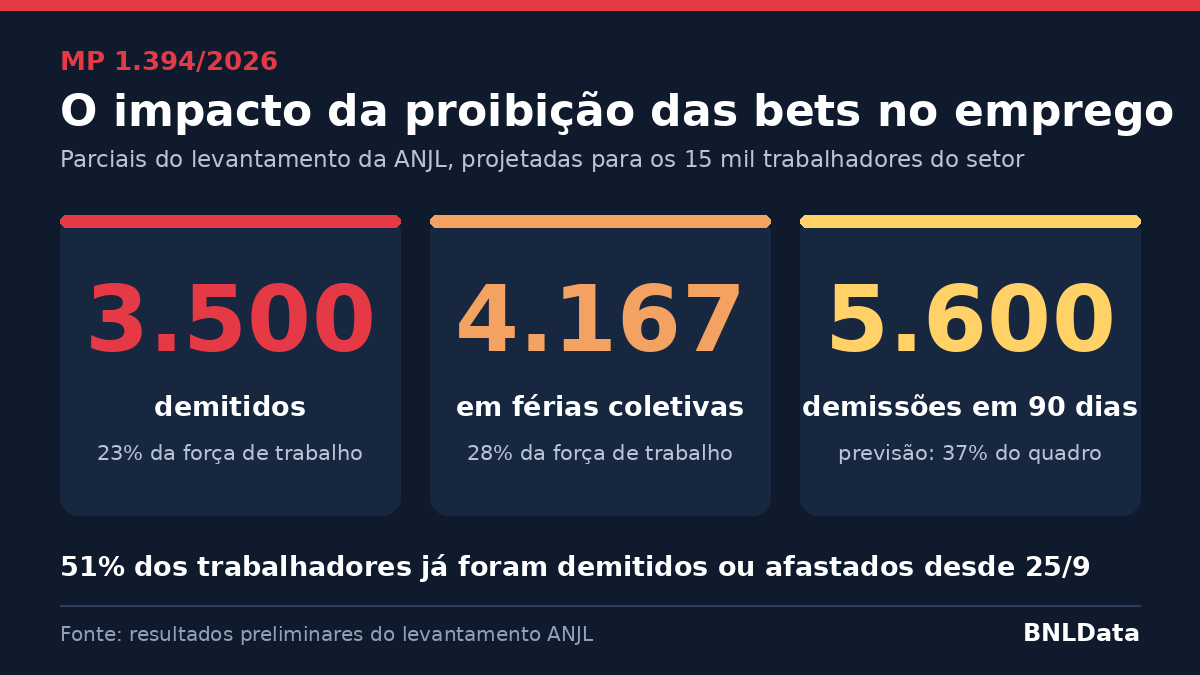
Brazil’s MP das bets has already cost 3,500 jobs, with 5,600 layoffs expected within 90 days, ANJL preliminary data shows
:strip_exif()/i.s3.glbimg.com/v1/AUTH_bc8228b6673f488aa253bbcb03c80ec5/internal_photos/bs/2026/Y/d/DxAxP0TfyPei2BaFLIuw/agif26092021432652.jpg)
Corinthians signs Jota as one-off master sponsor for Inter match after Brazil betting ad ban

Flávio Bolsonaro says Lula’s betting ban is an attack on legal certainty
Weekly high-risk digest
Regulation, sanctions and payment news across your verticals — once a week, free.
Please check your inbox and click the link to confirm your subscription.
Please enter a valid email address!