Brazil’s bet ban would hit tax revenue, football sponsors, and the illegal market at once
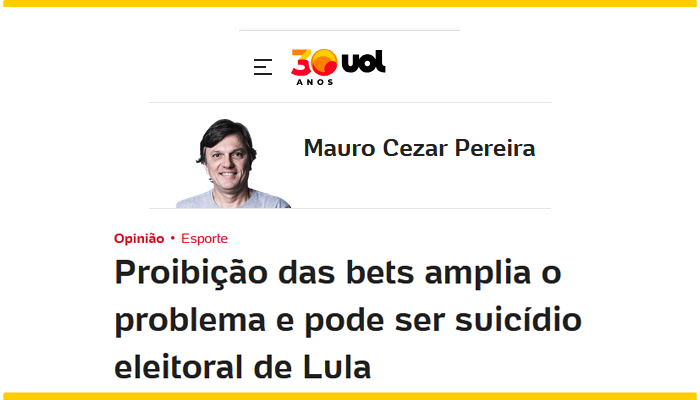
Brazil’s federal government is considering a provisional measure to ban sports betting operators in the middle of the 2026 election campaign. On paper, that looks like a regulatory reset; in practice, it would be an immediate fiscal hit, a direct blow to football club sponsorships, and a gift to the clandestine market.
- The proposal, discussed by the federal government and reported by Mauro Cezar Pereira on UOL Esporte, is not being framed as an improvement to Law No. 14.790/2023, which regulated the sector. It would instead be a fast reversal pushed into an election-year calendar, with Congress still far from backing the change.
- The tax angle is hard to ignore. From January to July 2026, Brazil’s Federal Revenue collected R$ 8.7 billion from games and betting. At the current pace, the year could end at R$ 16 billion. A ban by provisional measure would mean giving up that revenue, facing lawsuits from companies that paid licensing fees to operate, and possibly returning part of the amounts already collected.
- Football is in the blast radius. Master sponsorships from betting brands in Série A total about R$ 1 billion per season. In the first half of 2025, the legal allocations set out in Article 30 of Law No. 13.756/2018 — more than 8% of GGR (gross gaming revenue) — had already exceeded R$ 1.6 billion distributed among clubs, athletes, and the sports system. In a statement released on Wednesday, 16/9, football entities warned that fixed-odds betting has become one of the sector’s main commercial revenue sources.
- The political calculation is straightforward, if not elegant: sources in the government told the journalist that Luiz Inácio Lula da Silva was warned internally, met with entities and movements, and concluded that a measure of this kind would have little chance in Congress. On Tuesday, 15/9, he was told that fan groups could turn against the government if clubs suffer financial losses from the move. The legislature has already blocked tougher control initiatives before.
- The biggest winner from a ban on authorized operators would be the illegal market. Traffic tools used by the sector indicate that about 50% of Brazilian access is already being directed to platforms without authorization. In other words, if the legal market is shut down without making enforcement work first, the traffic does not disappear — it just changes address.
For PSPs, acquirers, and banks looking at Brazil, the useful takeaway is not just “regulation changed.” It is that a ban implemented by provisional measure would hit licensed revenue, reopen legal risk for operators that paid to enter the market, and likely push even more volume toward unlicensed channels already taking a large share of Brazilian traffic.
Related news
All news →
Brazilian football clubs and federations oppose a ban on sports betting and online gaming
:strip_exif()/i.s3.glbimg.com/v1/AUTH_bc8228b6673f488aa253bbcb03c80ec5/internal_photos/bs/2026/i/A/CgXGnXR5KFy6n5RmfRgA/rib8047.jpg)
Brazilian clubs back regulated betting and warn of the “end of Brazilian football” as MP targets online casino games
Slothunter says he will personally cover unpaid balances at Yoho after the casino’s June launch
Weekly high-risk digest
Regulation, sanctions and payment news across your verticals — once a week, free.
Please check your inbox and click the link to confirm your subscription.
Please enter a valid email address!