Brazilian betting ban could push illegal gambling share from 41% to 82%, ANJL says
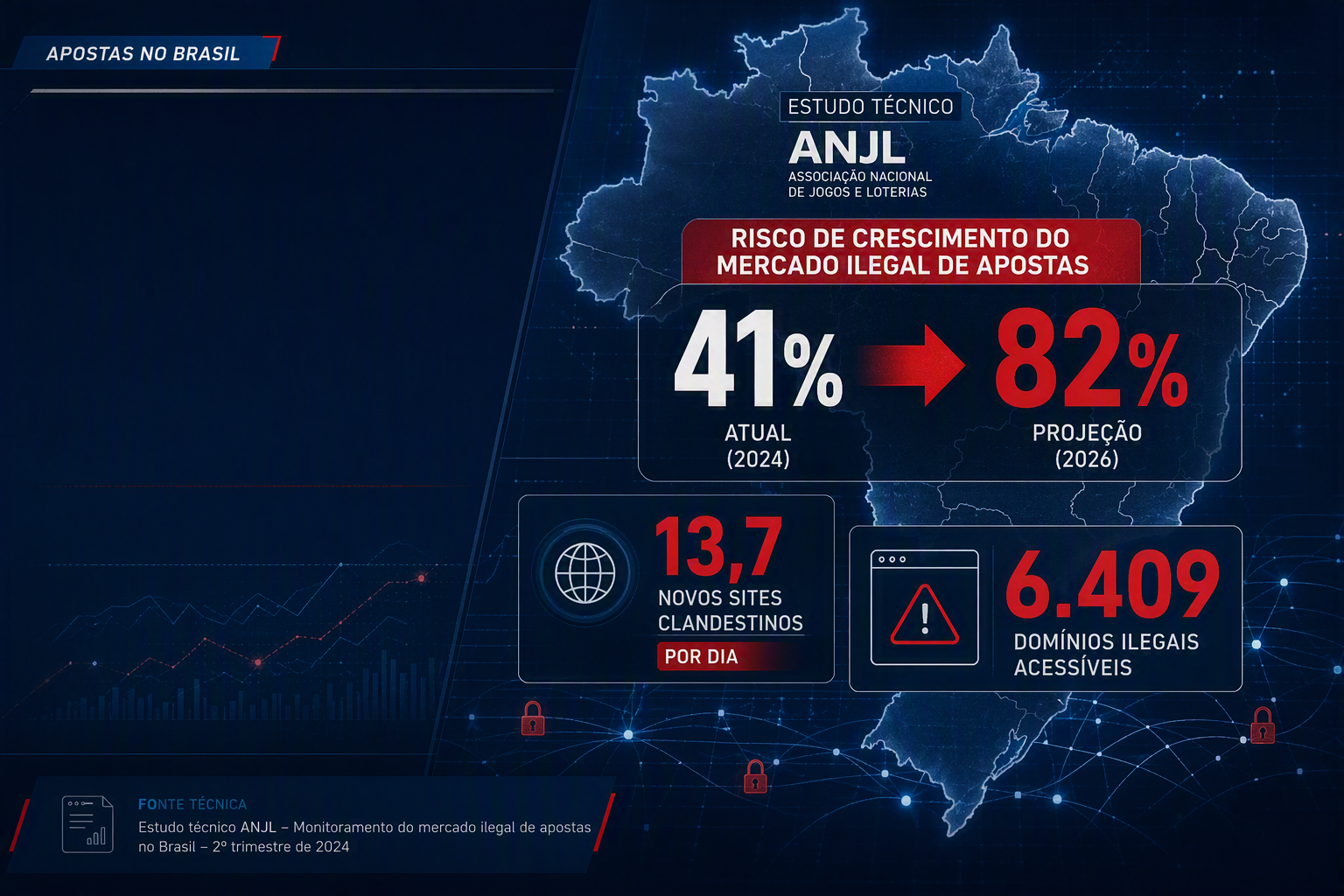
A technical study from the Associação Nacional de Jogos e Loterias (ANJL) says a ban on online casinos for licensed betting companies in Brazil could roughly double the share of illegal sites from 41% to 82%. For PSPs and acquiring teams, the point is simple: when licensed supply is restricted, traffic does not disappear — it migrates.
- According to ANJL, the projection is based on the current abundance of domains offering bets outside the law, without authorization from the Ministry of Finance. The association says that from June to August this year, Brazil saw an average of 13.7 new clandestine sites registered per day.
- In one week of monitoring, from 11 to 18 September, ANJL’s technical team identified 6,409 illegal betting domains that were responding normally, meaning they were fully accessible.
- ANJL president Plínio Lemos Jorge said the numbers show how a possible ban on bets in Brazil would push millions of bettors to illegal sites, most of them hosted abroad and paying no taxes. He also said that among sites outside Brazil, 55.8% use a distribution network that hides the original hosting location, and 98.3% of domains are not under the “.br” extension.
- The association says more than 25 million registered users on licensed platforms would be exposed to illegal sites if the ban goes ahead. It also estimates that Brazil would lose between R$ 3.6 billion and R$ 7.4 billion in annual tax revenue.
- Jorge said illegal platforms do not provide mechanisms for financial or mental health protection, including blocking recipients of social benefit programs or self-exclusion tools. ANJL, launched in March 2023, says it represents the interests of its members, the sector, and responsible and integrity-based gaming.
For high-risk operators, the useful signal here is not the politics of the ban but the mechanics: if regulated access tightens while demand stays in place, offshore inventory gains share fast, and the compliance controls that exist on licensed rails vanish with it.
Related news
All news →
Lula campaign launches “Brasil contra as Bets” anti-betting program on YouTube on September 21

Brazil’s registered bettors rose 75% to 43.8 million by August 2026, but active users fell 7.6% in H1

Russia’s Crypto Exchange Market Is Moving Into a Transition Period, and Three Paths Are Left for Operators
Weekly high-risk digest
Regulation, sanctions and payment news across your verticals — once a week, free.
Please check your inbox and click the link to confirm your subscription.
Please enter a valid email address!