Brazil tightens betting ads rules with fines up to 20% of turnover and platform liability
Brazil has published two orders setting new rules for fixed-odds betting advertising, and the thing to note for PSPs and other payment partners is that liability now runs far beyond the operator itself. The rules add mandatory warnings, broad content bans, and compliance duties for platforms, media, influencers, and app stores.
- From 17 July, every betting ad must include one of three warnings about addiction risk, possible loss of money, or the fact that betting is not an investment. The warning has to be placed horizontally, clearly and legibly, and take up at least 10% of the ad’s area.
- The new rules prohibit ads that promote operators without SPA authorization, use editorial content to push expert-style analysis and predictions toward betting, present betting as income, an investment, or a way to recover losses, or sell the idea of easy wins through influencers. They also ban calls to bet immediately, encouragement of excessive play, false claims about winning odds or the impact of skill, sexualized imagery, discrimination, insults to cultural traditions, and any ad aimed at minors.
- Platforms and distributors are now part of the compliance chain. Before signing an advertising contract, they must verify that the advertiser has SPA authorization, and they must store and disclose the advertiser’s name, tax number, and authorization number in the interface. Social networks must block betting ads from being shown to minors, and app stores must block access to betting apps without age verification.
- The sanctions are not cosmetic. Operators face fines of up to 20% of turnover or suspension of authorization for up to 180 days, with repeat violations leading to cancellation. Distributors can be fined up to ~$2.73 million under the Consumer Defense Code. For influencers, the operator carries responsibility and the content must be removed.
- For the industry, this is a clear shift from the framework under order No. 1.231 (2024), where responsibility sat only with operators. The new regime pulls media, platforms, influencers, and app stores into the same enforcement perimeter, which means affiliate networks and CPA programs now need license-checking in their onboarding and campaign workflows if they do not want to inherit the problem with the ad spend.
For high-risk PSPs, Brazil is doing something useful and annoying at the same time: it is making ad compliance easier to audit and harder to ignore. Verifying SPA authorization is now a gating issue, not a nice-to-have, and that tends to show up quickly in payment risk, merchant acceptance, and partner due diligence.
Related news
All news →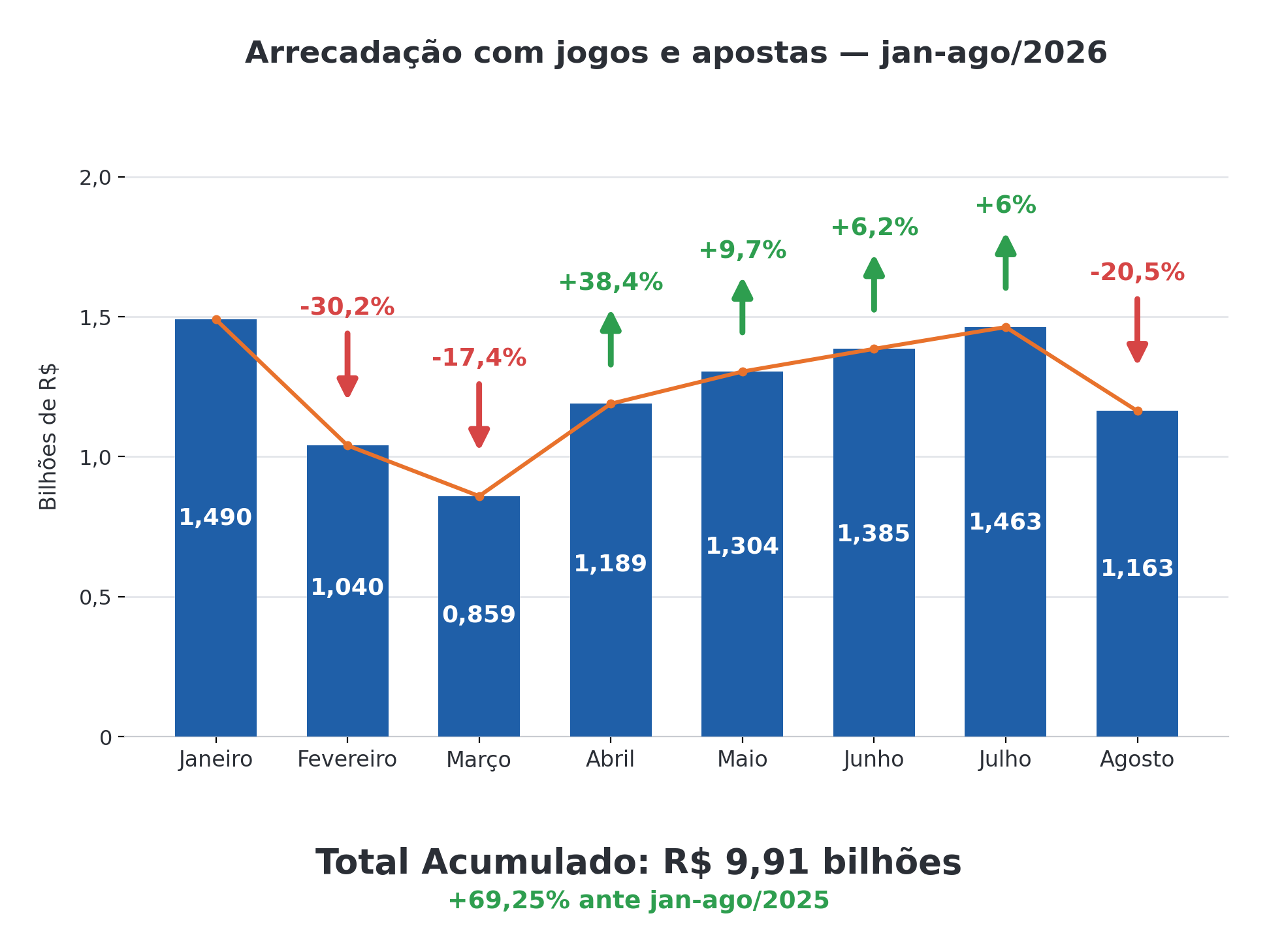
Brazil collected R$ 9.91 billion from betting and gambling taxes from January to August 2026

Sports betting sponsorships in Brazilian football reached R$ 1.03 billion in 2025 as clubs face R$ 17.3 billion in debt
First Dutch online gambling licence renewals confirmed ahead of 2026 expiry
Weekly high-risk digest
Regulation, sanctions and payment news across your verticals — once a week, free.
Please check your inbox and click the link to confirm your subscription.
Please enter a valid email address!