Messias tells Brazil’s Supreme Court the betting regime was “very efficient” and still asks it to strike it down
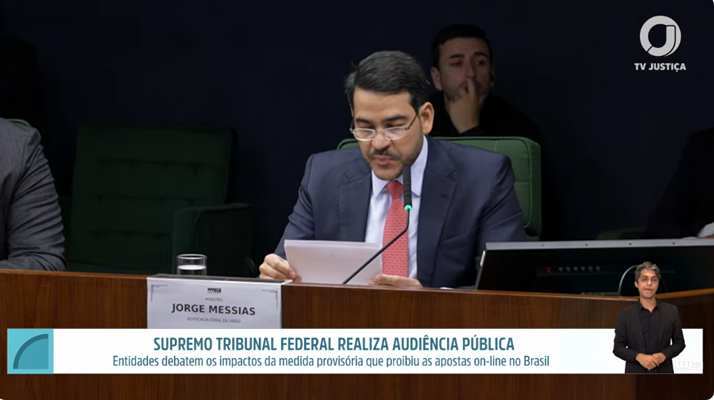
In a hearing on MP 1.394/2026, Brazil’s Attorney General Jorge Messias argued that fixed-odds betting should be banned nationwide, while also acknowledging that the existing regulatory framework was efficient and that licensed companies had complied with it. For PSPs and acquiring teams, the useful detail is simple: the government is now trying to undo a system it says worked administratively, which is exactly the sort of move that changes where payment volume, licensing, and tax exposure end up.
- Messias defended the “preservation in full” of MP 1.394/2026, which prohibited fixed-odds betting in Brazil, at a public hearing before the Supreme Federal Court (STF) on Tuesday (3). The Union’s core argument was that the state can halt an economic activity when experience shows it affects fundamental rights. Messias’ answer was blunt: the state “can and has the duty to act.”
- The Attorney General’s office said the legal framework built by Laws 13.756/2018 and 14.790/2023 had become “materially unconstitutional” because it supposedly offered insufficient protection to public health, dignity, and family. That is a complete pivot from 2024, when the AGU was defending the constitutionality of Law 14.790, signed by Lula, in the ADI 7721 case.
- The most revealing part of the hearing was Messias’ own description of the regime he wants the Court to erase. He repeated the “tame this dragon” metaphor from 2024, but now said “it has been found that this dragon was impossible to tame.” In the same speech, however, he acknowledged that the regulation had been “progressively improved,” that administrative enforcement had been efficient — “and I say, very efficient” — and praised “the effort of companies to apply the rules.” On paper, that is the government conceding the system worked; in practice, it is still asking the Court to declare that same system unconstitutional.
- Messias described the R$ 36.9 billion in betting revenue in 2025 as money taken from families, but omitted that the Union was a direct participant in that revenue stream. Under Law 14.790/2023, 12% of GGR (gross gaming revenue, i.e. operator revenue after prize payouts) went to legally defined allocations for social security, sport, tourism, public security, education, and health. That share alone was about R$ 4.4 billion in 2025. On top of that, each company paid R$ 30 million for the licence, while the government also collected income tax on player winnings and corporate taxes on operators’ profits.
- With MP 1.394/2026, those regulated revenues disappear. The money does not stop moving, though: it continues to be wagered on illegal sites that do not pay licensing fees, taxes, or social allocations. For licensed PSPs, that is the practical fork in the road — not whether demand vanishes, but whether it migrates into channels outside the regulated stack.
Messias closed by leaning on politics rather than regulatory mechanics, citing a Datafolha survey showing 78% support for the ban and the 64.2 million votes for reelection. The source also frames this as a “clause of others’ misfortune,” but the operational point is clearer than the rhetoric: Brazil’s Court is being asked to strike down a betting framework that the government itself built, enforced, and taxed for almost nine months.
Related news
All news →
“No country banned it and it worked”: the remarks by Udo Seckelmann and José Francisco Manssur that irritated MP defenders at Brazil’s Supreme Court

Binance says $6.3B hack started with fake job interviews and a compromised AI coding tool

Binance says it is financially strong after $6,300 million hack, with 95% of affected tokens restored
Weekly high-risk digest
Regulation, sanctions and payment news across your verticals — once a week, free.
Please check your inbox and click the link to confirm your subscription.
Please enter a valid email address!