Brazil’s betting ban under Provisional Measure 1.394/2026 alarms operators across Latin America
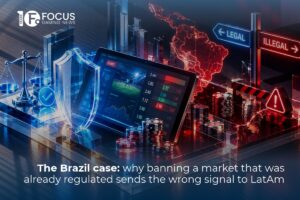
Industry figures from Brazil, Mexico, Colombia, Chile, Peru and Uruguay say President Lula’s decision to ban fixed-odds betting and online casinos through Provisional Measure 1.394/2026 could weaken investor confidence and regulatory predictability across the region. For PSPs, acquirers and banks working in high-risk, the concern is simple: when a regulated market can be switched off this fast, commercial and compliance assumptions get a lot less reliable.
- The special report cited in the source brings together industry representatives and legal experts from six countries who warn that the measure could undermine the case for investing in regulated gaming markets. Their point is not about Brazil alone: if operators can lose an authorised activity after building local teams, infrastructure and compliance processes, the signal to capital is that licensing does not necessarily mean stability.
- Several contributors argue that banning regulated products does not eliminate demand; it moves it. In their view, players may migrate to illegal operators, where age checks, spending limits, player-protection tools and fraud prevention may be weaker or absent. For payment providers, that is the usual awkward trade-off: the regulated channel shrinks, while the unregulated one gets the traffic.
- Bárbara Teles, director of government relations at the Associação Brasileira de Conformidade, Boas Práticas, Ética e Transparência em Apostas (ABC-BET) and founder and director of the Associação de Mulheres da Indústria do Gaming (AMIG), says the abrupt abolition of a legalised and regulated activity could trigger discussion over reimbursement and possible compensation claims, depending on the circumstances of each case. She argues that the issue is not whether the state can review its policy, but whether it can replace a detailed regulatory system with a near-total ban in such a short time.
- The contributors in the report converge on a familiar but important point: sustainable regulated markets need clear rules, independent regulators, effective controls, responsible gambling policies and protection against short-term political change. That is the bit PSPs and banking partners care about most, because underwriting a high-risk vertical becomes harder when the regulatory floor can move under your feet.
For Brazil and the wider Latin American market, the immediate question is not just what the ban does to operators, but what it tells the rest of the region about regulatory predictability. If a licensed model can be rolled back so quickly, everyone in the payment chain starts asking the same thing: what exactly is the licence worth?
Related news
All news →
Weekly high-risk digest
Regulation, sanctions and payment news across your verticals — once a week, free.
Please check your inbox and click the link to confirm your subscription.
Please enter a valid email address!